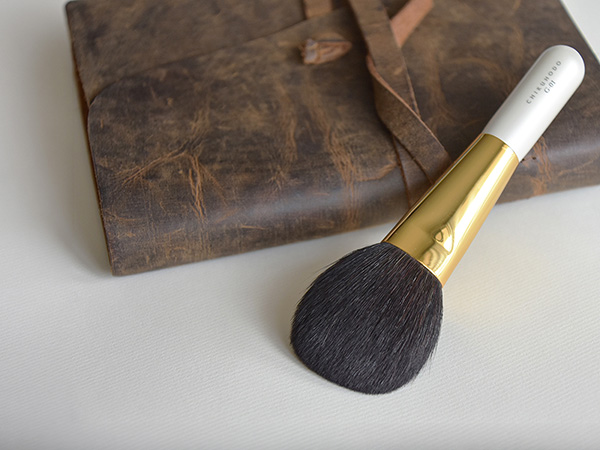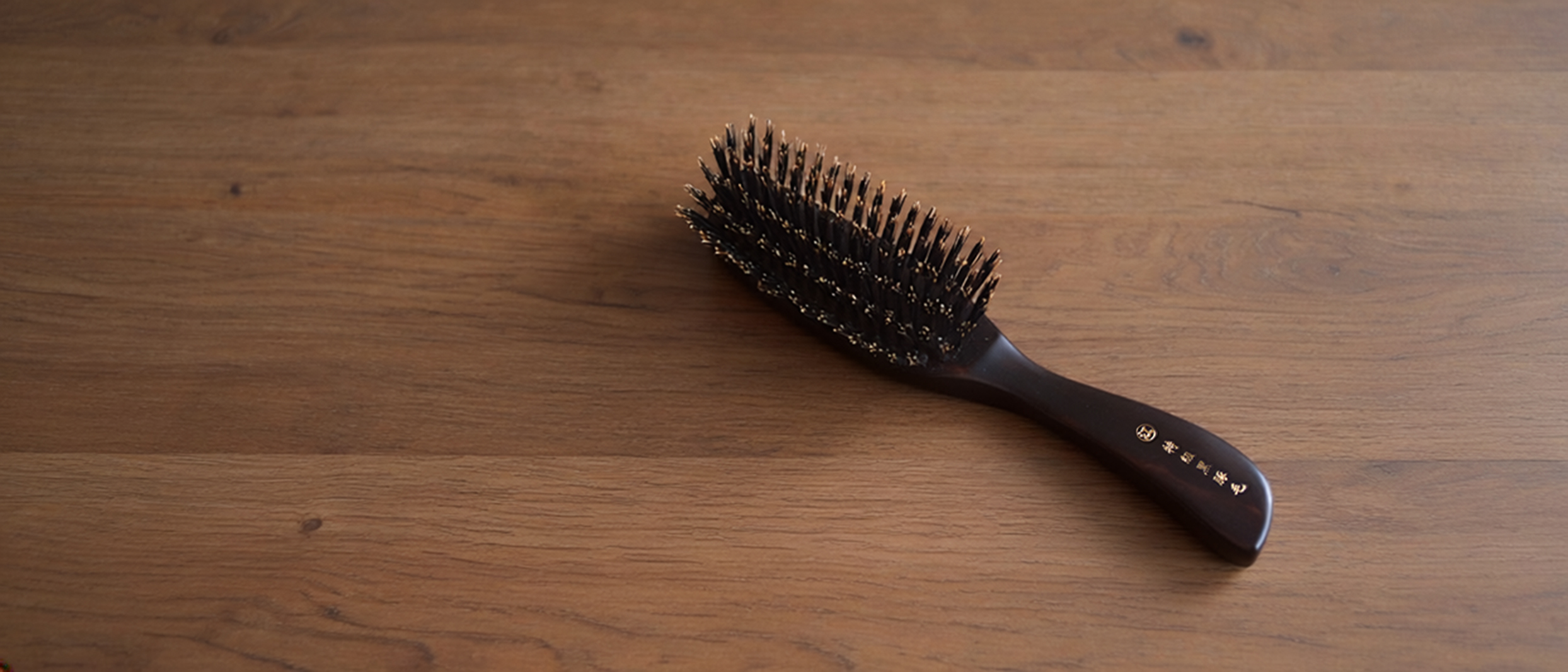
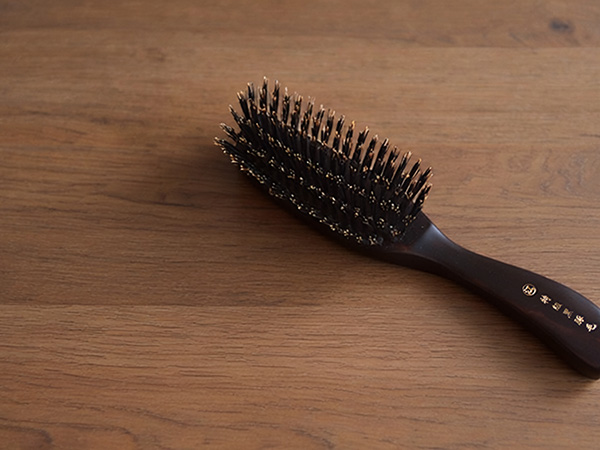
Hang up a coat after coming home and run a clothes brush across its surface. As the bristles move from shoulder to hem, fine dust and loose fibers become easier to notice.
In Tokyo, a brush-making tradition broadly described here as Edo brush-making includes two related but distinct traditions: Edo Hake, flat brushes made for specialist crafts, and Tokyo hand-planted brushes, used for clothing and other everyday purposes.
Traditional Edo Hake are flat brushes made for work such as mounting, textile dyeing, woodblock printing and lacquer application. Tokyo hand-planted brushes use a different construction, securing individual bundles of bristles inside a wooden base with wire. This method is used for clothes brushes, body brushes, cleaning brushes and other everyday tools.
The two traditions are related through Tokyo's long history of working with natural bristles, but their structures and uses are not the same.
For a clothes brush, that distinction matters. The material, length, density and arrangement of the bristles all influence how the brush meets a particular fabric.
Edo Hake is recognized as a traditional craft by the Tokyo Metropolitan Government. Alongside this tradition is Tokyo hand-planted brush-making, which developed into a different form of brush construction.
Tokyo's specialist brush-making developed alongside the expansion of urban trades during the Edo period (1603–1868). Mounting scrolls and screens, dyeing kimono fabric, printing woodblock images and applying coatings to architectural surfaces all required brushes, but not the same brush.
Paste, pigment, dye and lacquer differ in viscosity. The surfaces they are applied to also differ in size, texture and absorbency. Makers therefore developed brushes with different bristles, widths and structures according to the work they needed to perform.
A Japanese publication from 1732, Mankin Sangyō-bukuro, contains descriptions of brush-making, providing historical evidence that specialist brush production was already established by the early 18th century.
The hand-planted brushes used for clothing and other everyday purposes developed later.
From the late 19th century, as Japan opened to more Western goods and everyday practices, forms such as hairbrushes and clothes brushes became increasingly familiar. Tokyo brush makers adapted their knowledge of selecting and preparing natural bristles to these newer forms.
Instead of the flat construction used for traditional hake, hand-planted brushes secured bundles of bristles individually inside a wooden base. This created a structure suited to objects such as garment brushes, body brushes and cleaning brushes.
Machine-made brushes and plastic products later became widely available, but specialist hake and hand-planted brush-making continued.
Today, flat brushes are still made for trades including mounting, woodblock printing and lacquer work. At the same time, Tokyo's broader brush-making knowledge—particularly the careful selection and preparation of bristles for specific tasks—continues in everyday objects such as clothes brushes and cleaning brushes.
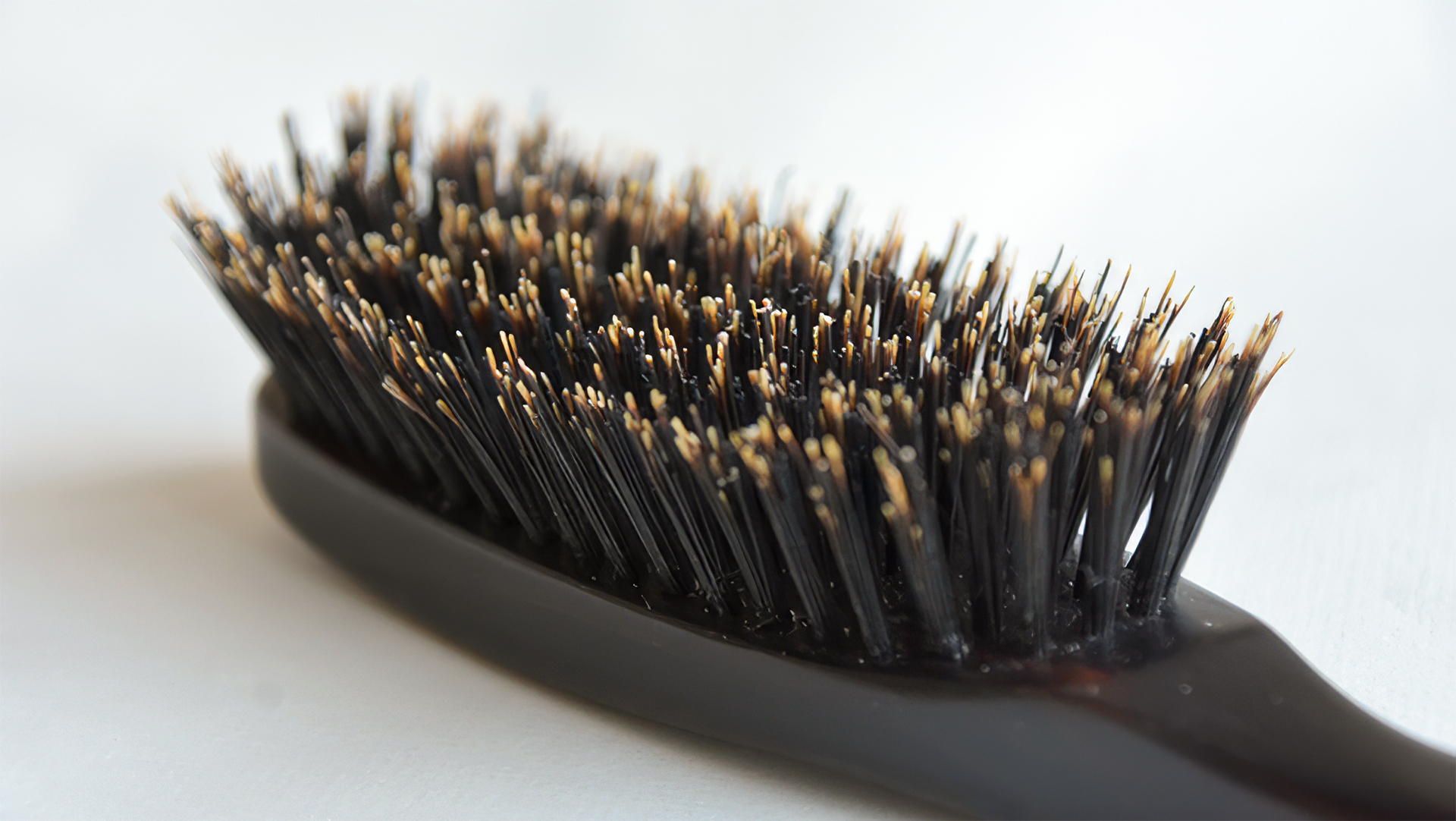
Edo brush-making is easier to understand by looking at three elements: bristle material, the natural form of the hair tips, and the way the bristles are secured.
Natural bristles used in Tokyo brush-making include horsehair, pig bristle, goat hair, deer hair and, for some traditional lacquer brushes, human hair.
Horsehair from the tail, mane and body can differ in thickness, flexibility and resilience. Makers therefore select bristles not simply by animal but according to the part of the animal, the characteristics of the individual fibers and the task the finished brush is intended to perform.
For clothes brushes, some products use relatively flexible horsehair for fabrics such as wool or cashmere. Others use firmer pig bristle for heavier fabrics or applications that call for more stiffness.
Natural bristle can retain a fine, uncut taper at the end of each hair. In Japanese brush-making, this natural tip is sometimes referred to as inochi-ge, literally “life hair.” On a clothes brush, these fine tips can work across and into the surface of a fabric, helping lift loose dust and align the nap rather than simply passing over the top.
Edo brush-making includes different construction methods. Traditional flat Edo Hake and Tokyo hand-planted brushes are not made in the same way.
1. Selecting and Combining the Bristles
Horsehair, pig bristle and other natural fibers vary not only by animal but also by individual hair and, in some cases, by the part of the animal from which they come. Makers consider qualities such as flexibility, stiffness, length and volume when preparing the brush.
2. Preparing the Wooden Base
Holes are drilled into the wooden base where the bristle bundles will be planted. Their position and spacing affect more than appearance. The arrangement helps determine the density of the finished brush and the direction in which the bristles spread from the base.
3. Pulling Each Bundle Into Place
This is the defining stage of the hand-planted construction. A fine wire, commonly stainless steel or copper, is passed through the holes in the wooden base. A small bundle of bristles is folded around the wire and pulled into the hole, securing it inside the wood.
The maker repeats the process one bundle at a time. Tension matters. Pull too firmly and unnecessary stress can be placed on the wood or wire; too little tension and the bundle may not be secured adequately.
4. Shaping the Bristle Surface
Once the bristles have been planted, their height and overall surface are adjusted according to the purpose of the brush. Scissors or other cutting tools may be used where necessary to establish the intended contour.
The aim is not simply to make every brush look neat. Bristle length, density and surface shape influence how the finished brush meets clothing, hair or another surface.
5. Finishing the Wooden Base
After planting is complete, a backing piece is attached so that the internal wire is enclosed within the wooden base. The wood is then sanded and finished according to the product.
Tokyo's brush-making tradition includes tools designed for very different surfaces and kinds of work.
Mounting and Lacquer Brushes
Traditional flat Edo Hake are made for specialist work including hyogu—the mounting and conservation-related work used to assemble hanging scrolls, folding screens and other paper or textile objects—and lacquer application. Different stages require brushes with different widths, bristle characteristics and structures.
Clothes Brushes and Other Everyday Brushes
Tokyo hand-planted brush-making is used for everyday tools including clothes brushes, as well as some hair, body and cleaning brushes. For garment brushes, horsehair and pig bristle are among the materials used. The stiffness, length and density vary according to the intended fabric and purpose.
Cleaning Brushes
Smaller brushes are also made for removing dust from desks, furniture, keyboards and other household surfaces. Bristle material, length, density and overall brush size can be adjusted according to what needs to be cleaned.
Brushes rarely transform an object all at once.