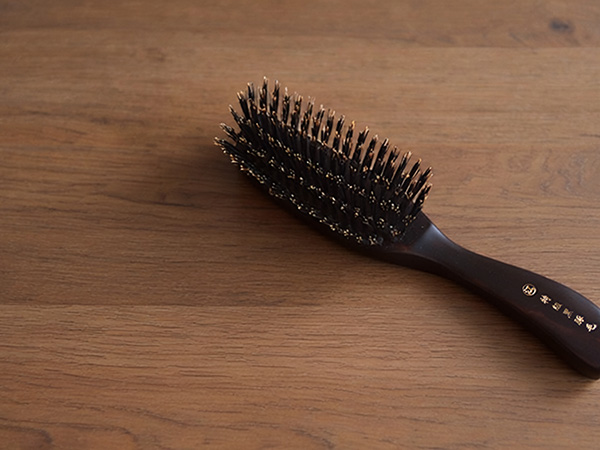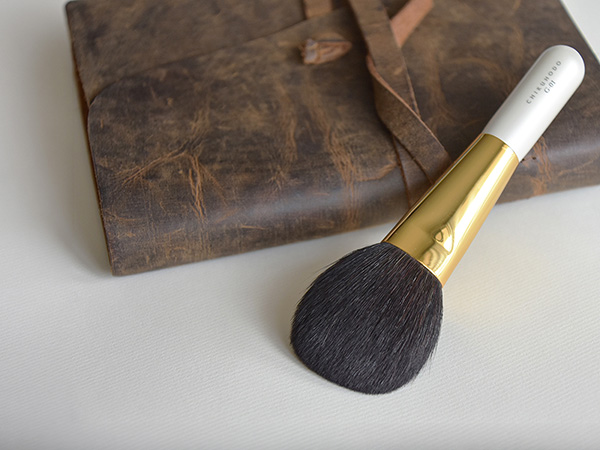
In the morning, a powder brush picks up a light dusting of color before moving softly across the cheek. Look closely at the bristles and each one narrows toward a fine point. That natural taper—and the care taken to preserve it while shaping the brush—is part of what gives Kumano Fude, traditional brushes, its distinctive touch.
Made in Kumano, a town in Hiroshima Prefecture in western Japan, these brushes are best known internationally as makeup tools. But their story begins with brushes for calligraphy. Today, the same regional brush-making tradition extends across calligraphy, painting, and makeup, with materials and brush tips shaped for the particular demands of each.
One defining feature of traditional Kumano brush-making is the way artisans work with the natural taper at the working end of each hair. Rather than trimming the finished brush head straight across with a blade to create its final shape, makers sort and position hairs of different lengths so that their naturally fine tips remain intact. This helps create the delicate contact that a brush can make with skin or paper.
The materials are equally varied. Natural hair from goats, gray squirrels, horses, and weasels is used alongside synthetic fibers such as PBT. The choice depends on the brush: how much softness or spring it needs, how it should hold and release powder, ink, or paint, and how it will be used and cared for.
The beginnings of Kumano's brush industry are generally traced to the mid-19th century, during the closing decades of Japan's Edo period. Surrounded by mountains, Kumano had relatively little farmland. During the agricultural off-season, some residents traveled elsewhere for seasonal work, including to Nara and the Kishu region, an area associated with present-day Wakayama Prefecture.
According to the history passed down in the region, residents returning to Kumano bought brushes and ink to sell along the way. Later, people who had learned brush-making techniques in places such as Nara brought those skills back with them. Brush production gradually took root in Kumano itself.
A major shift came after Japan introduced a national school system in 1872. As formal schooling expanded and calligraphy became widely taught, demand for writing brushes grew. Kumano responded by dividing different stages of brush production among specialized workers, creating a manufacturing network that extended across the town.
As everyday life and education changed in the decades that followed, demand for traditional writing brushes also shifted. Kumano's makers applied their knowledge of selecting hair, combining different materials, and shaping brush tips to other uses, particularly painting and makeup. The tools changed, but much of the underlying expertise in working with hair and fibers remained relevant.
In 1975, Kumano brush-making was officially designated a Traditional Craft by the Japanese government. Today, makeup brushes have become one of the town's most internationally recognized products, alongside brushes for calligraphy and painting. Kumano's history is therefore not simply one of preserving a single form of brush. It is also a history of adapting brush-making skills to changing ways of writing, painting, and applying makeup.
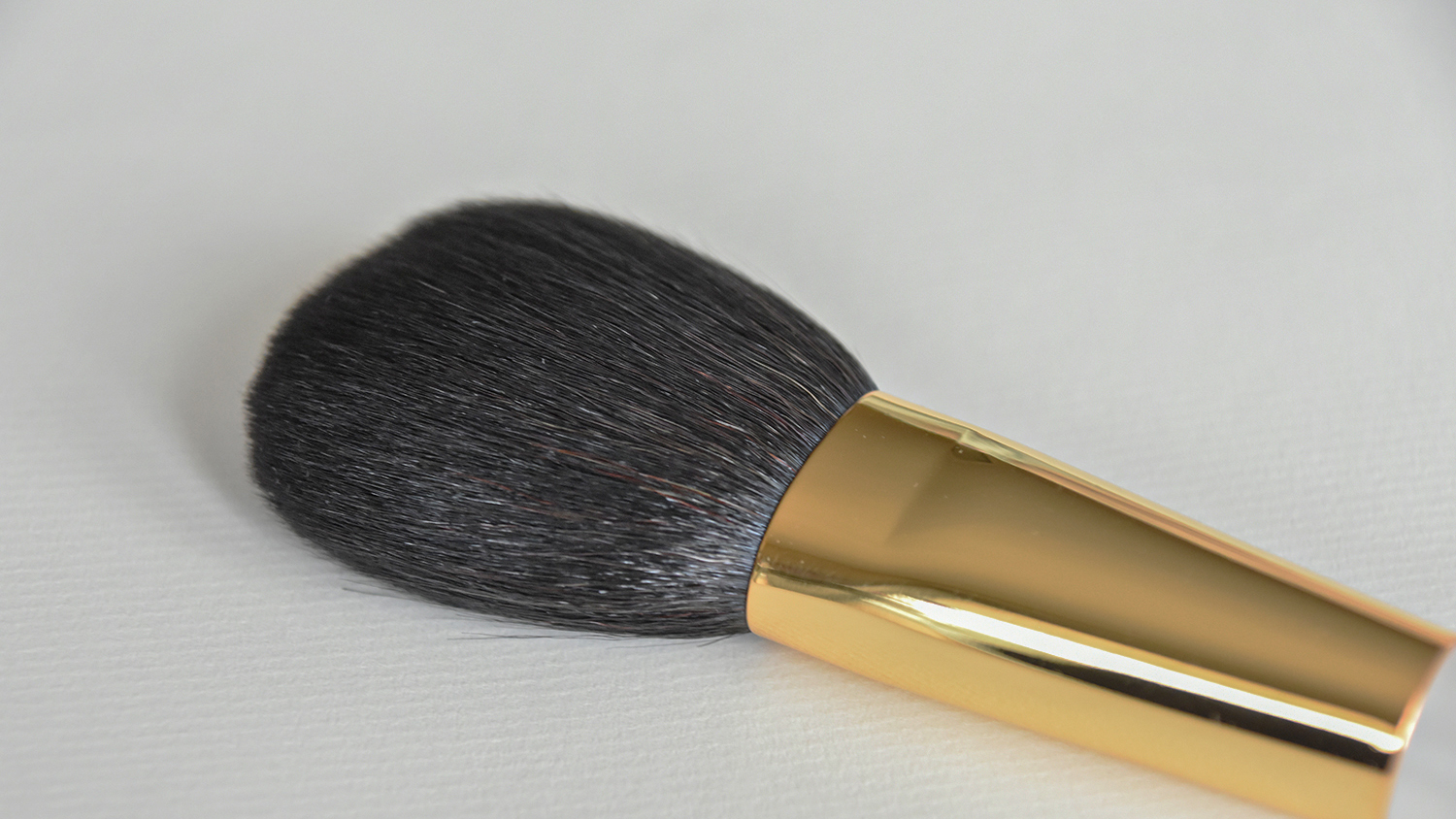
Look closely at a Kumano Fude brush and much of its character can be traced to the construction of its tip.
In traditional tip-making, artisans preserve the natural taper at the working end of the hair rather than trimming the finished brush head straight across to create its shape. A representative technique is koma-ire, in which a small wooden mold called a koma is used to arrange hairs of different lengths into the intended brush shape while retaining their naturally fine tips.
This final shaping depends on decisions made much earlier in the process. During hair selection, bent, damaged, or otherwise unsuitable hairs are removed, leaving material suited to the intended brush. When different types of hair are required, artisans may use neri-maze, a wet-blending technique that distributes fibers of different thicknesses and stiffnesses evenly through the bundle.
These choices affect how the finished brush behaves. In a makeup brush, the combination of fibers, density, and tip shape influences how the brush picks up powder, blends color, and feels against the skin. In a calligraphy or painting brush, it affects how the tip holds ink or paint, how much spring it has, and the kinds of lines it can produce.
Material is only one part of that equation. Goat hair may offer more spring in some brushes, while gray squirrel hair can be particularly fine and soft. Synthetic fibers such as PBT are also used, either alone or blended with natural hair. Natural hair is often selected for powder cosmetics, while synthetic fibers can be well suited to liquid products or brushes designed with easier cleaning in mind. Exact performance, however, varies with the quality and treatment of the fibers, the density and shape of the brush head, and the overall product design.
For this reason, understanding Kumano Fude is less about ranking one material above another than about looking at how each brush has been made for its intended task. The distinctive quality lies not in a single type of hair, but in the decisions that bring material, shape, and use together.
Kumano Fude are made through a series of stages that turn loose hair or fibers into a balanced brush tip. The exact process varies by maker and brush type, but traditional production depends heavily on sorting, combining, and shaping the material by hand.
1. Selecting the Hair
Natural hair varies even within the same animal species. Length, thickness, stiffness, curl, and the condition of the tip all affect whether an individual hair is suitable for a particular brush. During hair selection, unsuitable hairs—including bent, damaged, or irregular ones—are removed. The remaining material is sorted according to the characteristics needed for the finished brush.
2. Cutting to the Required Length
The selected hair is prepared to approximately the length needed for the brush. This does not mean cutting off the naturally tapered working tips. Instead, the material is oriented so that the fine ends are kept on the side that will become the working surface of the brush, while adjustments to length are made from the opposite end where required.
3. Blending the Hair
Some brushes use more than one type or length of hair. When materials need to be combined, artisans may use a wet-blending process known as neri-maze. The hairs are spread out, moistened, layered, and repeatedly mixed so that different fibers are distributed through the bundle. The maker checks the mixture by touch as well as sight. The goal is to avoid concentrating hairs of one thickness or stiffness in a particular area, since an uneven mixture can change the behavior of the finished brush.
4. Shaping the Brush Tip
The prepared bundle is gradually shaped into the form required for the brush. One representative technique is koma-ire. The hair is placed into a small hollowed wooden mold called a koma, and the mold is gently vibrated so that the individual hairs shift into position. The maker adjusts the bundle as the tip develops. Instead of trimming the completed working surface straight across, hairs of different lengths are arranged to create the intended profile while retaining their naturally tapered ends.
5. Securing the Brush Head
Once the shape has been established, the base of the hair bundle is secured so that the brush head holds together. The method varies according to the type of brush and maker. The completed head is then attached to a handle appropriate for its intended use. At this stage, the relationship between material and function becomes visible in the finished object.
Kumano Fude are made from both natural hair and synthetic fibers, and some brushes combine the two. These are material categories rather than indicators of quality.
Natural Hair Brushes
Natural materials used in Kumano Fude include goat, gray squirrel, horse, and weasel hair. Goat hair can provide softness together with a degree of spring, gray squirrel hair is known for its particularly fine, soft feel, and horse and weasel hair are used where their respective stiffness, resilience, or other characteristics suit the intended brush.
Synthetic Fiber Brushes
Synthetic fibers such as PBT are also used in contemporary Kumano Fude, either alone or blended with natural hair. Their inclusion is not simply a substitute for traditional material. Synthetic fibers provide different properties that can be useful for particular applications.
The differences between brushes become easiest to understand when they are used.