Press a bath towel against your skin after a shower, and you can feel the water move from your body into the fabric. Imabari towels, made in and around the city of Imabari in Ehime Prefecture on Shikoku, one of Japan's four main islands, turn that everyday quality into something measurable: absorbency is assessed against a defined standard, rather than judged by touch alone.
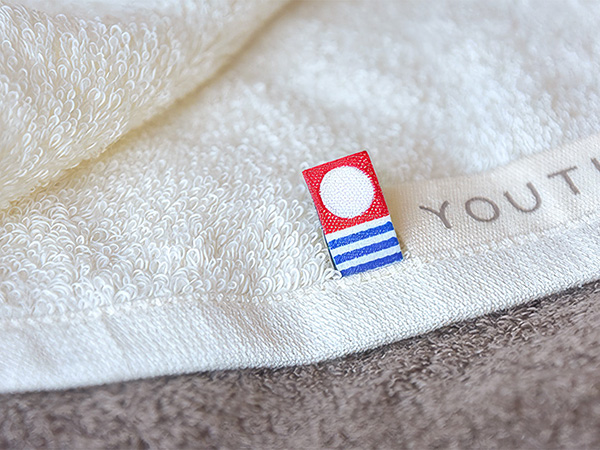
Being made in the Imabari area and carrying the official Imabari Towel brand mark are not necessarily the same thing. Products certified to use the mark must meet quality standards established by the Shikoku Towel Industrial Association. Towels produced in the region without that certification should not be confused with certified Imabari Towel products.
The best-known part of the certification process is an absorbency test commonly referred to as the five-second rule. A small piece of towel fabric is placed on water and must begin to sink within five seconds. The fabric is tested both before washing and after three washes, confirming that it meets the absorbency requirement in both conditions.
This does not mean that every certified Imabari towel has the same softness, thickness, weight, or feel. Those qualities vary considerably from product to product.
Cotton is the main material, but the yarn itself can differ. Products may use extra-long-staple cotton, zero-twist yarn, organic cotton, or other types of cotton yarn, while some combine cotton with linen or other fibers.
Pile length and density, yarn twist, weave, and overall construction further affect how a towel feels, how much bulk it has, and how quickly it dries.
Imabari's towel industry grew against the background of a much longer history of cotton weaving in the region.
During Japan's Edo period (1603–1868), the area around present-day Imabari produced a cotton textile known as Iyo cotton, or Iyo momen. This helped establish local knowledge of spinning and weaving. Today's towel industry is not simply an uninterrupted continuation of that earlier textile production, but it developed in a region where textile skills were already well established.
Towel production in Imabari itself is generally traced to 1894, when a weaver named Heisuke Abe adapted a loom originally used for cotton flannel to produce towels.
Another important development came in 1910, with the introduction and refinement of jacquard looms. A jacquard loom allows individual warp threads to be controlled to create intricate woven patterns. In Imabari, the technology helped expand production beyond plain towels to patterned textiles using different weave structures and colored yarns.
As demand for decorative and gift towels grew during the 20th century, particularly during Japan's postwar economic expansion, Imabari developed into one of the country's major towel-producing regions.
That position came under pressure from the 1990s into the early 2000s, when growing imports of lower-priced towels contributed to a substantial decline in local production.
In 2006, the region began a major effort to rebuild the Imabari Towel brand through JAPAN BRAND, a national initiative supporting internationally competitive regional products. Creative director Kashiwa Sato became involved in the project, and the initiative helped establish clearer quality standards and a recognizable brand mark.
The result was more than a new visual identity. It created a clearer way to distinguish products that met defined standards while drawing renewed attention to the textile knowledge already present in the region.
For certified Imabari towels, absorbency is the clearest shared performance standard. Testing before washing and after three washes helps distinguish that measurable requirement from qualities such as softness or thickness, which vary by product.
The five-second test assesses fabric both before washing and after three washes. This matters because a towel's initial surface condition can change with washing. Testing both conditions provides a defined way of checking absorbency rather than relying only on how a new towel feels in the hand.
Beyond that common standard, Imabari towels can differ substantially.
Water and Textile Processing
One element in Imabari's textile production is the region's soft water.
Rivers such as the Sojagawa, fed by the Takanawa mountain range, supply water with relatively low levels of calcium and magnesium. This water has long been used in processes such as bleaching and dyeing, including the removal of oils and impurities from cotton.
Imabari has also traditionally been associated with processing yarn before it is woven. The yarn may be bleached and, where required, dyed before weaving, rather than carrying out all of these processes only after the fabric has been produced.
Removing natural oils and other impurities from cotton during preparation helps ready the fibers for water absorption, while dyeing yarn before weaving also allows colored yarns to be incorporated into woven patterns.
The local water is therefore best understood as one part of the production environment rather than a single explanation for Imabari towels' absorbency. Yarn, pile construction, weaving, finishing, and the certification standard all play their own roles.
Pile, Thickness and Drying
Another important element is pile — the loops of yarn that rise from the surface of many towels.
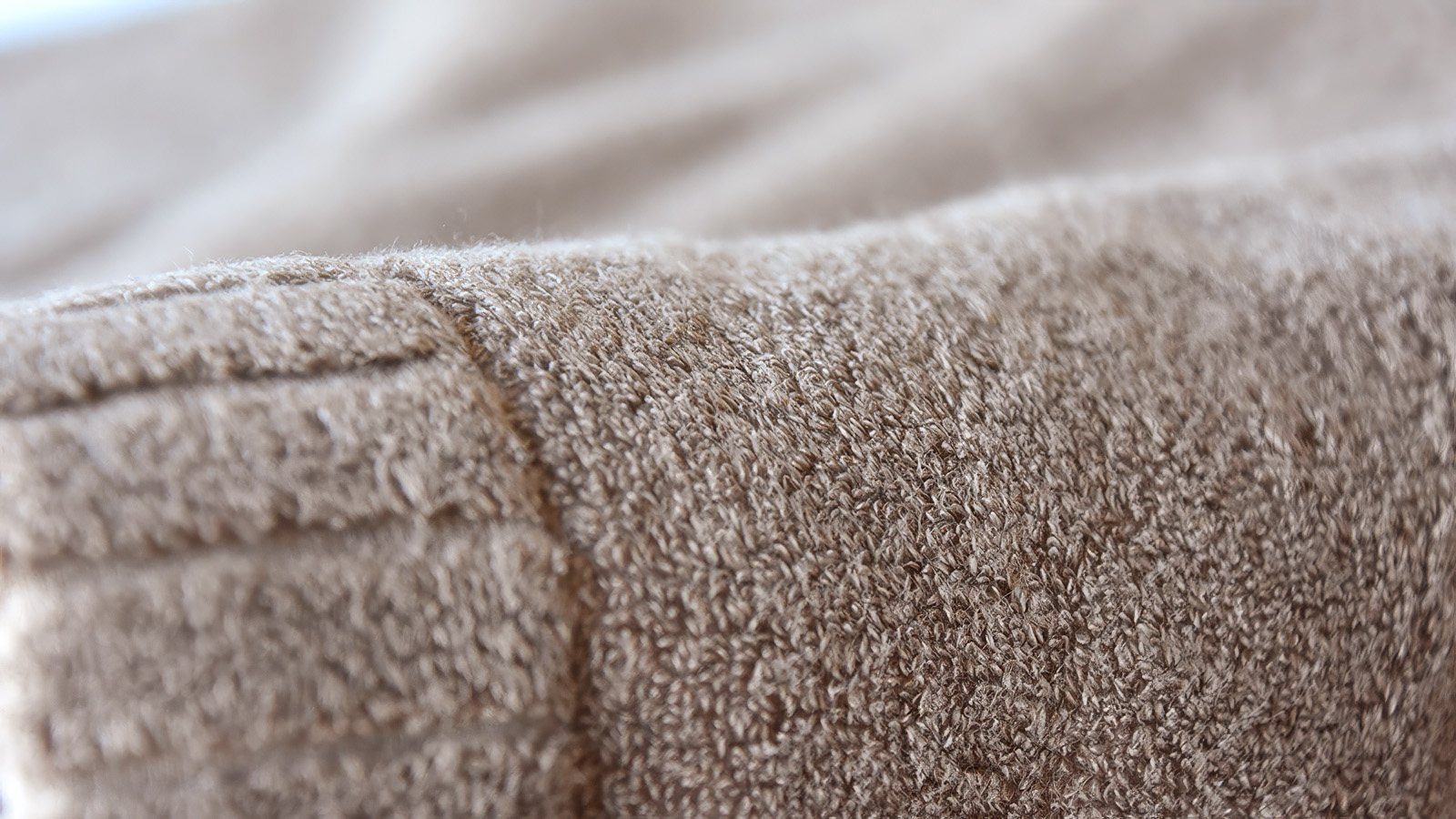
These loops increase the surface area of the fabric and contribute to both water absorption and cushioning. Their length and density can be adjusted to create very different towels.
Longer, densely packed piles can produce a thicker, springier surface. A lighter construction with shorter piles — sometimes combined with gauze — can reduce bulk and dry more quickly. A substantial bath towel and a lightweight towel designed to dry quickly simply answer different everyday needs.
Yarn and Texture
Texture also changes according to the yarn.
Zero-twist or low-twist yarn can create a fuller, softer surface because the cotton fibers are held with less twist. The trade-off is that loosely twisted yarn may shed more fibers, particularly when new.
More tightly twisted yarn can give the surface greater structure and resilience.
1. Selecting and Preparing the Yarn
Cotton yarn is selected according to the intended character and use of the towel. A product designed for softness may use yarn with relatively little twist, while another may use more tightly twisted yarn for a firmer or more structured surface. Because different yarns behave differently on a loom, tension and other weaving conditions need to be adjusted accordingly.
2. Bleaching and Dyeing the Yarn
Yarn may be bleached to remove oils and other substances before weaving using the region's soft water. When color is required, yarn can also be dyed at this stage. Dyeing before weaving makes it possible to combine colored yarns directly in the fabric, including in patterned jacquard designs.
3. Warping and Sizing
Before weaving, the many warp yarns running lengthwise through the fabric must be arranged in the correct order and wound onto a beam at consistent tension. This process is known as warping.
A temporary sizing agent may also be applied to the warp yarns. Sizing helps protect them from friction and breakage while they pass through the loom.
4. Weaving the Towel
The towel is woven by combining yarns that form the ground fabric with additional yarns that create the pile loops on the surface.
Depending on the design, manufacturers may use jacquard or dobby looms. Jacquard weaving allows complex combinations of colored yarns and woven structures to form patterns directly in the textile rather than printing them onto the finished surface.
5. Removing Sizing and Remaining Impurities
After weaving, temporary sizing and remaining impurities are washed from the fabric. This finishing stage removes substances used to support the weaving process and allows the cotton to perform as intended as an absorbent textile.
6. Sewing and Quality Inspection
The woven fabric is cut to the required size and the edges are sewn. Products submitted for official Imabari Towel certification are then assessed against the quality standards established by the Shikoku Towel Industrial Association, including the absorbency requirement.
The result is not one standardized towel design, but a wide range of products made within a shared framework for certified quality.
Because Imabari towels vary in yarn, pile, weave, and weight, the name alone does not tell you which of these qualities a particular product will have.