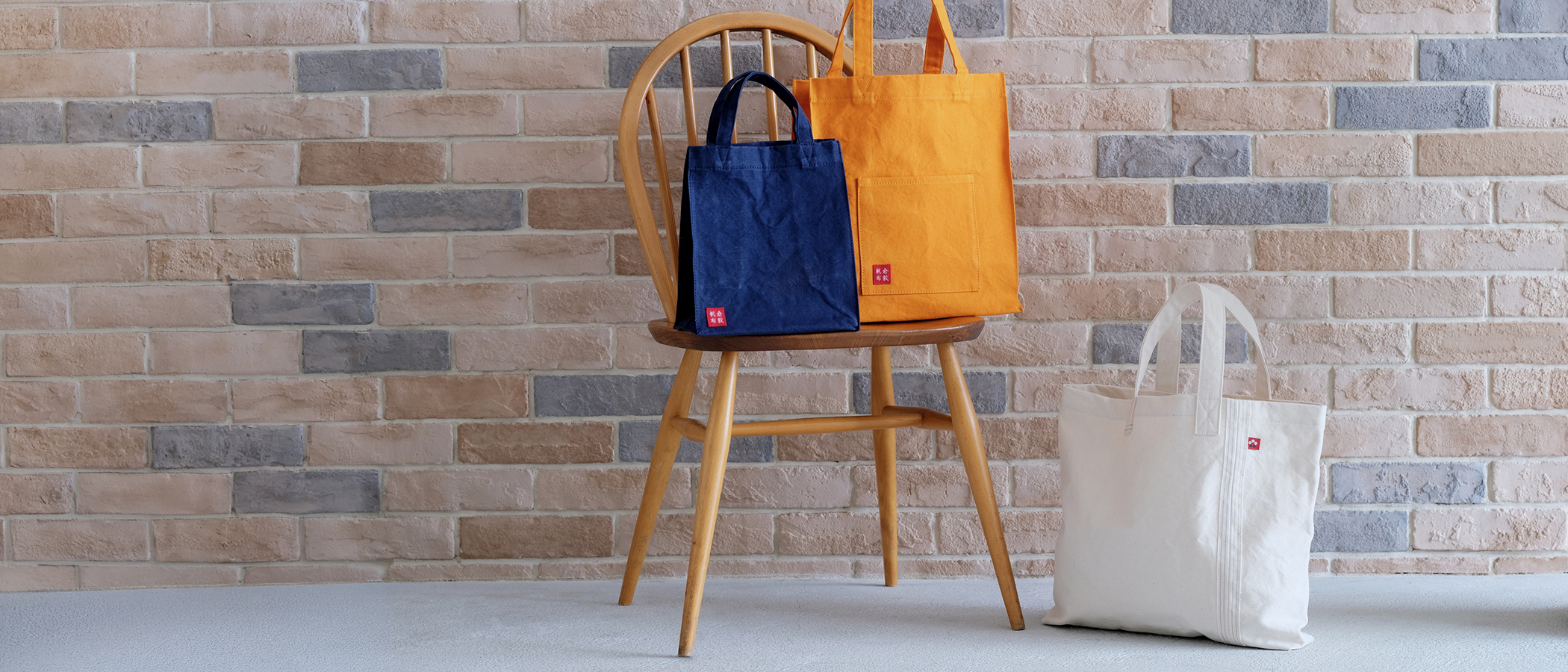
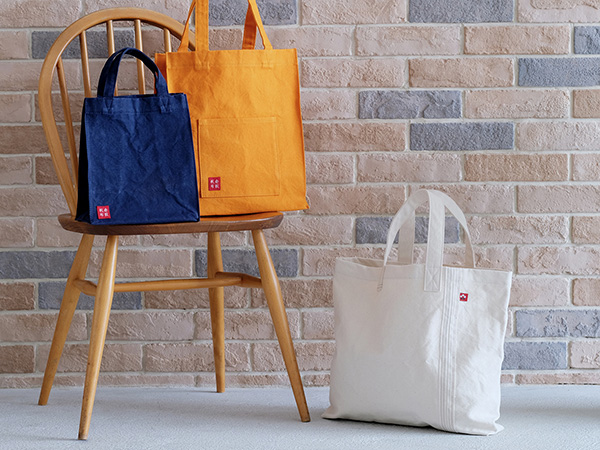
Set an empty tote bag on the floor and, depending on the fabric and construction, it may stay upright rather than folding in on itself. With heavier canvas, that structure can be one of the first things you notice.
Kurashiki canvas is a cotton textile produced in and around Kurashiki, a city in Okayama Prefecture in western Japan. It is characterized by a dense plain-weave structure.
In Kurashiki, canvas production developed around yarn structures and weaving methods suited to materials that needed strength and body. Japanese cotton canvas is also classified by a numbering system related to fabric weight and specification. Lower numbers indicate heavier fabric, and generally correspond to thicker, stiffer canvas.
Some Kurashiki canvas is still woven on traditional shuttle looms, while other fabric is produced on modern looms. Rather than being defined by one machine or one visual signature, Kurashiki canvas is better understood through the region's long experience of making densely woven cotton fabric for different uses.
Kurashiki canvas is used for products ranging from tote bags, backpacks, and tool bags to aprons, storage items, and furniture upholstery. Untreated canvas is generally made from cotton, although finished products may incorporate treatments or additional materials such as leather.
The history behind Kurashiki canvas begins with cotton cultivation around the Seto Inland Sea.
During the 18th and early 19th centuries, land reclamation created new agricultural areas along the coast. The reclaimed soil often contained enough salt to make rice cultivation difficult, while cotton was comparatively tolerant of such conditions. Cotton cultivation consequently spread around Kurashiki and other parts of what was historically known as Bitchu, a region that covered much of present-day western Okayama Prefecture. Records from the period refer to locally grown cotton known as Bitchu cotton.
A major change came in the late 19th century, as mechanized spinning developed around Kurashiki. A more stable supply of cotton yarn helped support mechanized canvas weaving, and production expanded beyond fabric for sailing vessels. Dense cotton canvas was also used for industrial materials that required strength, including belts and sheets.
During the early 20th century, improvements in transport and industry broadened these uses further. The skills involved in preparing yarn and weaving heavy cotton fabric at high density developed in response to such practical demands.
The production environment changed again in the decades after World War II. Synthetic fibers such as nylon and polyester became increasingly common in industrial materials, while faster modern looms replaced older shuttle looms in many textile factories.
Kurashiki's canvas industry did not remain limited to its earlier industrial roles. Alongside industrial materials, the fabric found new uses in bags, storage goods, interiors, stationery, and other everyday objects. From the 2000s onward, the name Kurashiki canvas became increasingly visible in connection with lifestyle products, bringing a textile with industrial roots into a wider range of daily settings.
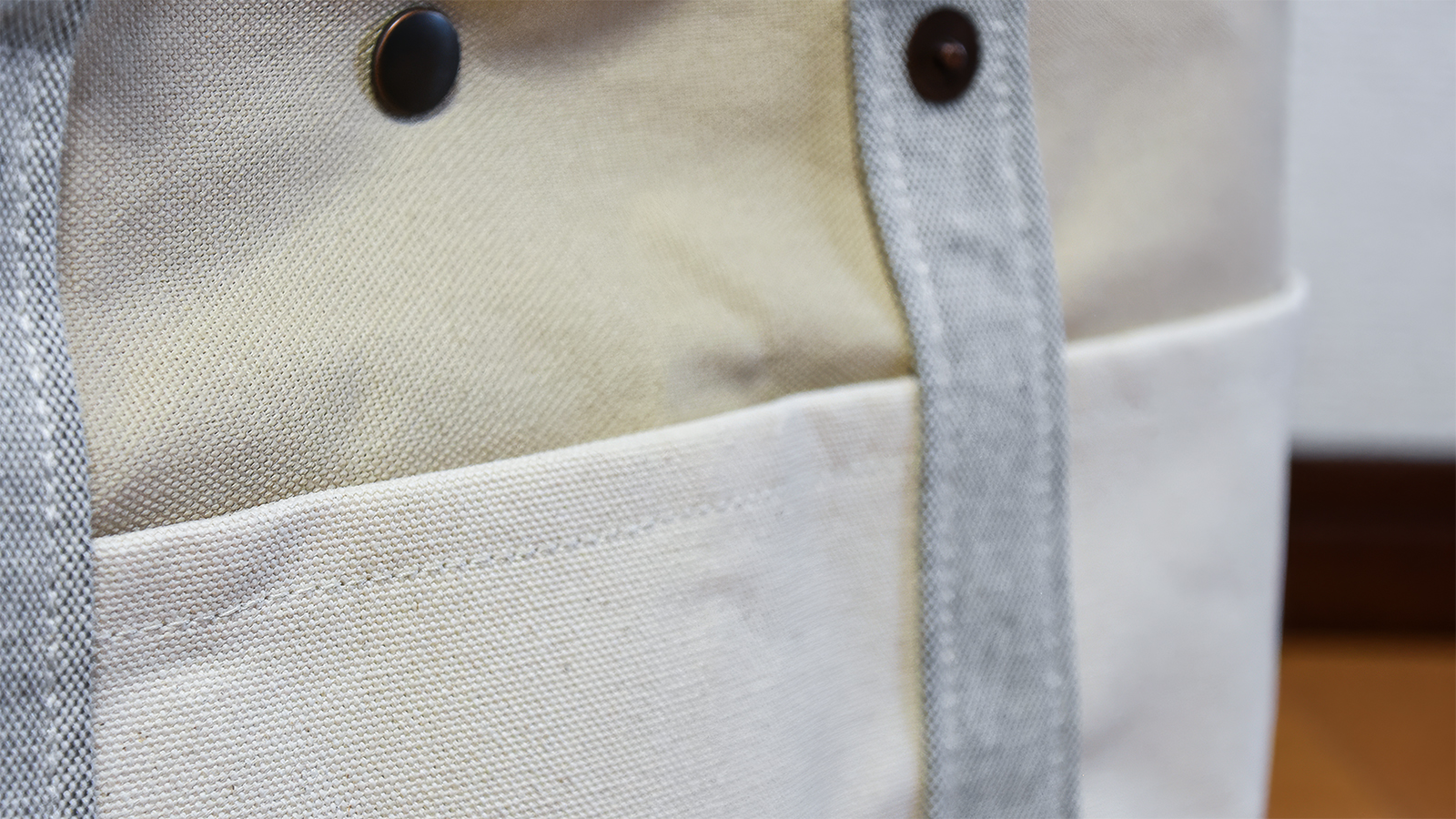
The character of Kurashiki canvas begins with its yarn and weave.
Kurashiki canvas is typically woven from cotton yarn prepared to achieve the thickness and strength required for a particular specification. Multiple strands may be combined and twisted together, then woven densely in a plain weave, with the warp and weft alternating over and under each other.
Unlike denim, which is typically woven in a twill structure that creates visible diagonal ribs, canvas uses a plain weave in which the warp and weft alternate over and under each other. Although Okayama is also widely associated with Japanese denim, the two textiles are structurally distinct.
The result can be a fabric with considerable body, but Kurashiki canvas does not have one fixed thickness or stiffness. Those qualities vary with its weight number, yarn structure, weave density, finishing, and the way the fabric is used in a finished product.
Heavier canvas can provide the body needed for substantial bags or storage items, while lighter canvas is easier to fold, sew into smaller forms, or use for garments such as aprons.
Some Kurashiki canvas is woven on shuttle looms. On this type of loom, a shuttle carrying the weft yarn travels back and forth across the warp. Because the same weft yarn turns back at each side rather than being cut at the edge, the loom creates a self-finished woven edge called the selvage.
This edge is structurally different from a cut edge and is less prone to fraying. Makers may leave it visible in parts of a finished product, such as the opening of a pocket.
Untreated heavy cotton canvas can feel firm when new. With repeated folding, carrying, and friction, the cotton fibers may gradually become more flexible and the fabric can soften.
Creases and fold marks may appear in areas that bend frequently. On dyed canvas, friction, washing, sunlight, and other conditions can also change how the color appears over time.
These changes vary with the weight of the fabric, its dye or finish, the construction of the product, and how it is used. Rather than following a single pattern of “aging,” each piece develops according to those conditions.
The exact process varies according to the weight and specification of the canvas, but the major stages are broadly as follows.
1. Preparing the Yarn
Cotton yarn is prepared according to the canvas specification. Multiple strands may be combined and twisted together to produce yarn with the required thickness and strength. The number of strands and the way they are twisted contribute to the density and body of the finished fabric.
2. Setting the Warp
Large numbers of warp threads are arranged in parallel before being placed on the loom. Keeping their tension as even as possible is important for producing consistent cloth. Cotton responds to changes in temperature and humidity, so the condition of the yarn must also be considered as the loom is prepared and adjusted.
3. Weaving the Canvas
The weft passes through the prepared warp to create a dense plain weave. On a shuttle loom, the weaver adjusts factors such as yarn tension, the insertion and beating of the weft, and the condition of the loom as weaving progresses. These adjustments contribute to the density and surface of the finished fabric.
Modern looms are also used within Kurashiki's canvas industry. The loom itself is therefore only one part of what determines the characteristics of a particular fabric.
4. Inspection and Finishing
After weaving, the fabric is inspected for flaws and irregularities.
Depending on its intended use, it may then undergo additional processes such as dyeing, paraffin treatment, or water-repellent finishing. These treatments can alter the appearance, feel, water resistance, and care requirements of the finished canvas.
Japanese cotton canvas is commonly distinguished by weight number. Because lower numbers indicate heavier fabric, the scale can initially feel counterintuitive. The categories below offer a practical way to understand how different weights are used. The exact feel and performance of a finished product also depend on weaving, finishing, sewing, lining, and other construction details.
Canvas numbered 1 to 3 is particularly heavy and is more commonly associated with industrial or other applications requiring substantial strength than with ordinary household goods.
No. 4-6 Canvas
No. 4-6 canvas sits toward the heavier end of the Japanese canvas scale. It generally has substantial thickness and body. Its stiffness can help provide structure in products designed to hold their form, although the construction of the finished item also matters. Heavy tote bags, tool bags, and storage baskets are among the everyday objects in which these weights may be used.
No. 8 Canvas
No. 8 canvas offers a noticeable body without the same weight and stiffness as No. 4-6 canvas. It combines structure with greater flexibility, making it suitable for objects that need to be carried and handled regularly. It is commonly encountered in tote bags, backpacks, and storage items.
No. 9-11 Canvas
Compared with lower-numbered heavyweight canvas, No. 9-11 canvas is generally lighter and more flexible. The fabric is easier to fold and work into smaller or more detailed sewn forms. These weights may be used for pouches, book covers, fashion accessories, and aprons.
Kurashiki canvas fits naturally into everyday actions that involve carrying, organizing, and protecting things.
Looking at differences between the weights makes canvas less a single category of “durable fabric” and more a material selected according to how an object will be used.