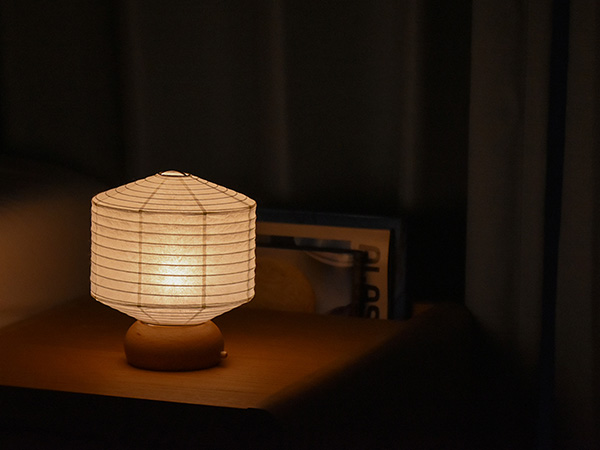
Light a lamp covered in washi, and the glow that comes through isn't direct. It spreads across the paper first, softened by the fibers before it reaches the room.
Yame Washi is a papermaking tradition carried on around Yame in Fukuoka Prefecture, on Kyushu, the southwesternmost of Japan's four main islands. Traditional handmade Yame Washi uses long kozo fibers that can produce paper thin enough to transmit light while retaining the strength needed for uses such as lanterns and shoji—traditional Japanese sliding screens covered with translucent paper.
Contemporary Yame Washi extends beyond traditional handmade paper. Those same material qualities now appear in different forms, including pendant lights, lampshades and interior panels made for contemporary homes. Not every product sold as Yame Washi today is handmade or made entirely from kozo, however; machine-made and blended papers are also part of contemporary production.
The exact beginning of papermaking in the Yame region is not known with certainty.
Several origin traditions survive. One places the arrival of papermaking in the late 14th or early 15th century, while another associates its development with a papermaker who came from Echizen, a historic papermaking region in what is now Fukui Prefecture. Rather than pointing to one securely documented founding date, these accounts indicate that papermaking had become established in the Yame area centuries ago.
The region's geography supported the craft. River systems including the Chikugo and Yabe provided the large quantities of water needed to wash prepared fibers and form sheets of paper.
By the Edo period (1603–1868), papermaking had become an established local industry. Paper from the region was used for practical purposes including shoji screens and mounting, and the growth of Yame Chochin (lanterns) production created demand for paper that could combine thinness with resistance to tearing.
The relationship between the two crafts became particularly important because lantern paper must perform two jobs at once. It needs to transmit and diffuse light, but it must also withstand the tension created when it is stretched across a bamboo frame. Demand from lantern production therefore helped sustain the use of long-fiber paper suited to this purpose.
During the late 19th and early 20th centuries, changes in papermaking technology and the spread of Western-style paper transformed Japan's paper industry. Machine production gradually became more important, while traditional hand papermaking continued on a smaller scale.
Later in the 20th century, changes in architecture and everyday living reduced demand for some traditional paper applications, including shoji. Yame's papermaking industry responded by expanding into different forms of paper and new uses.
Today, traditional handmade paper continues alongside machine-made and blended Yame Washi. Contemporary applications include pendant lights, lampshades and interior panels, extending the region's relationship with paper and transmitted light beyond the traditional lantern.
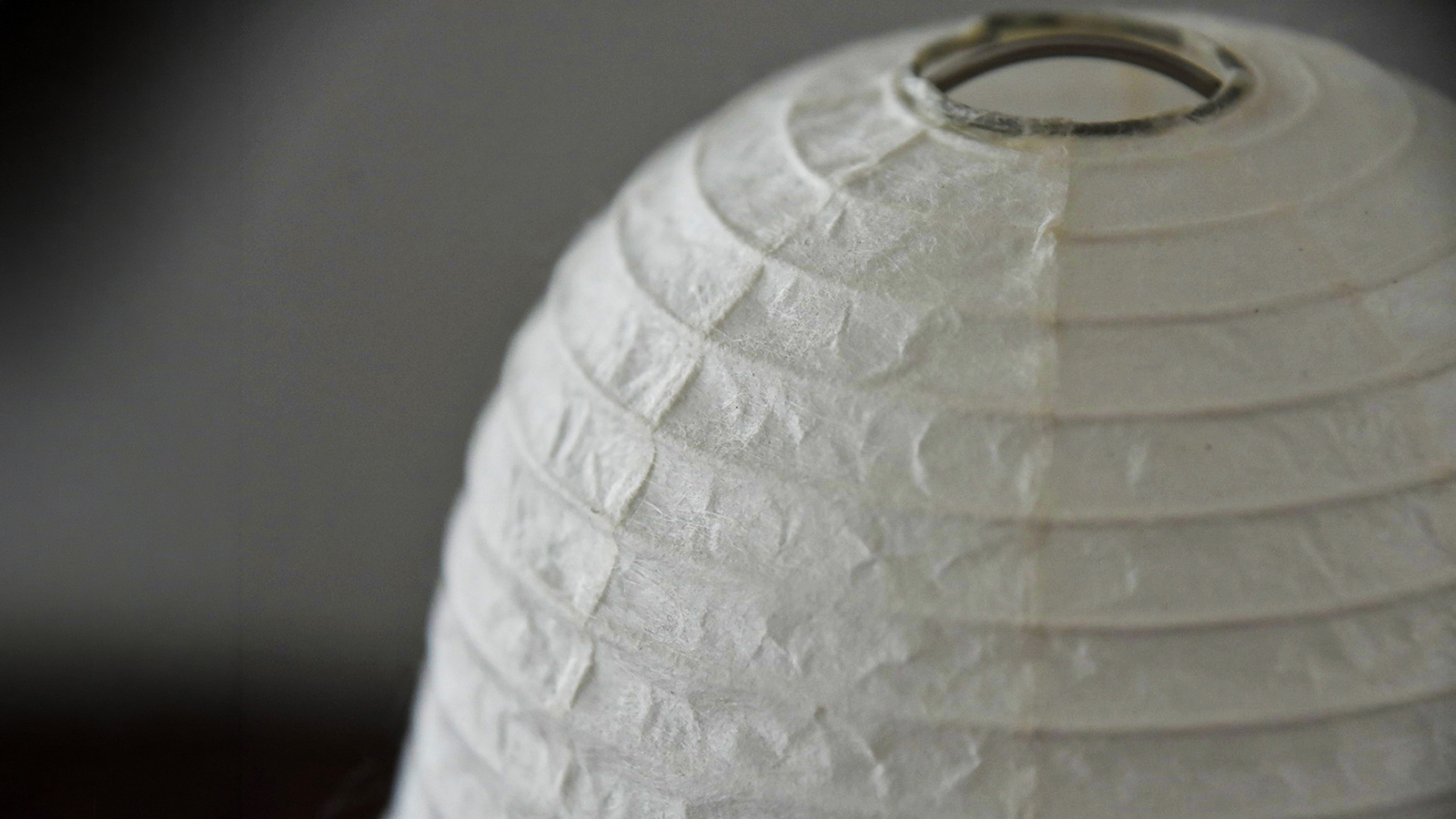
Traditional kozo-based Yame Washi is particularly useful for understanding two closely connected characteristics of the craft: how long plant fibers give thin paper physical strength, and how that fiber structure changes the passage of light.
These qualities vary according to material, thickness, forming method and product.
The strength of traditional handmade Yame Washi begins with kozo. Unlike the much shorter fibers found in conventional wood pulp, kozo produces long plant fibers. During traditional preparation, these fibers are beaten and loosened rather than simply cut into short pieces.
When a sheet is formed, the long fibers overlap and interlock throughout the paper.
This does not make the paper indestructible. It does, however, allow certain traditional Yame Washi papers to remain relatively thin while resisting tearing—an important quality when paper is pulled across the framework of a lantern or repeatedly handled in applications such as screens and mounting.
Hold a thin sheet of traditional Yame Washi against a window and the fibers inside it become easier to see. Light does not pass through the sheet in the same way it passes through clear glass. Instead, the irregular network of fibers scatters the light, reducing the sense of a direct glare and making the illumination appear more diffuse.
The effect depends on the particular paper. Fiber composition, sheet thickness and other production choices influence how much light passes through and how it appears on the other side.
This is one reason paper suited to lanterns, shoji and contemporary lampshades can affect a room differently from a transparent material. The paper is not simply hiding the light source; its structure changes how the light reaches the surrounding space.
Traditional handmade Yame Washi is not perfectly uniform.
Look closely at a sheet—or hold it against light—and differences in fiber distribution can remain visible across its surface. These are not decorative patterns printed onto the paper. They result from the material itself and from how the fibers were dispersed and formed into a sheet.
The exact process varies by maker and type of paper. The stages below describe the traditional hand-papermaking process rather than machine-made or blended Yame Washi.
1. Preparing the Kozo
The process begins with kozo. After the branches are harvested, they are steamed so that the bark can be removed. The darker outer layers are then scraped away, leaving the pale inner bark that contains the fibers used for papermaking. The prepared bark is washed before moving to the next stage.
2. Cooking and Cleaning the Fibers
The inner bark is cooked in an alkaline solution to soften the plant material and make the fibers easier to separate. After cooking, the material is washed thoroughly in clean water. Remaining pieces of bark, knots and other impurities are removed by hand. This preparation affects both the appearance of the finished paper and the condition of the fibers used to form it.
3. Beating the Kozo
The cleaned kozo is beaten to loosen and separate the fibers while preserving as much of their length as possible. The prepared fibers are then ready for sheet forming.
4. Preparing the Vat
The separated fibers are dispersed in a vat of water. A viscous forming aid known as neri is added to help keep the fibers suspended and control how they move through the water. Traditionally, neri can be made from plants such as tororo-aoi, whose roots release a natural mucilage when processed in water. This gives the papermaker more time to distribute the long fibers while forming the sheet rather than allowing them to settle too quickly.
5. Forming the Sheet
The papermaker scoops the fiber-and-water mixture with a wooden frame fitted with a screen. The frame is moved so that water drains away while the fibers spread and overlap across the surface. The papermaker judges the concentration of fibers, drainage and developing thickness through repeated movement.
This is one of the stages where experience is difficult to replace with a fixed measurement. A sheet that needs to remain thin while retaining strength depends on how evenly the long fibers are distributed rather than on thickness alone.
6. Pressing and Drying
Newly formed sheets are stacked while still wet and pressed to remove excess water. They are then separated and dried. Traditional drying may involve brushing individual sheets onto boards, although the exact method varies by maker and type of paper. Once dry, the sheets can be inspected for thickness, surface condition and other qualities relevant to their intended use.
Yame Washi does not need to be understood only through a traditional lantern or a Japanese-style room. Its relationship with light can appear in ordinary spaces at different times of day: beside a bed, above a dining table, or near a window where daylight passes through the paper from the opposite direction.