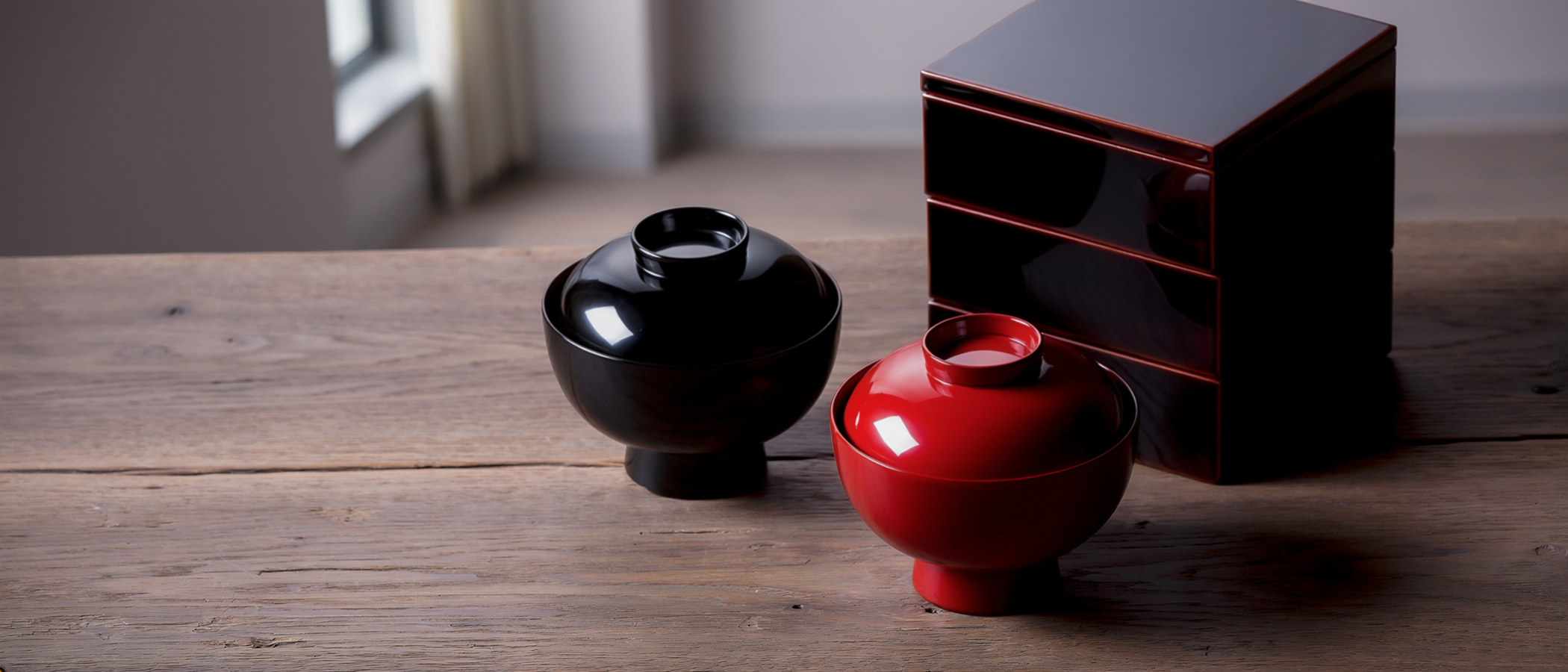
A soup bowl at breakfast. A bento box carried to work. A tray bringing a meal to the table. In Fukui Prefecture, lacquerware has long been made for such everyday uses.
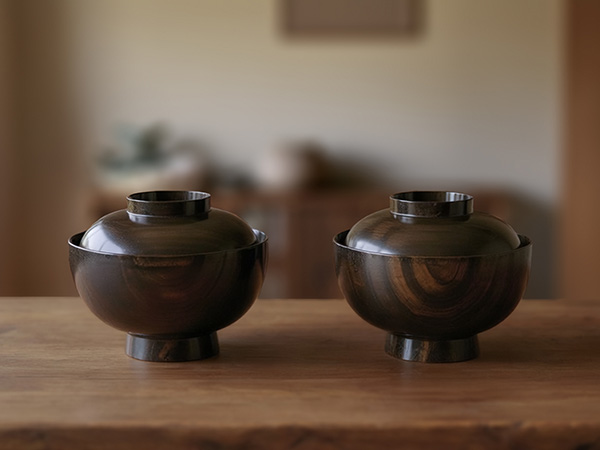
Echizen lacquerware is a Japanese lacquerware tradition centered on the Kawada district of Sabae, a city in Fukui Prefecture on the west coast of Japan's main island. Echizen lacquerware begins with natural wood—including horse chestnut, zelkova, dogwood, and cypress—and layers of natural urushi lacquer. The region also produces pieces made with synthetic resins and urethane coatings, materials suited to durability and production at scale.
What distinguishes Echizen is not a single look or finish, but a production system built around a specialist division of labor. Different artisans shape the base, prepare its surface, apply the lacquer, and add decoration. This structure has helped the region extend its production from traditional wood-and-urushi pieces to lacquerware made for a wider range of contemporary uses.
The origin of Echizen lacquerware is associated with a legend dating back roughly 1,500 years. According to the story, before becoming Japan's 26th emperor, Emperor Keitai was staying in the Echizen region when a lacquer craftsman repaired his damaged crown and presented him with a black lacquered bowl. The emperor is said to have admired the work and encouraged lacquerware production in the area. The story remains part of the region's account of its origins, although it cannot be verified as historical fact.
The landscape around Kawada provides a more concrete explanation for the development of Echizen lacquerware. The mountainous area offered limited farmland but access to trees used for wooden bases and to people with the skills needed to collect raw lacquer. Lacquerware making became established as a source of work in the region.
Between the 17th and 19th centuries, lacquer collectors from Echizen traveled to other production areas, including Kyoto and Aizu, for seasonal work. The techniques and knowledge they encountered outside the region are thought to have influenced production back in Kawada.
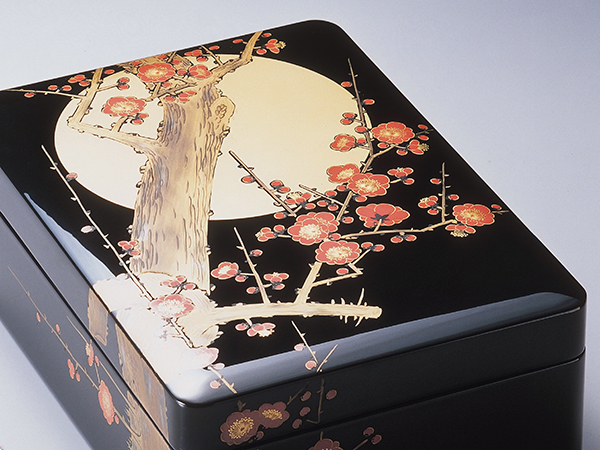
From the late 19th century, specialists in maki-e, decoration made by applying metallic powders such as gold or silver to designs drawn in lacquer, and chinkin, a technique in which designs are carved into a lacquered surface and filled with gold leaf or powder, were invited from Kyoto, Wajima, and Aizu. Their arrival expanded local production beyond the plain utilitarian bowls that had previously been central to the region.
Another major shift came after World War II. From the mid-20th century onward, Echizen producers adopted resin molding and synthetic coatings for lacquerware designed for repeated use in restaurants and hotels. Commercial production grew alongside the region's traditional wood-and-urushi work, establishing Echizen as one of Japan's major production areas for commercial lacquerware.
In 1975, Echizen lacquerware was designated a Traditional Craft by the Japanese government. Its present-day range—from traditional lacquered wood to commercial tableware—reflects the region's long-established specialist production system and its adaptation to changing uses.
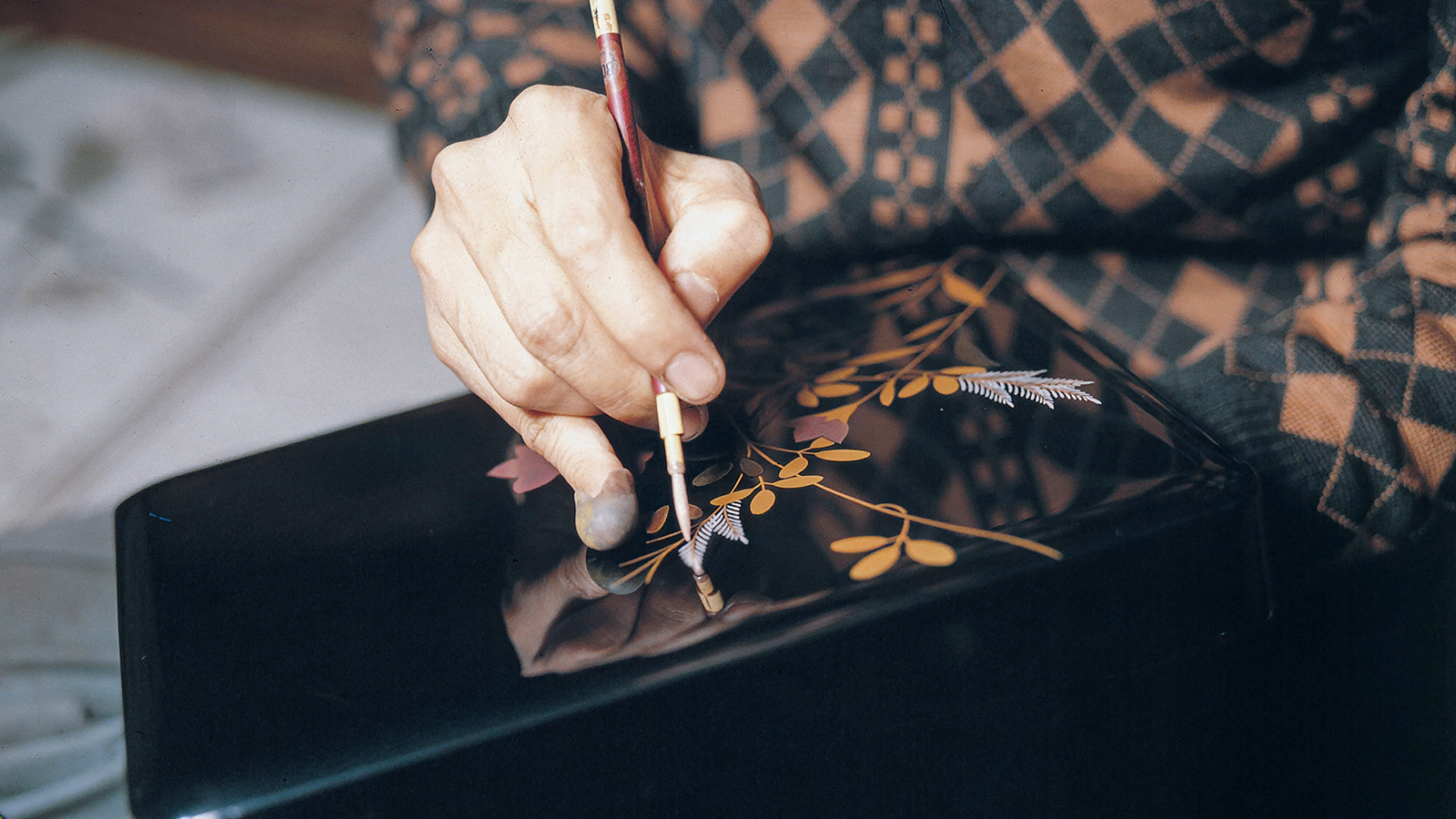
Echizen lacquerware is distinguished less by a uniform visual style than by the specialist skills behind its production. Turning a round bowl on a lathe and joining flat wooden panels to make a tiered box require different woodworking techniques. Surface preparation, lacquer application, and decoration form their own areas of expertise.
A piece can therefore pass through several specialist hands before it is finished. This division of labor allows knowledge to be concentrated within each stage of production and has helped the region work across different forms, materials, and intended uses.
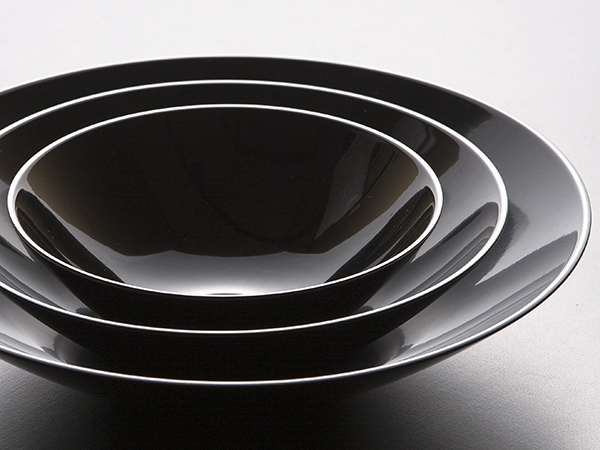
One traditional finish associated with Echizen is nuritate, also known as hana-nuri. In this method, the final coat of lacquer is left unpolished after it cures. Unlike finishes that are polished after the final coat, nuritate relies on the cured lacquer surface itself for its appearance.
On black or vermilion pieces, the result is the natural gloss of the lacquer rather than a surface produced by final polishing. Because the last coat is not subsequently polished to correct irregularities, applying it evenly is particularly important: brush marks, dust, or uneven thickness can remain visible on the finished surface.
Traditional wood-and-urushi Echizen lacquerware brings together several specialist processes. The exact methods vary by the form and finish of the piece.
1. Shaping the Wooden Base
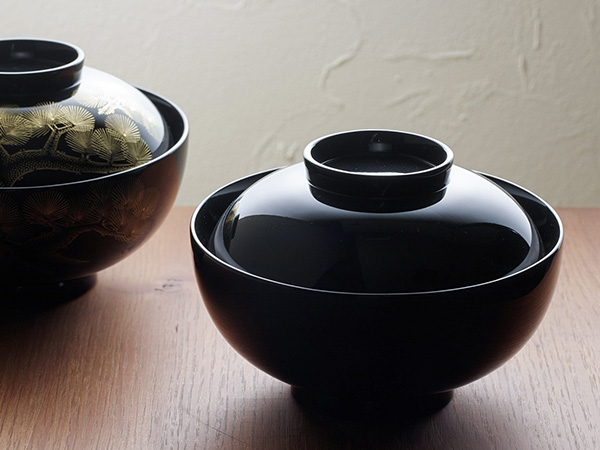
The first stage is creating the kiji, the wooden base that gives the object its form. Round pieces such as soup bowls are shaped by turning wood on a lathe. Tiered boxes and trays may be made by cutting and joining flat wooden panels, while some bento boxes use thin pieces of wood that are bent into shape. Each form calls for a different approach to woodworking before any lacquer is applied.
2. Preparing the Surface
The wooden base is prepared to create a smooth foundation for the layers of lacquer that follow. In traditional wood-and-urushi pieces, raw lacquer may be mixed with fine powders and applied in layers to fill small irregularities in the wood and even out the surface. The quality of this foundation affects how the subsequent lacquer layers appear.
3. Applying the Lacquer
Lacquer is applied in successive layers, typically progressing through undercoats, intermediate coats, and a final coat. Between stages, each layer is allowed to cure and the surface may be adjusted before the next is applied. Urushi does not simply dry through evaporation like many conventional paints. Its curing process is affected by temperature and humidity, so controlling the environment is part of working with the material.
With hana-nuri, the final coat is not polished after curing. The quality of that single surface therefore depends directly on how evenly the lacquer has been applied, with particular attention to visible brush marks, dust, and variations in thickness.
4. Adding Decoration When Required
Some Echizen lacquerware is left plain to emphasize the black or vermilion lacquer surface. Other pieces receive decorative work after lacquering.
Its variations are better understood through finishes and decorative techniques, as well as differences in material and intended use.