Pick up a thin wooden bowl and two details may register immediately: how little it weighs and how fine the rim feels against the lips. In a well-turned wooden bowl, these qualities begin with the shaping of the wood itself.
Yamanaka lacquerware is a Japanese lacquerware tradition centered on the Yamanaka Onsen district of Kaga, a city in Ishikawa Prefecture on the Sea of Japan coast of Japan's main island.
A saying in Ishikawa contrasts two of the prefecture's lacquerware traditions: “Wajima for lacquering, Yamanaka for the wooden base”. The distinction is not absolute—both traditions involve woodworking, lacquer, and decoration—but it points to the particular importance of woodturning in Yamanaka.
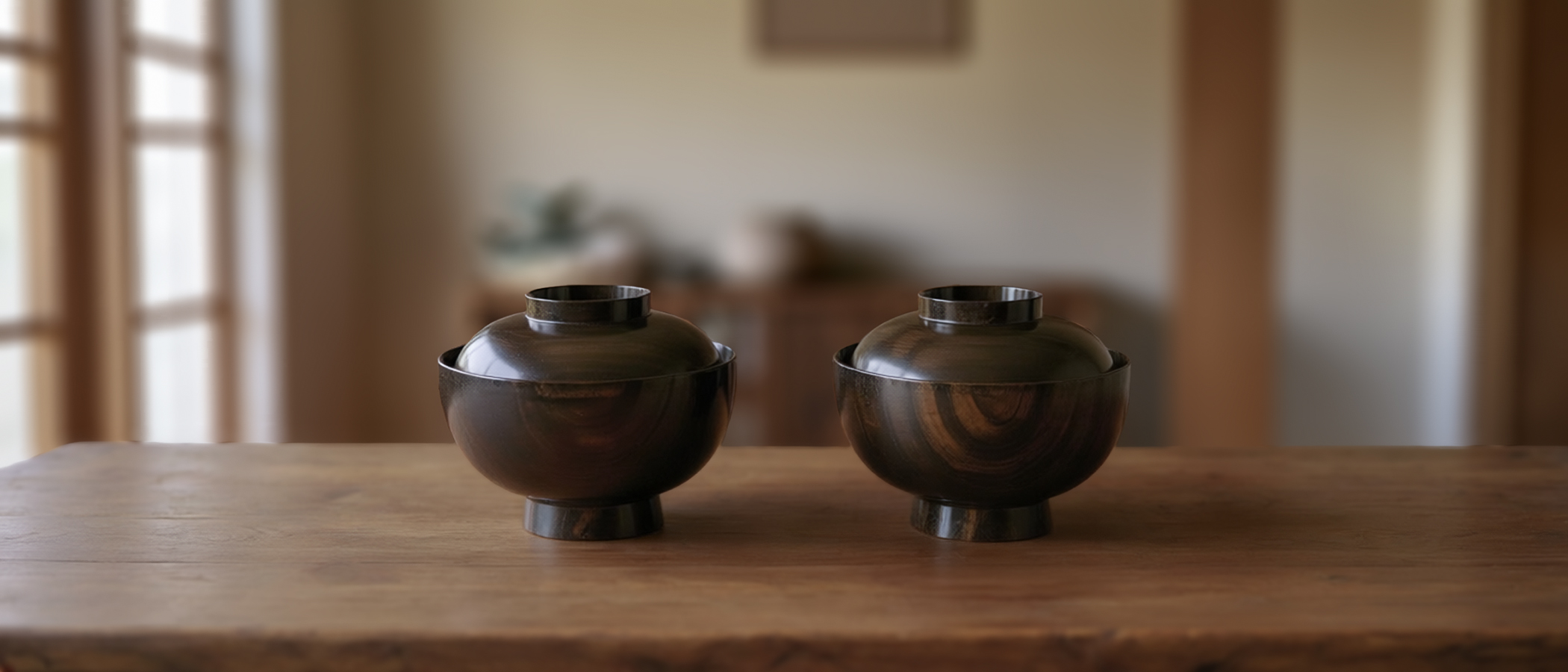
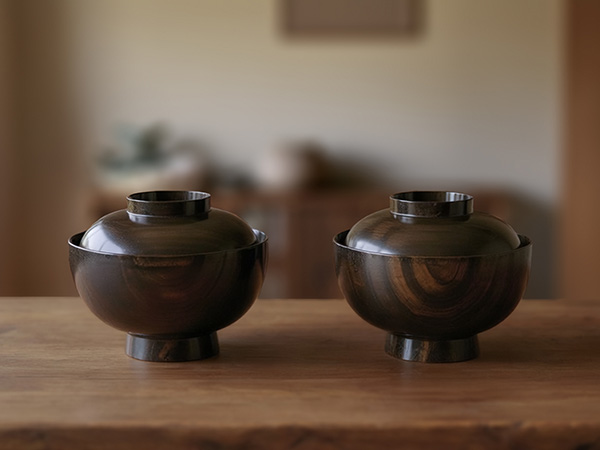
Two techniques make the role of the wooden base especially visible: fuki-urushi, a lacquer finish that reveals the wood grain, and decorative turning, which uses the lathe itself to create fine surface patterns.
The beginnings of Yamanaka lacquerware are generally traced to between 1573 and 1592, when groups of woodturners from the historic Echizen and Omi regions, in present-day Fukui and Shiga prefectures, are said to have settled around Masago, a mountain village upstream from present-day Yamanaka Onsen.
The surrounding area provided access to timber, while the settlement of specialist woodturners allowed techniques for shaping bowls, trays, and other round wooden objects on a lathe to accumulate locally.
By the 18th century, bowls and trays were being produced as souvenirs for people visiting Yamanaka's hot springs for extended stays. As visitors carried these objects home, Yamanaka's turned wooden ware reached users beyond the immediate production area.
From the late 19th into the early 20th century, lacquerers and maki-e decorators from areas including Aizu, in present-day Fukushima Prefecture, and Kyoto, were invited to Yamanaka. Maki-e is a decorative technique in which designs made with lacquer are finished with metallic powders such as gold or silver. Their arrival broadened production beyond the wooden base itself, adding new lacquer finishes and decorative techniques.
Decorative turning also developed during this period. Instead of carving a stationary surface, the woodturner holds a cutting tool against the rotating piece to create fine concentric grooves and lines. These patterns became another way for Yamanaka's lathe skills to remain visible in the finished object.
The precision of local woodturning also found an application in tea ceremony utensils. Objects such as natsume tea caddies, used to hold powdered matcha in the Japanese tea ceremony, require the lid and body to fit closely, making accurate shaping as important as thinness.
From the late 1960s onward, the production area also developed modern lacquerware using resin bases and urethane coatings. Traditional turned wood-and-urushi pieces and products made with modern materials continue to be produced within the same region.
In 1975, Yamanaka lacquerware was designated a Traditional Craft by the Japanese government.
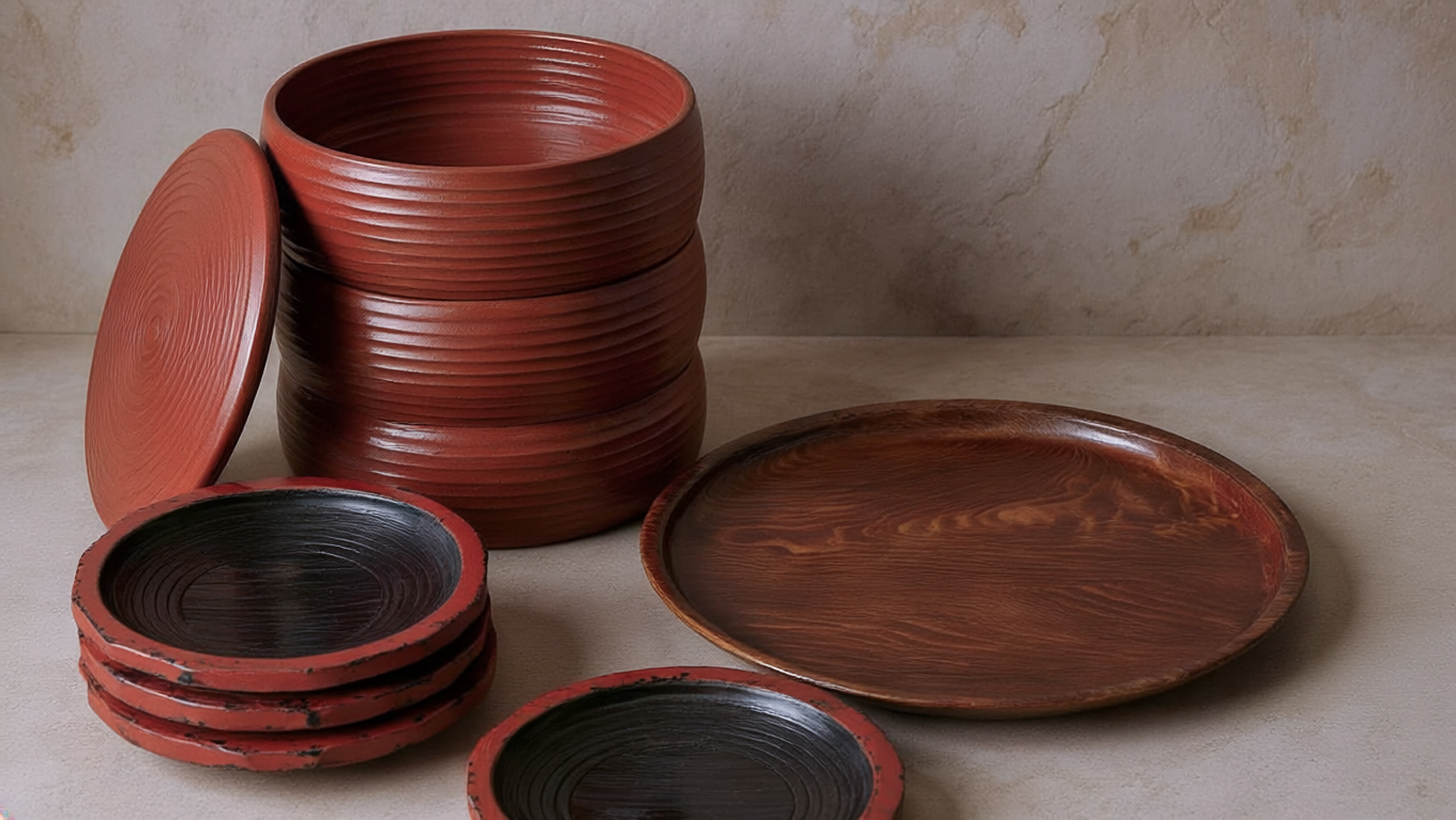
The defining feature of Yamanaka lacquerware is the precision of its wooden base. For many round pieces, this begins before the wood reaches the lathe.
Wood is commonly cut lengthwise along the direction of the trunk, a method used to reduce the distortion that can occur as timber dries. Because wood shrinks differently depending on grain direction, this orientation can help a circular vessel retain its shape more consistently than wood cut across the trunk. It does not prevent all warping or cracking, but it provides a more stable starting point for turning.
Once the wood has been dried and mounted on a lathe, the woodturner shapes both the outside and inside of the vessel. Grain, knots, and the individual character of the material influence how the piece is cut. Some bowls are turned to walls only a few millimeters thick, with the rim and foot adjusted as part of the same precise shaping process.
The result can be felt directly in use. A thinly turned wooden bowl may feel lighter than a ceramic bowl of similar size, while the thickness of the rim affects how the vessel meets the lips. These qualities vary by piece, but they show how decisions made at the lathe remain present in the finished object.
Woodturning can also become a decoration. In kashokubiki, or decorative turning, a cutting tool is held against the surface while the piece rotates, producing concentric lines and grooves. Some are extremely fine and closely spaced; others create a more pronounced texture across the surface.
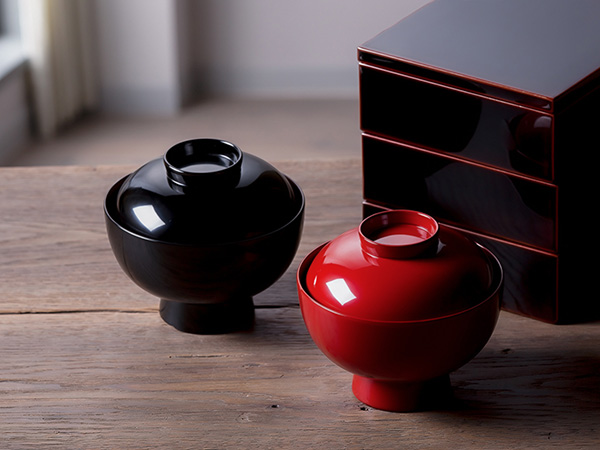
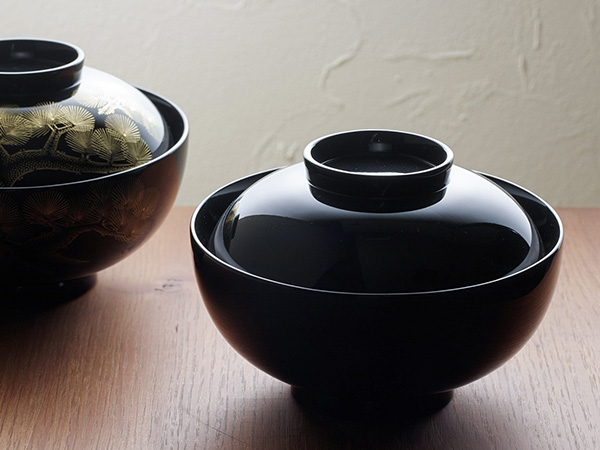
Finishes such as fuki-urushi leave the grain and turned surface visible beneath the lacquer. Other pieces are finished in opaque black or vermilion lacquer or receive additional decoration. Yamanaka lacquerware therefore has no single visual appearance: its defining qualities often lie beneath, or remain visible through, the final surface.
1. Selecting and Cutting the Wood
The maker first identifies a suitable section of timber from woods such as zelkova or horse chestnut. For many round vessels, the wood is cut lengthwise along the direction of the trunk. The grain, knots, and natural characteristics of the timber all influence where the material is taken from and how it will eventually be shaped.
2. Turning the Wooden Base
The wood is mounted on a lathe and rotated while cutting tools shape the vessel.
The first stage, rough turning, establishes the general form. The wood is then left to season and dry before final turning, when the rim, foot, walls, and overall thickness are adjusted more precisely. For thinly turned pieces, the walls may be reduced to only a few millimeters. The woodturner must work with the grain and condition of the individual piece while maintaining the intended form.
3. Adding Decorative Turning
Some pieces receive kashokubiki, decorative turning performed while the wooden form is still rotating on the lathe.
Rather than carving a finished stationary surface, the woodturner holds a cutting tool against the rotating piece to form concentric lines or grooves. Patterns vary in spacing and depth, from closely repeated fine lines to more visibly defined grooves.
4. Applying the Lacquer
For fuki-urushi, raw urushi lacquer is applied to the wooden surface, then the excess is wiped away before the lacquer cures. Repeating the process builds the finish while allowing the grain and turned surface beneath it to remain visible.
Other pieces are finished with layers of opaque lacquer, including black or vermilion. These finishes cover the grain and create a more uniform lacquered surface.
5. Adding Further Decoration
Some pieces, including certain tea ceremony utensils, receive additional decorative work.Maki-e uses lacquer with metallic powders such as gold or silver to create designs on the surface. Chinkin takes a different approach: a design is cut into the lacquered surface and the incised lines are filled with gold leaf or powder.
Yamanaka lacquerware is not defined by a single finish or decorative style. Its range is better understood through the different ways the turned wooden base can be finished or decorated.
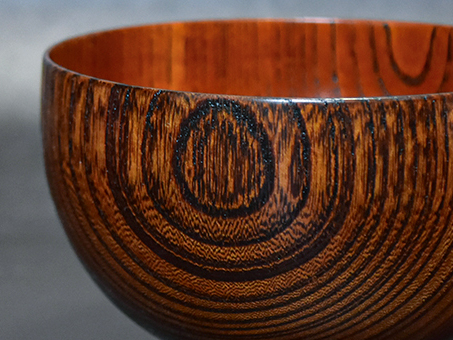
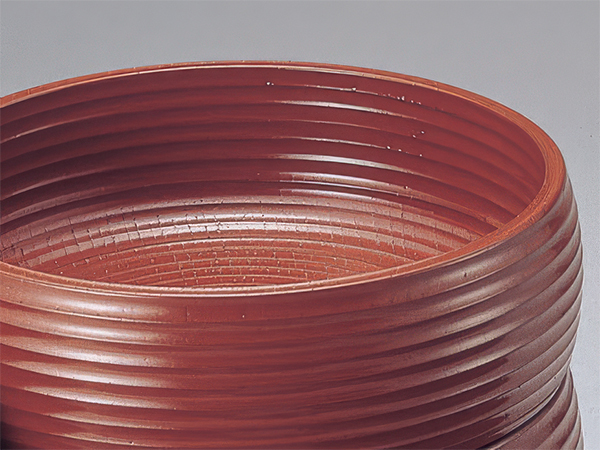
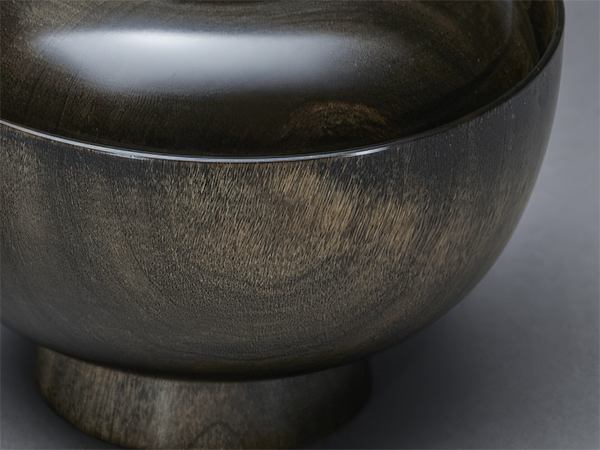
The production area makes objects for different parts of daily life, from soup bowls and plates to cups and tea utensils. Materials and finishes vary, but in traditional turned-wood pieces, the work of the woodturner remains closely connected to how the object is handled and used.