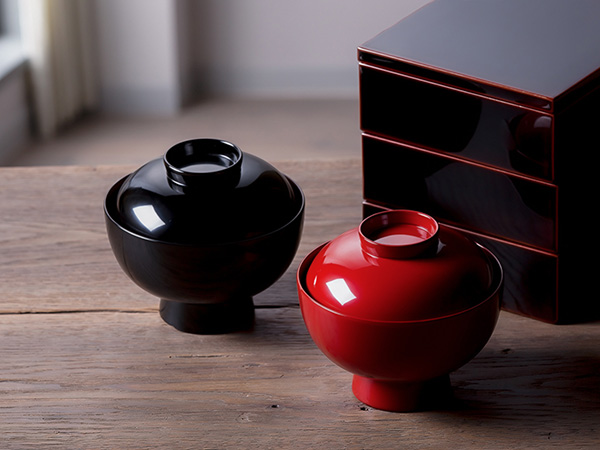
Lift a black lacquered soup bowl from the table and the first thing you notice may be how different it feels from ceramic tableware. Beneath the lacquered surface is a wooden base, built up with layers that are almost entirely hidden once the piece is finished.
Wajima lacquerware is a type of Japanese lacquerware produced in Wajima, a city on the Noto Peninsula in Ishikawa Prefecture.
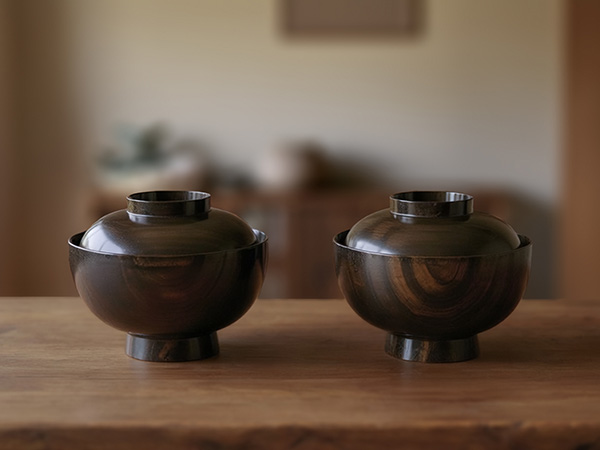
Its base is made from wood, with species selected according to the form and intended use. Zelkova is commonly used for objects such as bowls and trays, while Noto hiba cypress is used for bentwood and box-shaped pieces. Over the wooden base, artisans build layers of ground coating and urushi, a natural lacquer derived from the sap of the lacquer tree.
One of its most distinctive features is the preparation beneath the final lacquer surface. Vulnerable areas such as the rim and foot of a bowl may be reinforced with cloth, while layers of ground material containing jinoko—powder made from diatomaceous earth found around Wajima—are applied and polished before the final coats of lacquer.
Production is also divided among specialists. Woodworkers shape the base, ground-layer specialists prepare and reinforce it, lacquer coaters apply the surface layers, and some pieces are passed to maki-e or chinkin specialists for decoration. A single object may therefore move through several hands before it is finished.
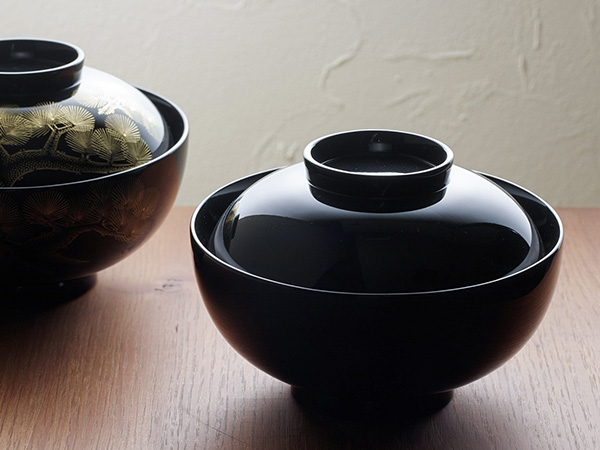
Wajima lacquerware received national recognition in Japan as a designated Traditional Craft in 1975, and its production techniques were designated an Important Intangible Cultural Property in 1977. Although decorated pieces often receive the most attention, plain black and vermilion bowls, trays, and other household objects are equally important to the tradition.
The exact origins of Wajima lacquerware remain uncertain. Some accounts connect its development to lacquer techniques brought from continental Asia, others to Negoro lacquerware from the Kii region, and still others to a local tradition of wooden bowls known as gouroku-wan, a type of wooden bowl historically made in the Noto region.
More reliable evidence appears in the fifteenth century. A roof plaque dated 1476 records lacquer work in the area, providing some of the earliest surviving evidence that lacquer production was already taking place around Wajima by that time.
Techniques associated with Wajima lacquerware as it is known today developed more clearly during the Edo period (1603-1868).
Between 1661 and 1673, artisans are believed to have begun using jinoko made from local diatomaceous earth in the ground layer. Together with cloth reinforcement, this became an important part of the multi-layer foundation beneath the lacquer surface.
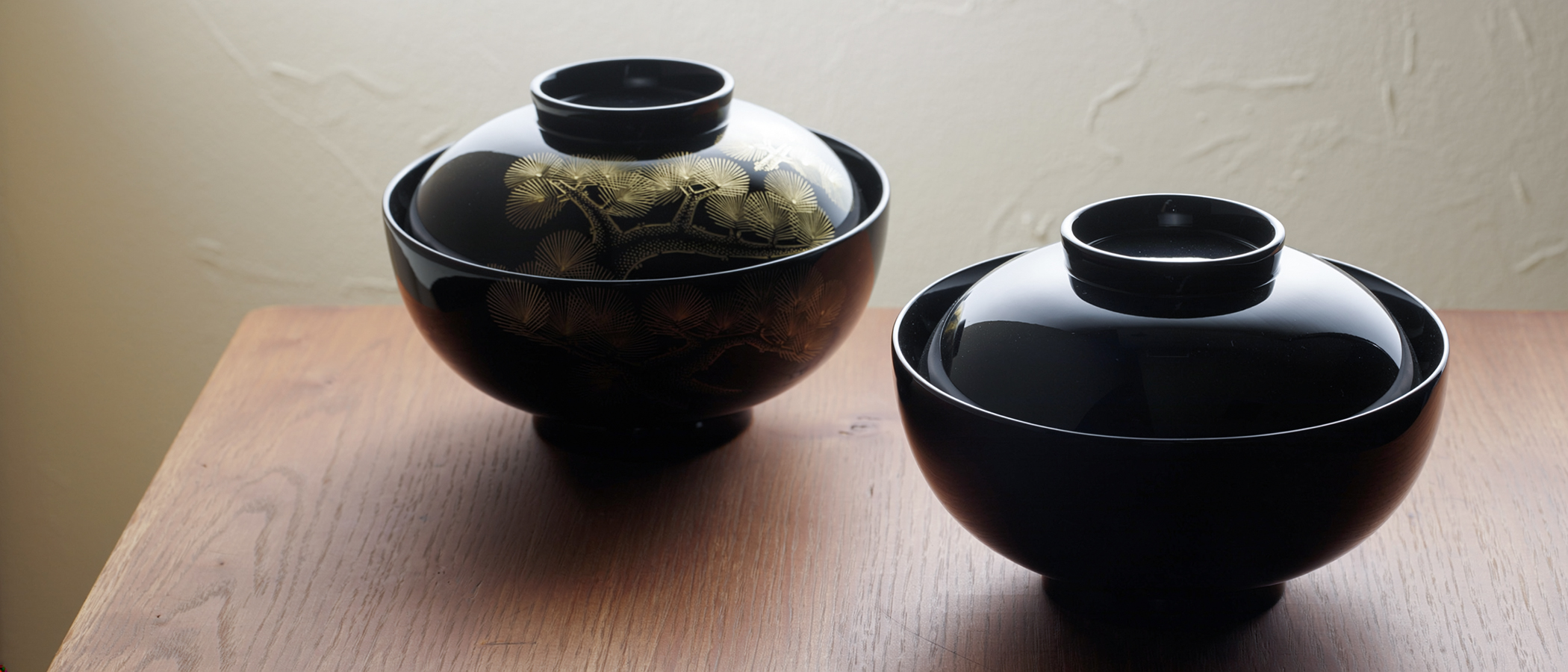
Decorative techniques developed later. Chinkin, in which a design is carved into cured lacquer and filled with gold leaf or powder, is thought to have become established in the region during the early eighteenth century. Maki-e, which uses lacquer and metal powders to build decoration on the surface, was introduced during the early nineteenth century.
Around the same period, Wajima lacquerware expanded through a distribution system known as wankō, in which bowls were sold through cooperative purchasing groups. This helped extend the reach of Wajima-made lacquerware beyond the immediate production area and supported the growth of a specialized regional industry.
In the modern era, the transmission of these skills became increasingly formalized. The Ishikawa Prefectural Wajima Institute of Lacquer Arts opened in 1967 to train future lacquer artisans. National recognition followed with the Traditional Craft designation in 1975 and Important Intangible Cultural Property designation in 1977.
The industry has also faced significant disruption. The Noto Peninsula earthquake of January 2024 damaged workshops and production facilities across Wajima. Temporary workshops were subsequently established, and production continues, although rebuilding remains ongoing. Temporary workshops were subsequently established, and production continues, although rebuilding remains ongoing. Because Wajima lacquerware depends on a network of specialized craftspeople, the condition of the wider production system remains an important part of the industry's recovery.
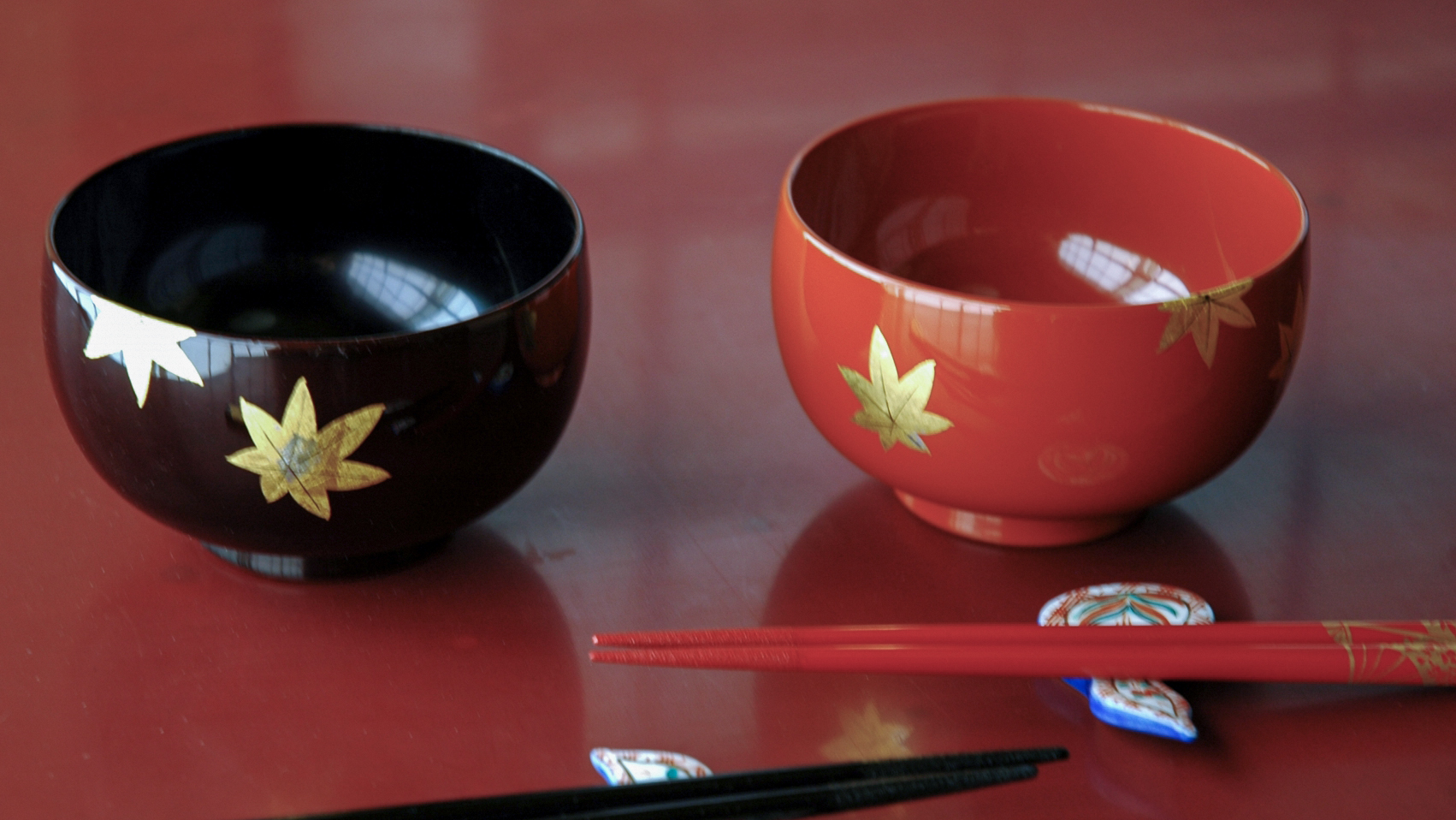
What distinguishes Wajima lacquerware is not simply the visible lacquer surface. Its structure begins with the wooden base and the layers built over it.
Different woods are used for different forms. Once the base has been formed, vulnerable areas such as rims and feet may be strengthened using nunokise, a technique in which cloth is attached with lacquer.
Over this reinforced base, artisans apply a ground layer containing jinoko, a powder produced from diatomaceous earth found around Wajima. Different grain sizes are used at different stages, with each layer applied, hardened, and polished before the next is added. This multi-stage ground preparation, known as hon-kataji, together with cloth reinforcement, is widely cited as one of the technical foundations of Wajima lacquerware's robust construction.
Urushi (lacquer) itself behaves differently from ordinary paint. It does not harden primarily through solvent evaporation. Instead, enzymes within the sap contribute to an oxidative polymerization process, so freshly coated pieces are placed in an environment where temperature and humidity can be controlled while the lacquer cures.
The surface may also change gradually with use and environmental conditions. Handling, humidity, temperature, and care can all affect how lacquer looks and feels over time, though those changes vary by piece.
Wajima lacquerware is therefore best understood as a layered structure rather than a decorative surface alone. The wood, reinforcement, ground preparation, lacquer coating, and optional decoration each contribute something different to the finished object.
The number of production steps varies depending on how they are counted. One official description identifies around 30 stages in the lacquering process, while Wajima's industry association counts 124 detailed processes when the full sequence from wooden base preparation to decoration is included. In either case, the finished object is the result of many specialized steps rather than a single coating of lacquer.
1. Preparing the Wooden Base
Production begins with selecting wood suited to the intended object.
Zelkova is commonly used for bowls and trays, while Noto hiba cypress is often chosen for bentwood and box-shaped objects. The wood is shaped with turning tools or other woodworking techniques until the final form has been established.
2. Reinforcement and Ground Preparation
Areas that are likely to receive stress, such as the rim and foot of a bowl, may be reinforced using nunokise, in which cloth is attached with urushi lacquer. Multiple layers of ground coating containing jinoko are then applied. Different particle sizes are used at different stages, with each layer drying and being polished before the next is added. This layered foundation provides structural support beneath the lacquer surface.
3. Lacquer Coating
After the ground layers have been completed, successive coats of urushi are applied.
Rather than drying like conventional paint, urushi cures through a chemical reaction that requires carefully controlled temperature and humidity. Pieces are therefore placed in a humidity-controlled curing chamber known in Japanese as an urushi-buro ("lacquer curing chamber").
Each layer is adjusted so that colour, thickness, and brushwork remain consistent across the surface.
4. Decoration
Not every piece receives decorative work. Plain black and vermilion finishes are an important part of the tradition, but some objects are completed with maki-e or chinkin.
5. Inspection and Completion
Once all coating and decoration have been completed, the finished object is inspected before leaving the workshop.
The final appearance reflects not only the lacquer itself but also the precision of the wooden base, the quality of the ground preparation, and the coordination between multiple specialists throughout production.
Pieces may be distinguished by surface finish, decorative technique, intended use, or the choices of individual workshops. The following examples represent three common surface expressions rather than three fixed categories.
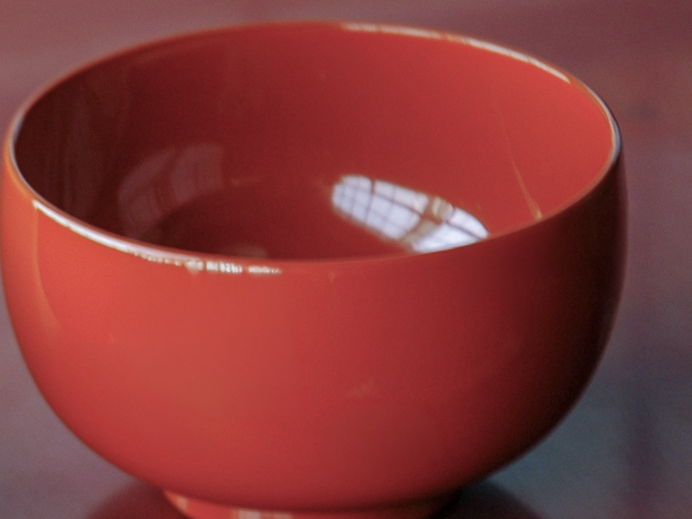
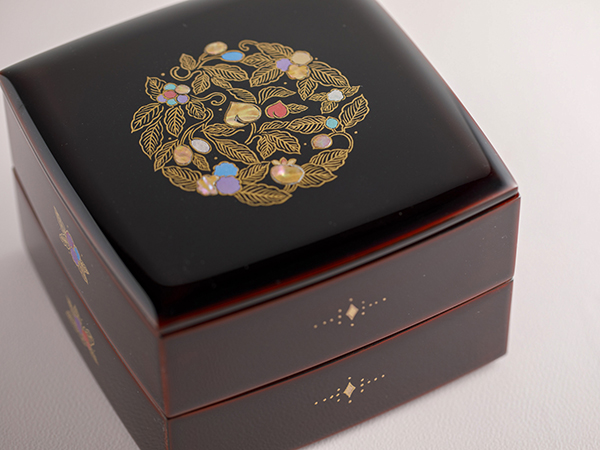
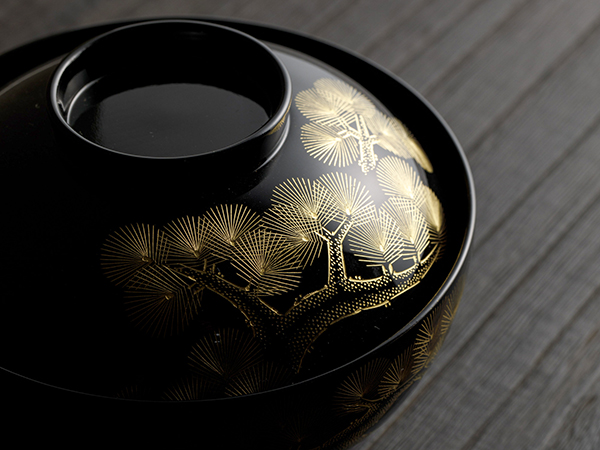
Wajima lacquerware developed as practical household equipment rather than as display objects alone. Understanding how the objects were intended to be used helps explain why so much attention is given to their construction beneath the lacquer surface.