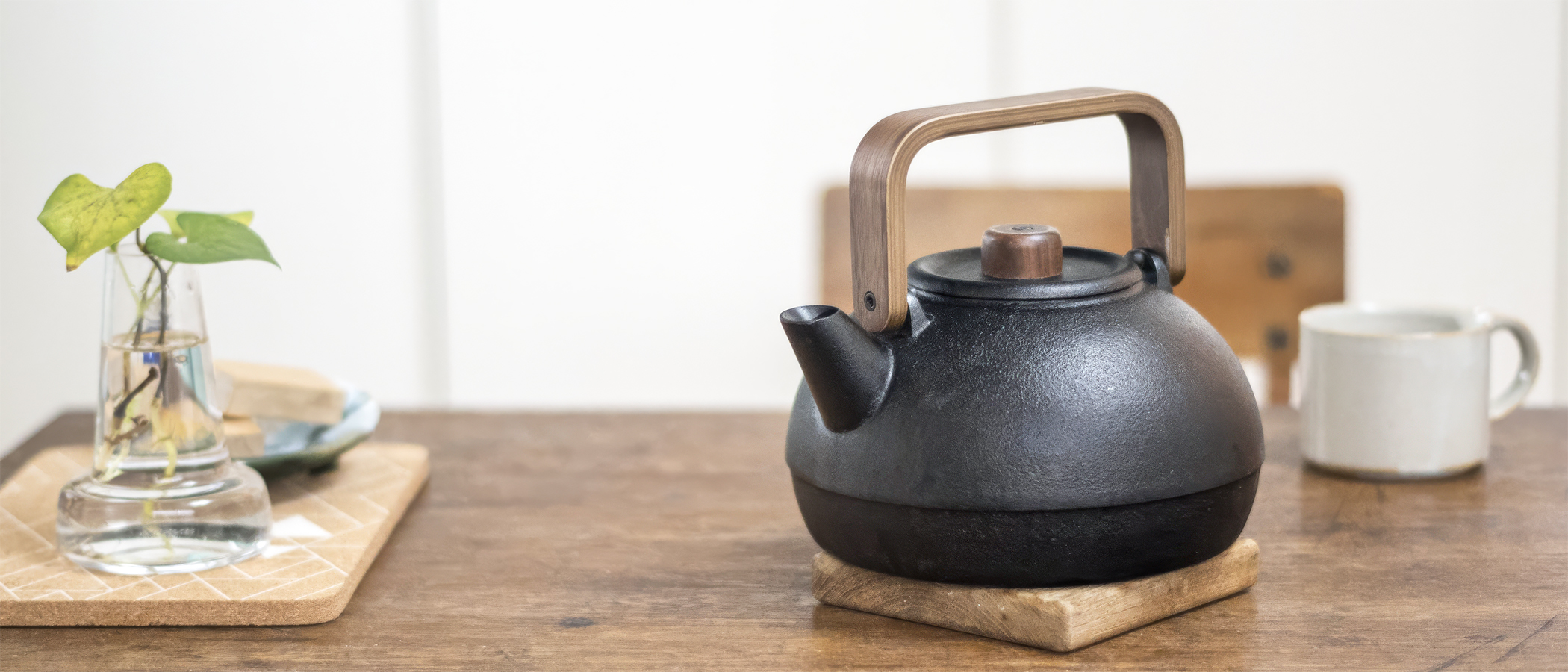
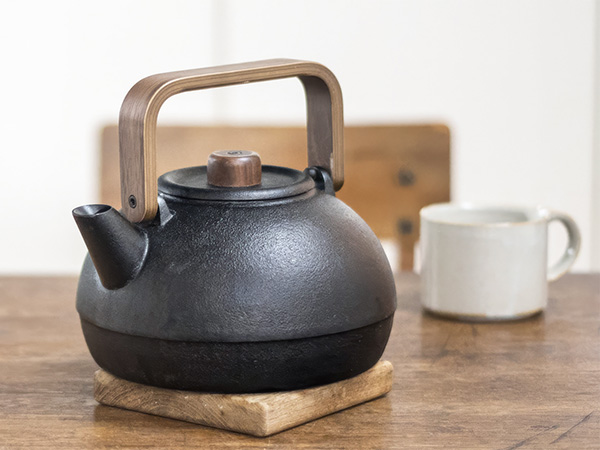
Fill a tetsubin, a Japanese cast iron kettle, with water and set it on the stove. As the water nears a boil, a low sound may rise from beneath the lid.
Nambu ironware is a regional tradition of cast ironwork centered on Morioka and Oshu in Iwate Prefecture, northern Japan. Its shared foundation is sand-mold casting: molten pig iron is poured into a mold formed from packed sand and clay.
From that process come objects with very different purposes. A tetsubin is a kettle for boiling water. A cast iron teapot is designed for steeping tea and is typically lined with enamel. Nambu ironware also includes cast iron cookware such as pots and pans. Surface treatments and compatible heat sources vary by product, so care and heating instructions cannot be generalized across the entire category.
What connects these objects is not one single use, finish, or shape, but a regional casting tradition that has been adapted to different kinds of everyday tools.
Today's Nambu ironware brings together two casting traditions with different histories: one centered on Morioka and another in the Mizusawa area of present-day Oshu.
In Morioka, iron casting developed in connection with tea culture. In the mid-17th century, the local feudal lord invited kettle makers from Kyoto to produce iron kettles for the tea ceremony. By the late 18th century, smaller vessels fitted with a handle and spout had developed into the tetsubin, extending casting skills associated with formal tea equipment into an everyday tool for boiling water.
Mizusawa followed a different path. According to local historical accounts, ironworkers were brought from the historic Omi region, in present-day Shiga Prefecture in the late 11th century, during the period of the Oshu Fujiwara clan. Casting there developed around practical objects such as agricultural tools, pots, and kettles.
The two areas therefore arrived at ironworking through different needs: tea equipment in Morioka and everyday tools in Mizusawa.
Production faced severe disruption during the first half of the 20th century, when wartime controls on metal forced many workshops to suspend or stop manufacturing. Some production knowledge continued to be maintained, and casting resumed in the postwar period.
In 1975, the Morioka and Mizusawa traditions were brought together under the name Nambu ironware when they received recognition through Japan's national Traditional Craft system.
Production has continued to change since then. Traditional black tetsubin remain part of the region's output, while manufacturers also make induction-compatible products and enamel-lined teapots in a wider range of colors. These contemporary forms do not replace the older casting traditions; they show how the same production region has adapted different iron objects to changing kitchens and uses.
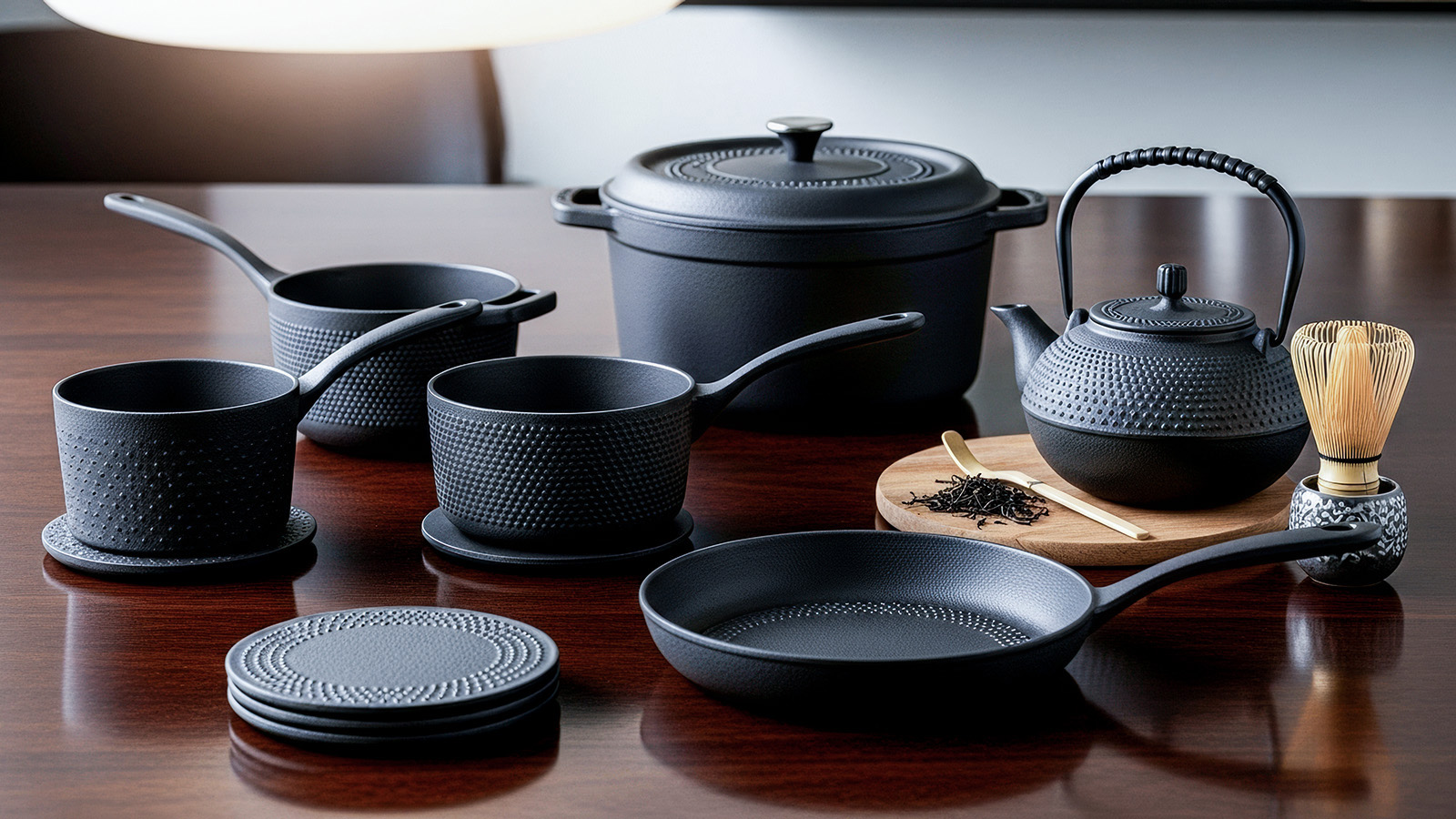
One of the most immediate characteristics of Nambu ironware is its high heat capacity. Once heated, a cast iron pot or kettle tends to lose heat gradually rather than cooling immediately.
The casting process is also visible on the surface. Sand from the mold can leave a slightly textured iron skin, while some pieces carry a pattern of closely spaced raised bumps.
This pattern is known as arare, meaning hailstones. Rather than being added to the finished iron, the bumps are formed in the mold before casting. In traditional production, individual pins are pressed into the mold while it is still workable, creating the repeated pattern that appears after molten iron fills the form.
A tetsubin receives an interior treatment known as kanakedome. The kettle is heated to a high temperature during production, forming a protective layer of iron oxide on its inner surface.
The process is intended to reduce the formation of reddish rust when bare iron repeatedly comes into contact with water. It is not the same as coating the interior with enamel, and it should not be confused with seasoning a Western cast iron pan with oil.
Repeatedly boiling water in a tetsubin can gradually leave a whitish or grayish mineral scale on the interior. It forms as minerals in the water, including calcium and magnesium, are deposited through repeated heating. This is different from reddish rust. Rather than treating the pale mineral layer as dirt and scrubbing it away, it is generally left in place because it can help cover the exposed iron and limit further rust formation.
1. Creating the Design and Pattern
Production begins by determining the shape and dimensions of the finished object.
For pieces with surface decoration, patterns are formed at the mold-making stage. The familiar arare, or hailstone pattern, is created by pressing individual points into the surface of the mold. Because the pattern is built into the mold, it becomes part of the cast iron itself rather than decoration applied afterward.
2. Preparing the Outer Mold
A mixture of sand and clay is packed around a pattern to form the outer mold. The mold must reproduce both the overall form and finer surface details of the finished object. Once shaped, it is dried and prepared to withstand the heat of molten iron.
3. Creating the Inner Core
Hollow objects such as tetsubin require a separate inner core. The core is positioned inside the outer mold, leaving a carefully controlled space between the two. Molten iron will fill this space, so the distance between the core and mold determines the thickness of the finished kettle wall.
4. Pouring the Molten Iron
Pig iron is melted at high temperature and poured into the completed mold.
The iron flows into the narrow space around the core and takes on the form and surface texture prepared in the mold. After the metal has cooled and solidified, the mold is broken away to reveal the cast object.
5. Finishing the Surface
Rough edges and casting residue are removed, and the surface is finished according to the intended product.
Traditional pieces may be treated with black lacquer and an iron-based traditional coloring solution, while contemporary products may use other surface finishes depending on their design and intended use.
6. Treating the Interior of a Tetsubin
For a tetsubin, the interior undergoes kanakedome, a high-temperature treatment that creates a protective oxide layer on the iron. This is an important distinction from an enamel-lined cast iron teapot. The tetsubin remains an iron vessel intended for boiling water; the protective layer helps control rust without sealing the interior beneath glass-like enamel. Handles, lids, and other components are then fitted as required by the individual design.