Set a glass down on a kumiko coaster near a window, and light passing through the gaps between the wooden pieces casts a small geometric shadow across the table. As the angle of the sun shifts, the outline and length of that shadow change with it.
Kumiko is a Japanese woodworking technique in which thin pieces of wood are precisely cut and fitted together to create geometric lattice patterns. The technique exists in different woodworking traditions across Japan; Okawa Kumiko refers specifically to the regional tradition that developed in and around Okawa, a city in Fukuoka Prefecture in southern Japan.
Okawa's long history of furniture and architectural joinery provided the material knowledge, cutting skills, and production base behind the craft. Cedar and cypress are commonly used, although the material varies by product and design. Other woods can include jindai cedar—cedar naturally preserved underground for long periods—as well as sawara cypress, agathis, and walnut.
The pattern is constructed within a structural base frame known as jigumi. Small angled wooden pieces called ha are then shaped to fit into its openings. In traditional pattern construction, these pieces can be held in place primarily by the accuracy of their cuts and the friction between adjoining surfaces, without nails.
Historically, kumiko was used in architectural fittings such as shoji, translucent sliding screens that admit light while dividing a room, and ranma, openwork transom panels positioned above doors or partitions to allow light and air to pass. In Okawa, those woodworking skills have since been adapted to wall panels, lighting, table objects, and other contemporary products.

Okawa's woodworking history is closely connected to the Chikugo River, which flows through the region before reaching the Ariake Sea.
From roughly the 14th to the early 17th century, shipbuilding developed along the river. The cutting and joining skills used by shipwrights were later applied to furniture and architectural woodwork. The river also provided a route for transporting timber from upstream areas, helping Okawa develop into a center for woodworking.
During Japan's Edo period (1603–1868), craftspeople specializing in architectural fittings established themselves in the area. Kumiko developed within this broader joinery culture, particularly in shoji screens and ranma transom panels, where wooden latticework could provide decoration while also admitting light and partially screening the view.
From the late 19th century into the early decades of the 20th century, demand for detailed architectural fittings grew alongside Japanese-style residential construction. Craftspeople refined more intricate patterns, including asa-no-ha, a geometric motif based on the shape of a hemp leaf, and rindo, a motif named after the gentian flower.
The postwar expansion of Japanese-style housing supported further growth in Okawa's joinery industry. From the 1990s onward, however, changes in residential layouts and the decline of traditional tatami rooms reduced demand for shoji, ranma, and other conventional fittings.
Kumiko makers responded by adapting the same cutting and fitting skills to different scales and settings. Wall panels, partitions, pendant lights, table lamps, coasters, and products combining wood with materials such as acrylic expanded the technique beyond traditional architecture.
One contemporary example is the use of kumiko in the interior of Seven Stars in Kyushu, a Japanese luxury train launched in 2013. It is one example—not a definition of the craft—of how a technique developed through architectural joinery has entered newer interior environments.
Today, Okawa Kumiko continues to draw on the region's woodworking base while makers adapt production to contemporary products and spaces. Modern machinery may be used in parts of production, while the final fitting of intricate patterns can still depend on the craftsperson's judgment of angle, pressure, and the behavior of individual pieces of wood.
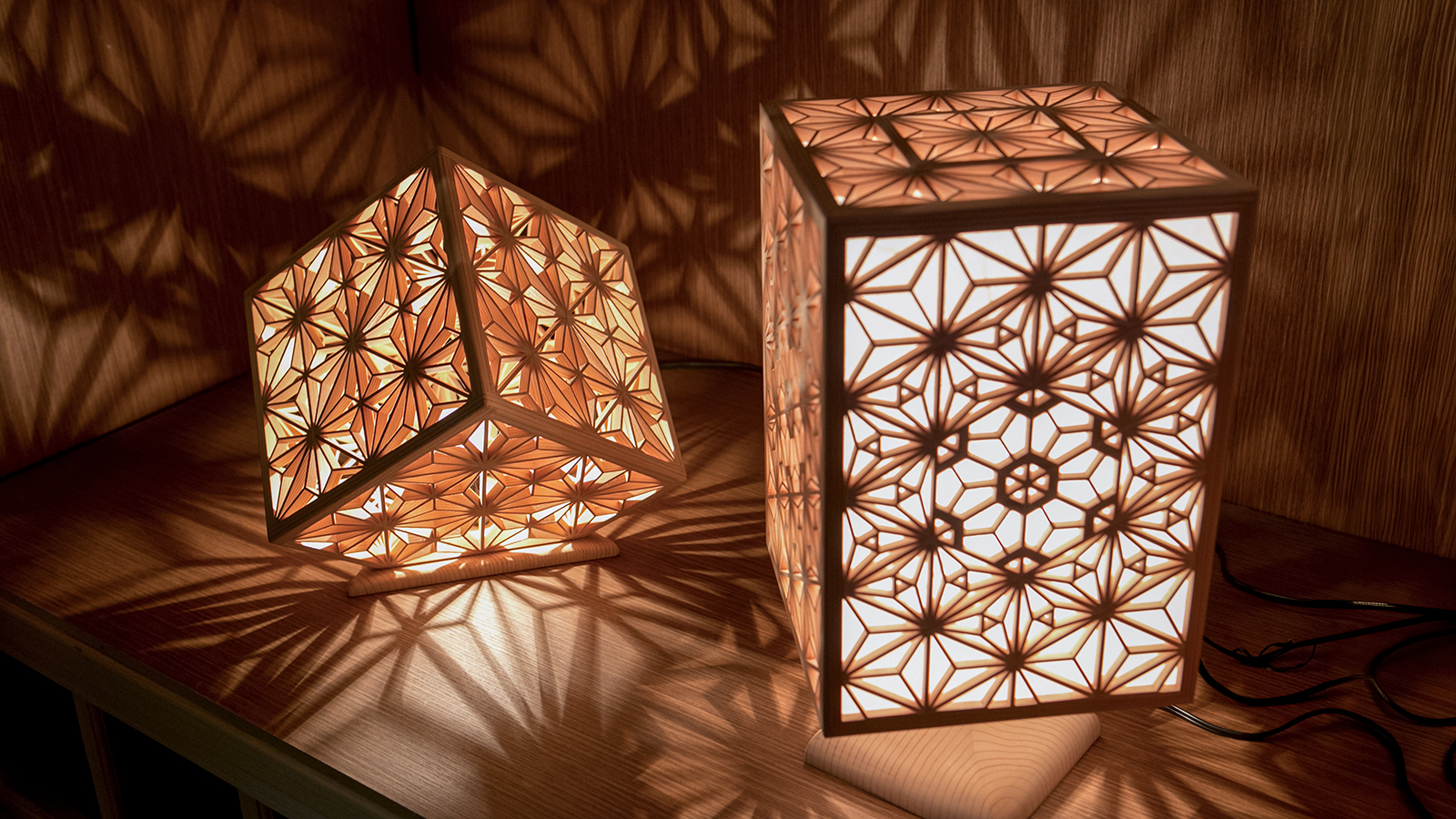
Three characteristics help explain how Okawa Kumiko works: the precision of its fitted wooden pieces, the variety of patterns that can be built from them, and the way those patterns regulate light and visibility.
Precision Through Fit
A kumiko pattern is assembled from many small wooden components rather than carved from a single board.
The basic structure begins with a larger frame divided into geometric openings. Within it, small pattern pieces are cut at specific angles and fitted one by one. The cuts must meet closely enough for adjoining pieces to support one another and form a stable lattice structure.
What matters is the relationship between the pieces: a small difference in width or angle can affect how neighboring components meet and whether the intended pattern holds its form. For intricate sections, the final fit depends on practiced hand judgment. Too much pressure can damage a thin component; too little can leave the structure unstable.
Patterns Built From Structure
Kumiko includes a broad repertoire of geometric patterns rather than one defining design.
One of the best-known is asa-no-ha, or hemp leaf, a repeating geometric motif built around a hexagonal structure. Another is rindo, named after the gentian flower. Contemporary makers may also develop original patterns or combine established motifs into larger compositions.
The pattern is not added to the surface afterward. It emerges from the structure itself—from the shape, angle, spacing, and arrangement of the individual wooden pieces.
Filtering Light and Sightlines
The spaces between the wooden pieces give kumiko another function.
When light passes through the lattice, the pattern can cast shadows whose length and definition change with the position and intensity of the light. A panel lit from behind reads differently from the same pattern seen in ordinary daylight.
In architectural fittings, these openings also affect visibility. A shoji screen or ranma panel can admit light while interrupting a direct line of sight, allowing the wooden lattice to work as both a visual pattern and a way of adjusting the boundary between spaces.

1. Selecting and Preparing the Wood
The process begins with selecting wood suited to the intended product and pattern. Cedar and cypress are commonly used, although makers may work with other species depending on color, grain, strength, and design.
2. Cutting the Strips
The prepared wood is cut into slender components of consistent dimensions. Accuracy at this stage matters because even a small difference in width or thickness can affect how pieces meet later.
3. Building the Base Frame
The larger lattice structure, known as jigumi (a base frame), is assembled first. Its intersecting wooden strips divide the surface into repeated geometric openings. This frame establishes the dimensions and rhythm within which the more detailed pattern will be built.
4. Shaping the Pattern Pieces
Smaller pieces, known as ha (leaves), are cut to the angles required by the chosen pattern. Rather than carving a motif into a finished surface, the craftsperson creates the motif by shaping each component so that it fits against its neighbors.
5. Fitting the Pattern by Hand
The small pattern pieces are inserted into the openings of the base frame one by one.
In traditional pattern construction, accurately shaped pieces can be held together primarily through their geometry and the friction between adjoining surfaces. The craftsperson adjusts the fit by feel, applying enough pressure to secure the pieces without damaging the thin wood.
* Outer frames and some contemporary products may use glue or additional materials depending on their construction and intended use.
6. Finishing and Inspection
Once the pattern is assembled, the surface and edges are checked and finished according to the product. The completed work is inspected for gaps, alignment, surface condition, and overall stability. For contemporary products, the kumiko section may then be incorporated into a lamp, wall panel, partition, coaster, or another object.
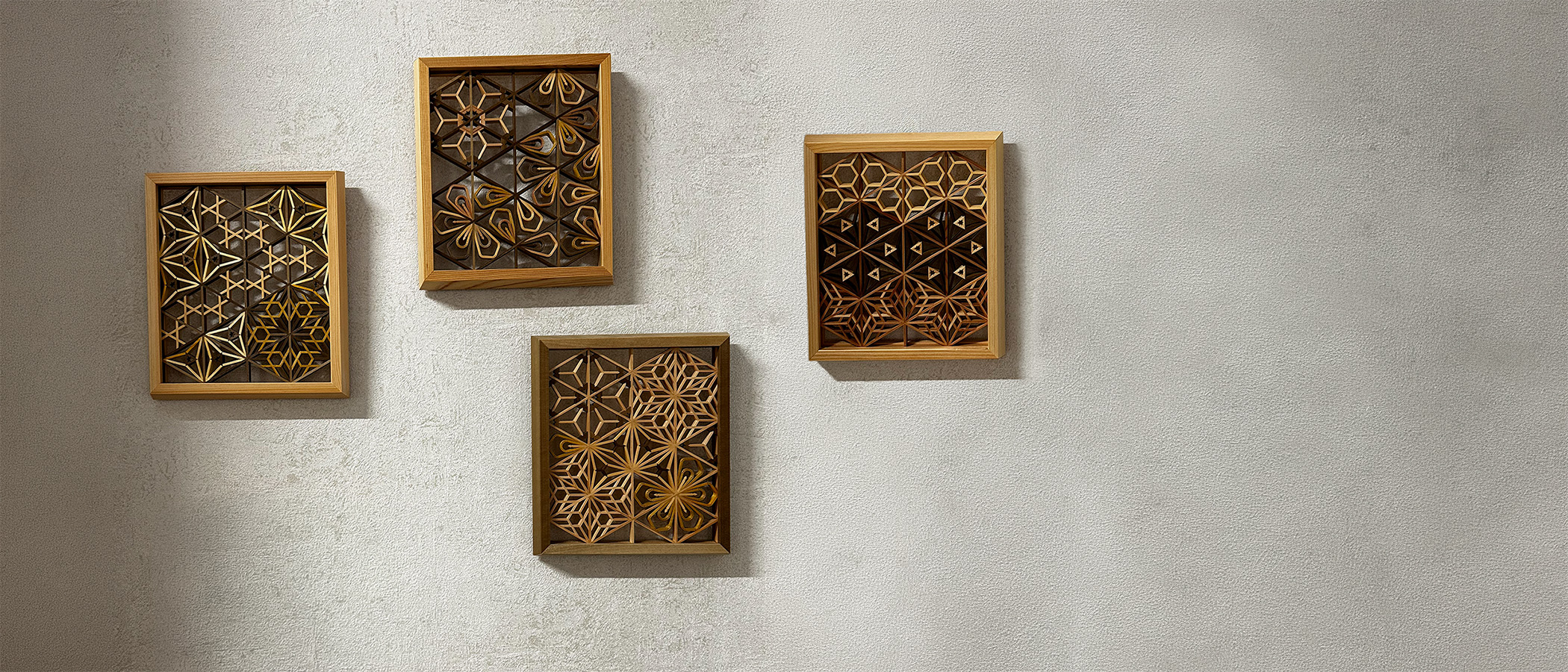
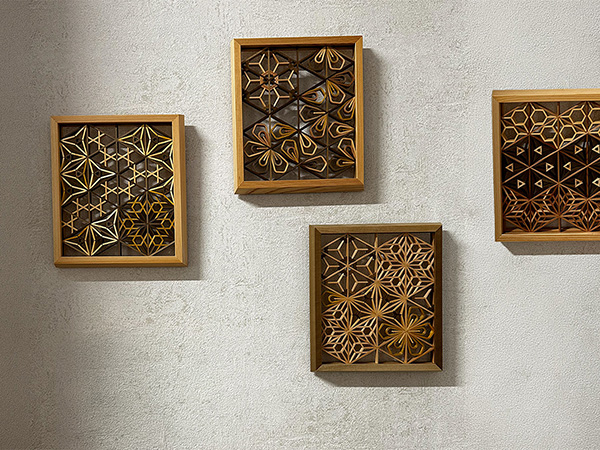
Kumiko patterns can be constructed in many ways, and individual workshops may develop their own compositions. The examples below show three ways geometric structure can shape the appearance of the finished work.


Kumiko changes depending on where it is placed and how light reaches it.