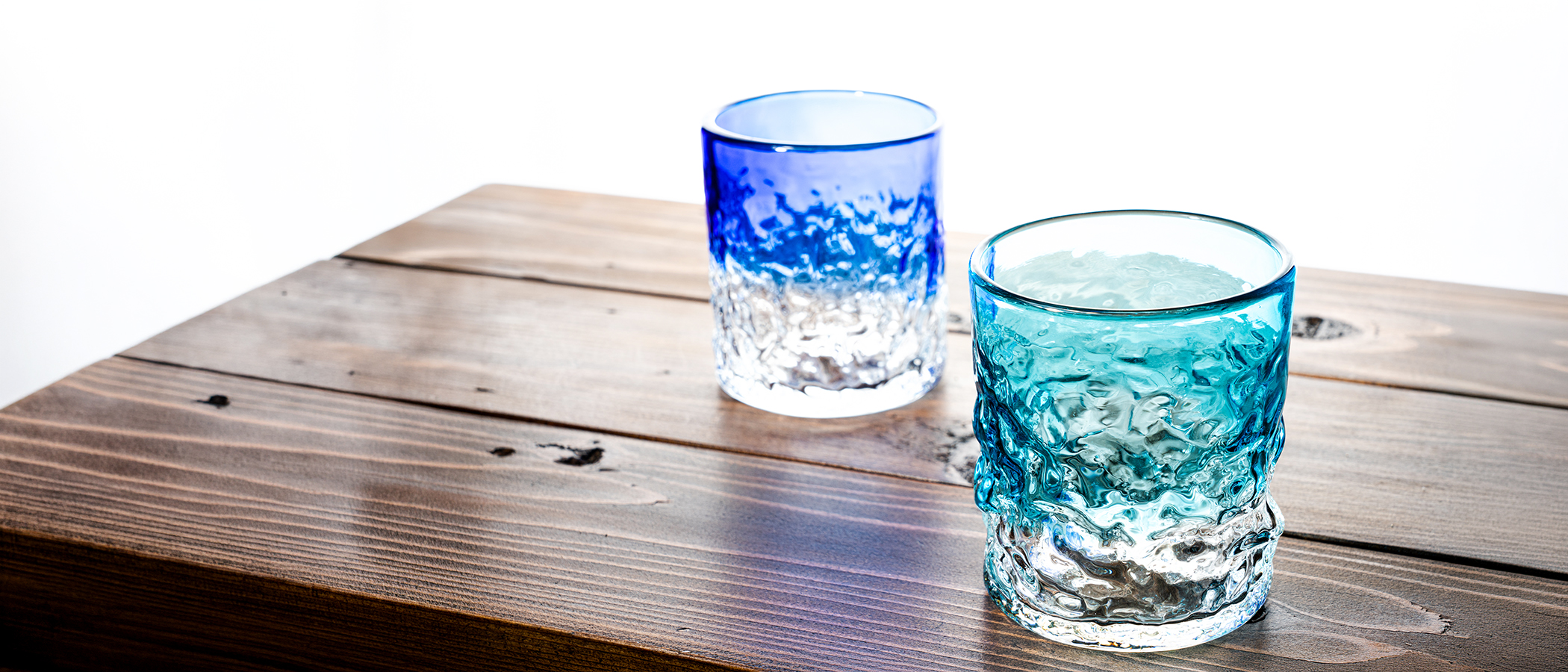
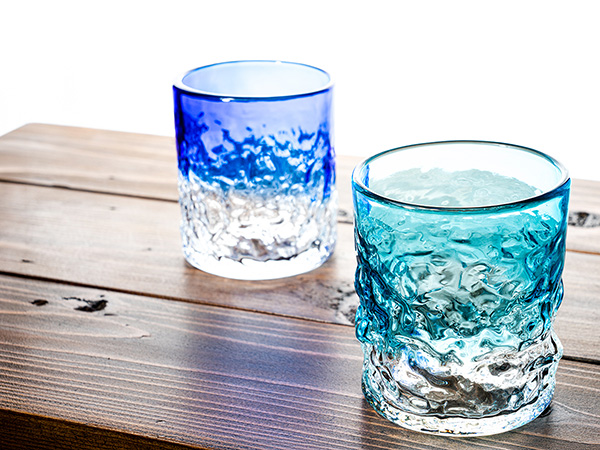
Pour cold water into a glass and set it by a window, and bubbles inside the glass, along with small differences in thickness, can appear as shadows and reflections that shift with the light.
Ryukyu Glass is a blown-glass tradition made on Okinawa's main island, shaped through techniques including free-blowing and mold-blowing. The bubbles, thickness and color often associated with it today are connected to a particular chapter of Okinawa's postwar history, when glassmakers began reusing discarded bottles at a time when other raw materials were scarce.
Most Ryukyu Glass is made from soda-lime glass. Contemporary production is more varied: some workshops continue to use recycled glass, while others use freshly compounded glass made from raw materials such as silica sand, and some use both.
In 1998, Ryukyu Glass was officially designated as a Traditional Craft by Japan's Ministry of Economy, Trade and Industry, a national recognition tied to defined requirements for traditional techniques, materials and production.
Glassmaking in Okinawa predates the modern form of Ryukyu Glass. By the Meiji period (1868–1912), glass workshops were operating in Naha, producing objects for everyday use.
World War II brought major destruction to Okinawa, including its glassmaking facilities. In the years that followed, workshops were rebuilt under conditions of material scarcity.
Discarded bottles from US military facilities became an important source of raw material. Brown beer bottles, green soft-drink bottles and other used glass could be crushed, remelted and formed into new objects.
The recycled material was not always perfectly clear or uniform. Differences in the original bottles and the remelting process could produce variations in color, thickness and bubbles. Rather than disappearing from the craft as production developed, some of these characteristics gradually became associated with the visual identity of postwar Okinawan glassware.
During the 1950s and 1960s, American servicemembers and their families became an important customer base. Glassmakers also began producing forms such as wine glasses and pitchers in response to changing patterns of demand. The craft therefore developed not only through available materials but through the everyday objects people wanted to use.
Bubbles followed a similar transition. Some bubbles appeared unintentionally during postwar production. Over time, however, makers began incorporating bubbles deliberately as a decorative feature, developing techniques such as awa-mori, literally “adding bubbles.”
Okinawa remained under US administration after the war until 1972, when it was returned to Japanese administration. The reversion, followed by the Okinawa International Ocean Expo in 1975, brought another period of change as tourism and demand for locally made objects expanded.
Ryukyu Glass continued to develop from postwar necessity into a recognized regional craft.
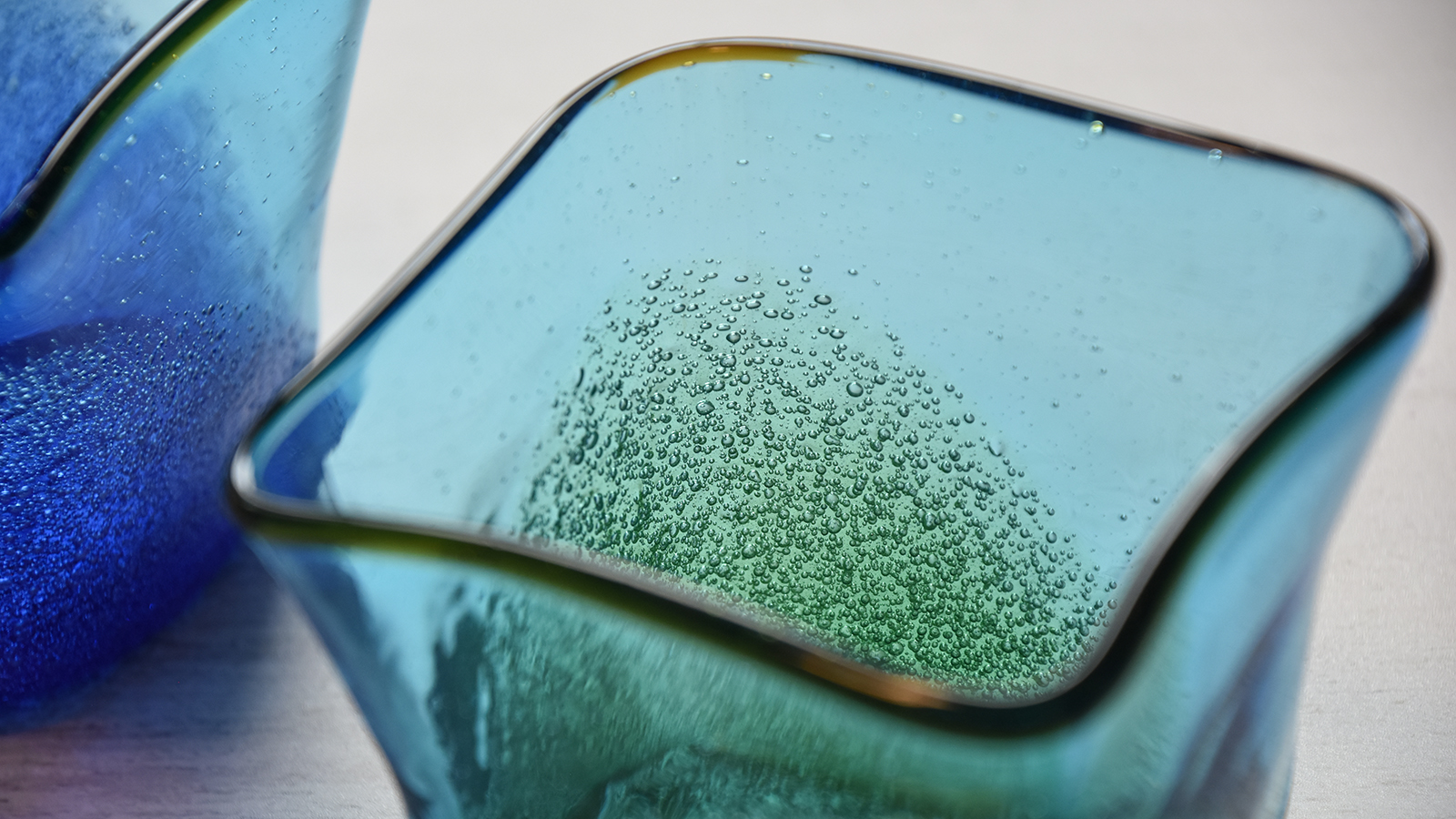
Air bubbles are one of the most recognizable features associated with Ryukyu Glass, although not every piece contains them. Depending on the material and forming process, bubbles may occur naturally or be introduced deliberately as part of the design.
Free-blown pieces may also show subtle differences in outline or thickness, while mold-blown forms can be more consistent in their external dimensions.
Ryukyu Glass is also known for its wide range of colors. Historically, reused bottles contributed greens, ambers and other existing tones. Today, makers may use recycled glass, freshly compounded glass and added colorants, allowing for a much broader palette.
These qualities become especially visible in use. Water and natural light can change how color, thickness and bubbles appear, creating shifting areas of transparency, shadow and reflection.
1. Preparing and Melting the Glass
Depending on the workshop and product, makers may use recycled glass from discarded bottles, freshly compounded glass made from raw materials, or a combination of the two. The material is melted in a furnace until it reaches a workable state. Its composition influences characteristics such as color and clarity.
2. Gathering the Molten Glass
An artisan gathers molten glass onto the end of a blowpipe, rotating the pipe to keep the material centered. From this point onward, timing matters. Glass becomes firmer as it cools, so the maker judges when it can be shaped, when it needs to be reheated, and how much pressure or breath to apply.
3. Adding Color and Decorative Effects
Color may be introduced during the forming process, with methods varying by workshop and design.
In awa-mori, literally “adding bubbles,” a substance such as baking soda is used to generate bubbles deliberately within the glass. Some makers also create crack-pattern effects by cooling the hot surface to produce fine cracks, then reheating and continuing to shape the glass.
4. Shaping the Form
In free-blowing, the artisan forms the glass without a mold, using breath, rotation, gravity and hand tools to control the shape.
In mold-blowing, molten glass is inflated inside a mold that helps establish the outer dimensions.
5. Forming the Rim and Finishing the Shape
Once the main body has been formed, the piece may be transferred to a punty rod, a temporary support that allows the artisan to work on the opening or rim. The glass is reheated as needed and the final proportions are refined. A rocks glass, plate, sake vessel and vase each require different judgments about the opening, wall and overall balance.
6. Annealing
The finished form is placed in an annealing oven and cooled gradually. Controlled cooling helps relieve internal stresses created while the glass was heated and shaped. Cooling too quickly could leave the finished object vulnerable to cracking.
Two representative decorative techniques found in Ryukyu Glass are intentional bubbles and crack patterns.
Intentional Bubbles — Awa-mori
Awa-mori creates clusters of bubbles within the glass as a deliberate decorative feature. Their size, density and placement vary by design, changing how light passes through the finished piece.
Cracking pattern
Fine crack-like lines create a textured visual pattern within the glass. When light reaches the surface, the network of lines catches reflections and gives the piece a more intricate appearance.
Ryukyu Glass changes noticeably once it moves from a shelf into use. These small changes make the material easier to understand through use than through appearance alone.