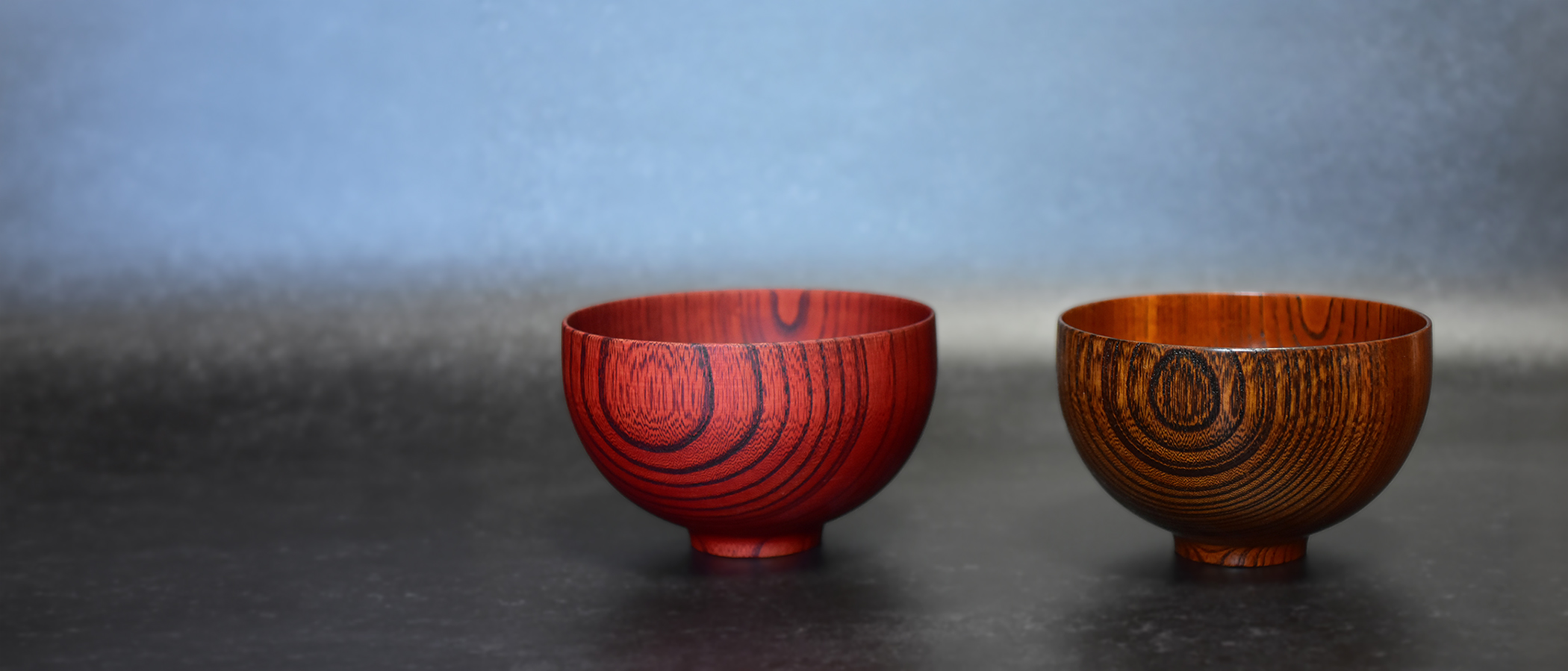
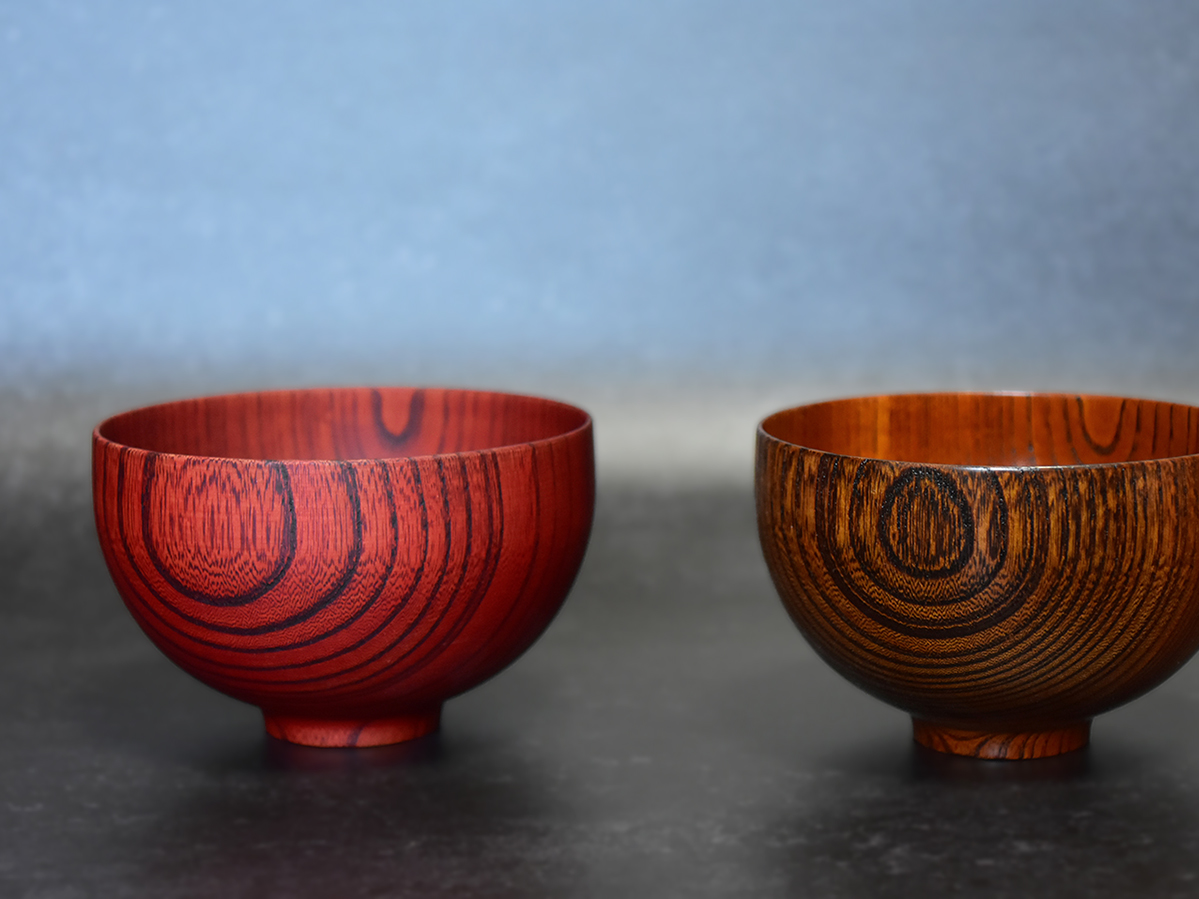
Fine wood grain, somehow warm, runs across the gently curved surface of the bowl.
Could wood grain be more beautiful? The way the wood was cut, where the grain falls against the finished curve, how each line bends — it looks as though every detail had been carefully planned from the start to show the grain at its most beautiful.
That's the kind of bowl Gato Mikio Shoten makes, in the Yamanaka lacquerware tradition.
I first came across the workshop while reporting on Yamanaka Onsen, a hot-spring town in Ishikawa Prefecture, for a magazine feature. Inside a shop in town, rows of Yamanaka lacquerware in different sizes lined the shelves. I was immediately drawn to the designs that let the grain show.
When I think of lacquerware, I usually picture bowls and tiered food boxes coated in red or black lacquer. The pieces I saw here used the grain itself as their pattern. I could sense a respect for the texture and character of the wood.
I chose two rounded bowls. One retained the wood's natural color beneath a fuki-urushi finish, made by applying urushi lacquer and wiping it off. The other had a red urethane coating.
They felt very light in my hands, with wood's distinctive warmth. I ran a finger across the surface, tracing the ridges of the grain. The fuki-urushi bowl is glossy and smooth to the touch; the red one is matte, with a smooth texture. When I brought my face close to the inside, I caught a faint scent of wood.
Now, every time I use one of these bowls, I cup it in both hands first — feeling the texture, the warmth. As I tip the bowl to drink, the grain on the inside comes into view a little at a time. Watching for it has become part of the pleasure of a meal.
I reach for these bowls whenever I make soup, morning or night.
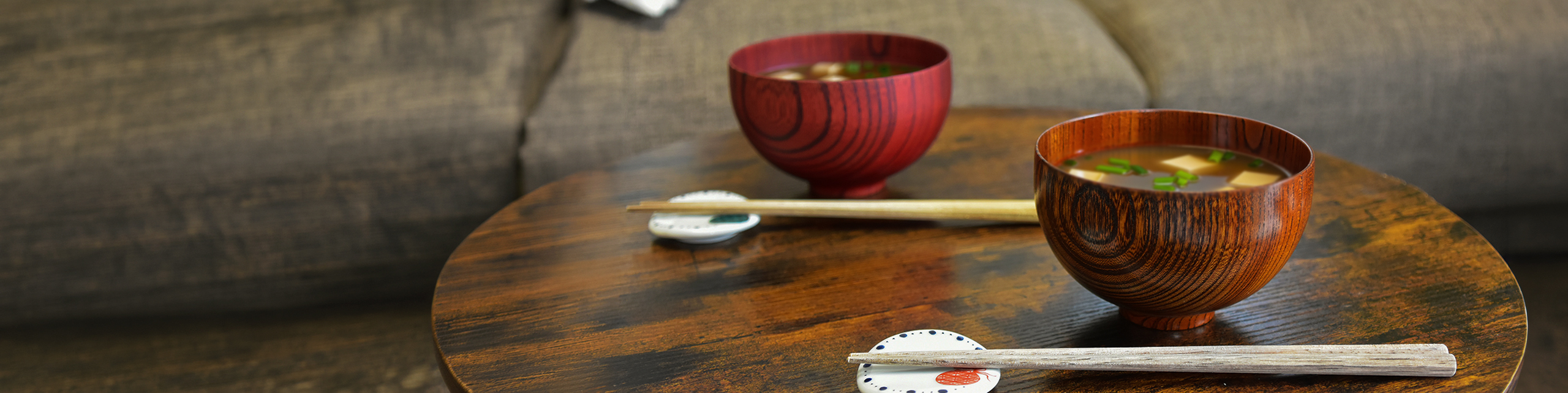
Gato Mikio Shoten was founded in 1908, in Yamanaka Onsen, as a workshop then called Gato Mokkosho. Yamanaka is known for the skill of its woodturners, who shape the wooden bodies of lacquerware on a lathe.
The workshop values both the precision of that work and the beauty of natural wood grain, making pieces that let the grain show rather than covering it. Preserving the look and feel of the material calls for a high level of craftsmanship.
Gato Mikio Shoten doesn't only make bowls. Its range extends from traditional Japanese tableware — sake cups and tea utensils — to plates, salad bowls, cups, and drinking vessels for wine and cocktails. Some retain traditional Japanese forms; others have simple, pared-down lines.
Traditional and contemporary sit side by side, each piece meant to fit the setting in which it is used.
The bowls I chose have a rounded shape called Sensai, one of the traditional forms of a Japanese soup bowl. Its name is said to refer to the talents of an immortal sage, reflecting the form's many uses.
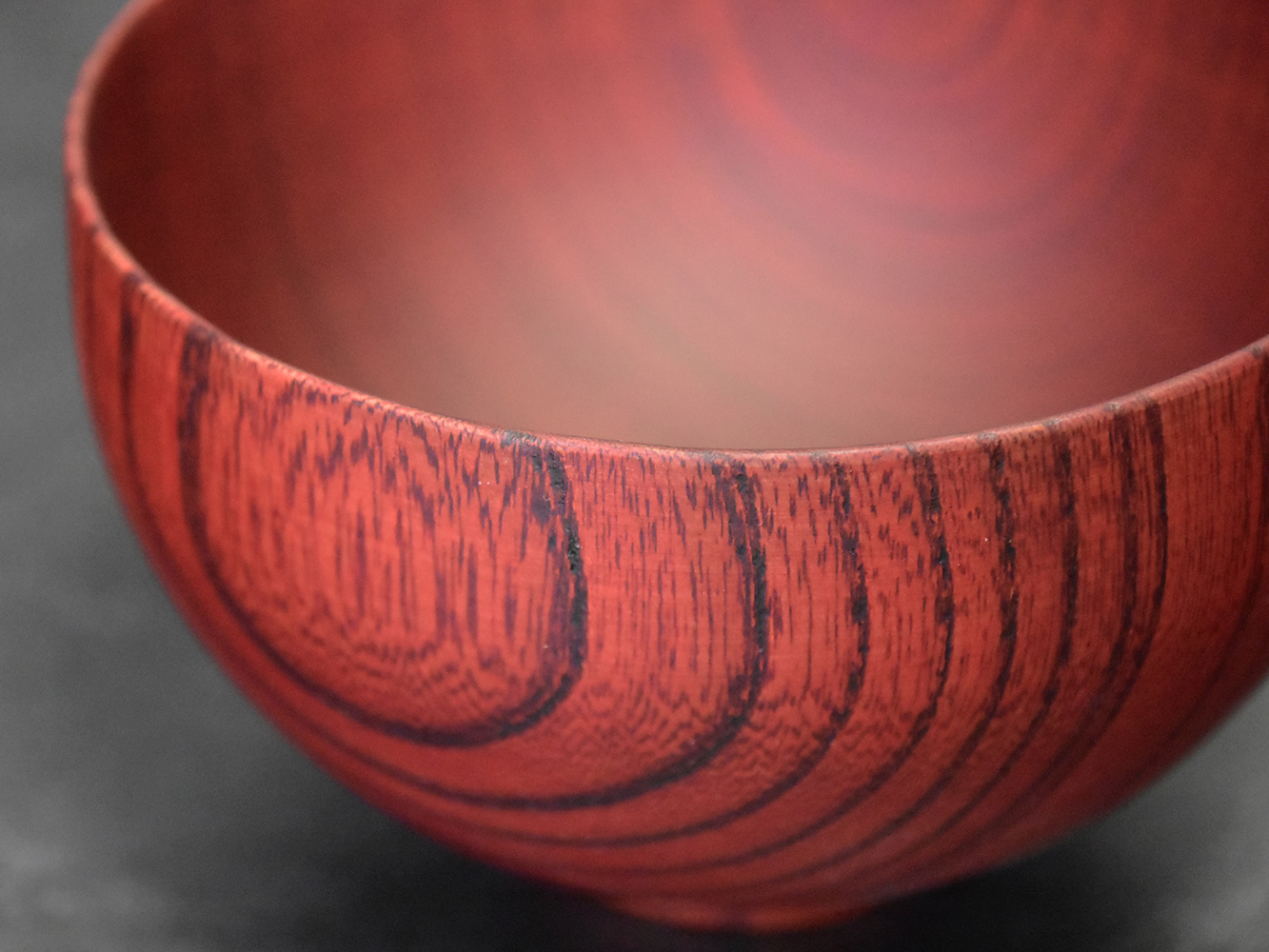
Wood brings a particular warmth to the table, different from that of ceramics.
The gentleness of it in my hands, the warmth of its appearance and even its faint scent — together, these qualities create a setting that gives me a little more room to breathe and a sense of warmth within. It's the kind of space, I realize now, that I'd been looking for.
At mealtime, you can let your eyes rest on the lacquerware a little longer than usual. When you drink soup, notice the grain hidden on the inside. You don't need to do more than watch it appear, a little at a time, as you drink.
Looking at the bowls can become part of the pleasure of a meal.