
Lately, I've been steaming something almost every week.
I use whatever is in the fridge—leftover vegetables, meat, seafood, eggs, or tofu. I fill the steamer with whatever is on hand or whatever I'm in the mood for. Some ingredients steam in about five minutes; others take around fifteen. After that, all that's left is to put together a sauce, and the dish is ready.
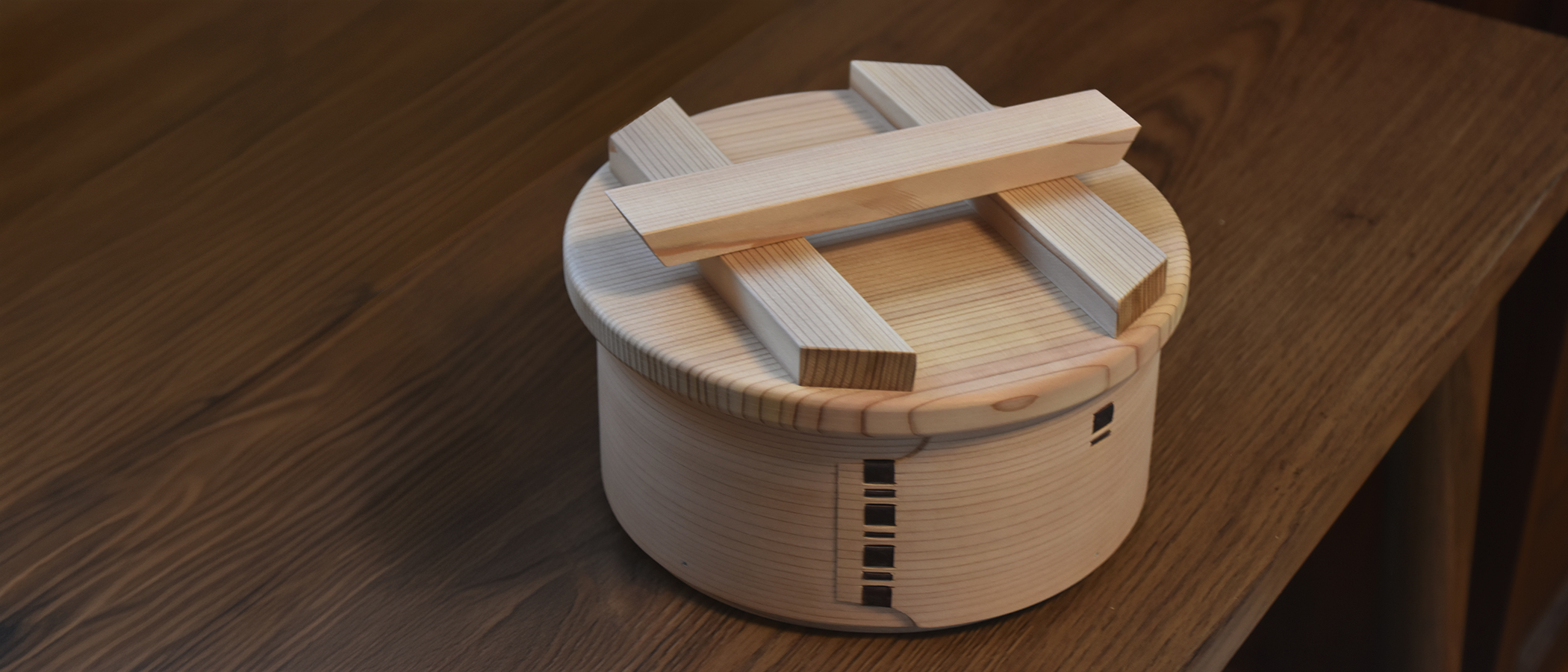
I use a cedar steamer for this. I dampen it, line it with a steaming cloth, pack in the food, and put the lid on. I set it over a pot of boiling water and wait a moment. Steam starts working its way up through the gaps.
Once it's wet, the steamer gives off a stronger cedar scent than it does dry—enough to fill the whole room. When I close my eyes, it almost feels as though I've wandered into a forest, surrounded by the smell of wood.
I open my eyes and watch the steam rising from the steamer. At first it rises vigorously, then floats lightly upward, dissolving into the air until it disappears without a trace.
I like watching it. The steam appears almost as though it has a will of its own, then fades away. I watch without thinking about anything in particular, simply waiting for the food to finish. There's a small kind of happiness in that stretch of doing nothing. Somewhere along the way, I began to look forward to those minutes waiting for the food to finish steaming.
My steamer is made using Odate magewappa, the bentwood craft of Odate in Akita, Japan.
The first thing I notice is the beautiful, straight grain. When I rest a hand on it, I feel the warmth of the unfinished wood. The cedar used for magewappa is said to come from trees two to three hundred years old. Growing through Akita's harsh winters, the trees develop closely spaced growth rings. This fine-grained wood is said to expand and contract less and is valued for its durability.
There's always a fresh cedar scent around it. Taking it from the shelf, carrying it, lifting the lid—each movement releases the scent into the air, and I notice it in the rising steam, too. Something in me settles, wrapped in that smell.

Odate magewappa has a history of about four hundred years.
Thin cedar boards are softened in hot water, bent into shape, and stitched together with strips of wild cherry bark. Bento-box making is said to have developed as a way for samurai to earn supplementary income. The skills have been passed down, and magewappa workshops can still be found throughout Odate.
Kurikyu is one of them.
Alongside traditional pieces such as bento boxes and wooden rice containers, Kurikyu makes bread plates, salad bowls, wine coolers, and beer cups for everyday use. The grain and curves I first came to know through a bento box take on a different appearance in larger pieces such as steamers and plates.
Kurikyu carries those traditional techniques forward while making things people will enjoy using. In its shop, I saw magewappa in many modern shapes alongside the bento boxes and rice containers.

Cooking with this steamer takes very little effort. I look at what's in the fridge and decide what to make, then put the ingredients into the steamer together to make a dish.
The ingredients themselves are the starting point. I can keep the seasoning simple with salt or soy sauce. Or I can make a Western-, Japanese-, or Chinese-style dipping sauce to serve alongside.
Since I started cooking with this magewappa steamer, I've come to realize how much flavor there is in food that has simply been steamed. The ingredients taste full of their own flavor, with a gentle cedar scent alongside. As I focus on those natural flavors and aromas, I can feel my senses of taste and smell becoming sharper.
Steamed food used to be something I rarely made at home. Now it's on the table once a week, sometimes three or four times.
Looking at what's in the fridge and deciding what to put together, what sauce to make—that choice has become part of my everyday life.