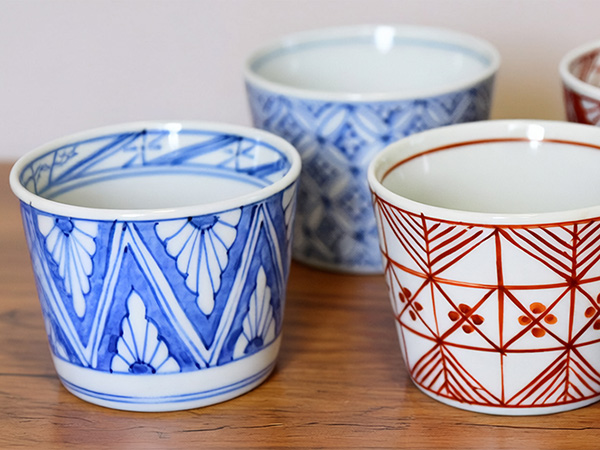
On a sunny afternoon, you pour fresh tea into a cup and place a little bread or fruit on a plate. Even in a scene this ordinary, the tableware quietly shapes how the food and the table are perceived.
Against white porcelain, the colors of fruit or bread appear more clearly. Indigo-blue decoration adds another layer without overwhelming what is served. These are some of the everyday qualities of Arita ware, porcelain made in and around the town of Arita in Saga Prefecture.
Unlike earthenware, which is made primarily from clay, porcelain is made from refined porcelain stone that is crushed and fired at high temperatures. The result is a hard, white body with relatively low water absorption.
Porcelain made in Arita was historically sometimes known as Imari ware because it was shipped through the port of Imari. Today, Arita ware is the name most commonly associated with porcelain made in the production area centered on Arita.
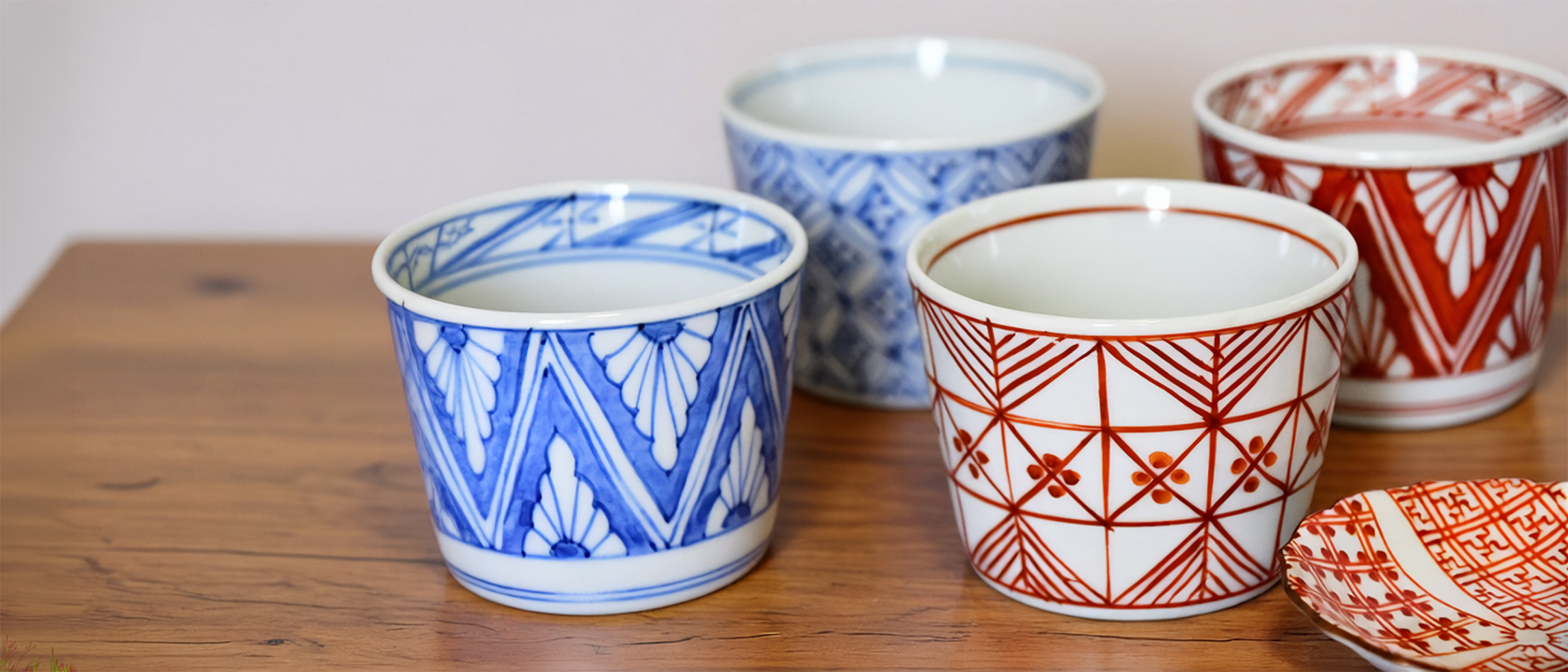
Arita ware is often associated with indigo-blue decoration on white porcelain. Yet the tradition is much broader than a single visual style. It includes white porcelain, underglaze blue-and-white decoration known as sometsuke, and overglaze enamel decoration known as iroe, among other expressions.
Today, Arita makers produce a wide range of tableware, from plates and bowls to teacups and coffee cups. These pieces are used not only with Japanese food, but also with Western-style meals, tea, coffee, and other parts of everyday dining.
Porcelain production in Arita began in the early seventeenth century. One of the conditions that allowed the industry to develop was the discovery of porcelain stone at Mount Izumi, near the town of Arita, which provided a local source of material suitable for making porcelain.
The origin story is traditionally associated with the Korean potter Yi Sam-pyeong, known in Japan as Sanbei Kanagae, who is said to have been involved in locating the porcelain stone and the beginnings of porcelain production in the area. While this account remains central to Arita’s historical narrative, details of the earliest period include elements passed down through tradition.
Access to porcelain stone helped Arita develop into an established production center. Over the seventeenth century, workshops expanded their decorative vocabulary. Blue-and-white underglaze painting became an important form of expression, while multicolored overglaze enamel techniques developed alongside historical styles such as Kakiemon.
By the late seventeenth century, porcelain from the region was being exported to Europe through the Dutch East India Company. These exports became part of a broader exchange that influenced European interest in and production of porcelain, although the nature and extent of that influence differed by place and period.
During the modern era, naming and distribution practices became more standardized, and “Arita ware” became the term commonly used for porcelain produced in the area. Porcelain production continues in Arita today, with workshops making pieces that draw on historical techniques as well as tableware shaped for present-day use.
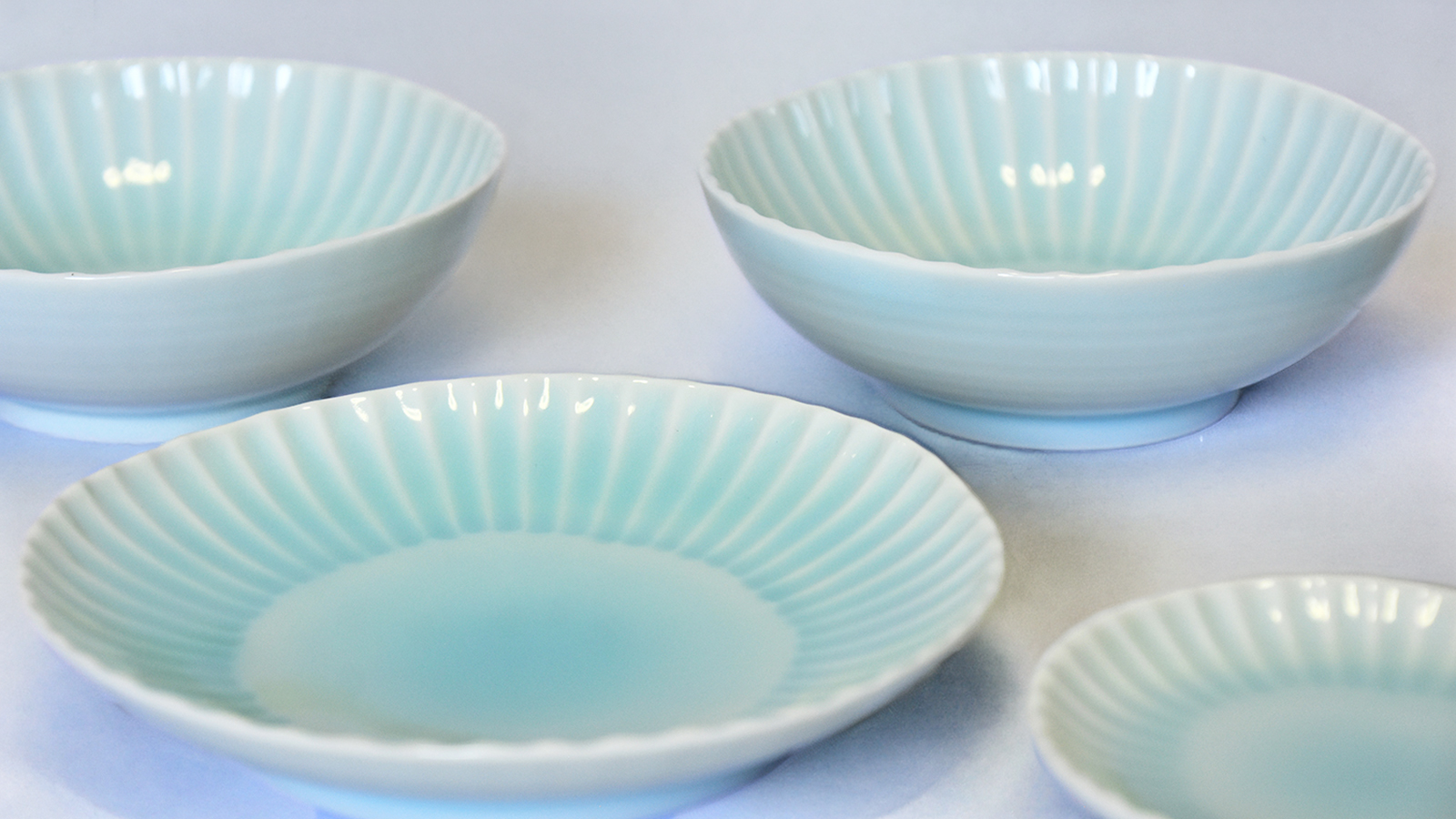
Arita ware is defined less by one appearance than by a combination of porcelain material and a wide range of decorative approaches.
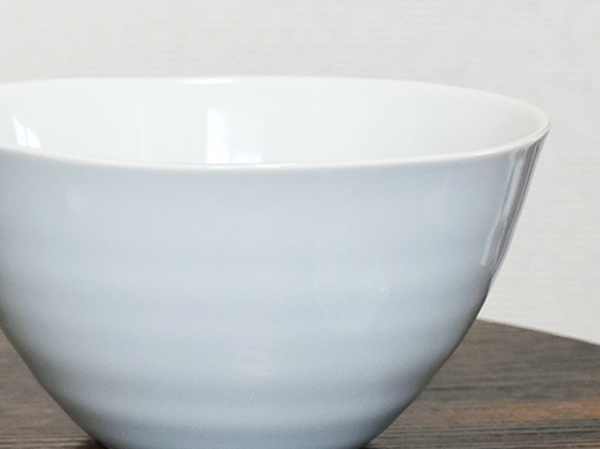
Its white porcelain body is one of the most recognizable foundations. Made from refined stone material and fired at high temperatures, the porcelain develops a hard, dense surface beneath the glaze. White pieces can appear bright under direct light, while some may take on a faint bluish cast depending on the raw material, glaze, firing, and lighting.
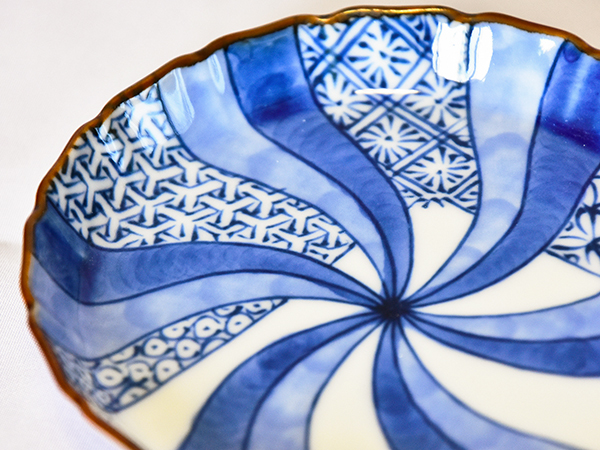
One of the best-known decorative techniques is sometsuke, blue-and-white underglaze decoration. A cobalt pigment called gosu is painted onto the piece before a clear glaze is applied and fired. The blue decoration is therefore seen through the glaze rather than sitting on top of it. Line weight, density of pigment, composition, and the amount of undecorated white surface all affect how a sometsuke piece looks.
Arita ware also includes iroe, or multicolored overglaze decoration. In these pieces, colors such as red, green, and yellow are added after the main firing and fixed through another firing at a lower temperature. Some designs also incorporate gold. The result can range from densely patterned decoration to compositions that leave large areas of white porcelain visible.
Because the craft includes white porcelain, sometsuke, iroe, and several historical styles, there is no single “Arita look.” Some pieces depend almost entirely on form and glaze; others are defined by painted line, color, or composition.
The material itself also shapes how the ware is used. Porcelain is generally harder and less absorbent than earthenware, with a smooth glazed surface suited to tableware.
Although individual workshops follow their own methods, Arita ware generally passes through a sequence of carefully controlled processes.
1. Preparing the Porcelain Stone
Production begins with toseki (porcelain stone), which is crushed, refined with water, and filtered to remove impurities. The resulting clay body is kneaded until its texture and moisture are suitable for forming. Because porcelain behaves differently from earthenware, careful preparation of the raw material influences everything that follows, from shaping to firing.
2. Forming the Shape
The clay is then shaped into bowls, cups, plates, or other forms. Depending on the workshop and the design, makers may use the potter's wheel, plaster molds, slip casting, or pressure casting. Each method suits different forms and production goals. Since porcelain shrinks during drying and firing, dimensions are planned with that change in mind.
3. Drying and Trimming
Once formed, each piece is dried gradually until it reaches a stable condition for trimming. At this stage, excess clay is removed, rims are refined, and the foot ring is shaped. Careful drying also helps reduce the risk of cracking or distortion during firing.
4. Biscuit Firing
The dried piece is fired once at a relatively low temperature. This first firing strengthens the body enough for glazing and decoration while leaving the surface porous enough to accept both.
5. Decoration and Glazing
Decoration depends on the style of the finished piece. For sometsuke, cobalt pigment is painted directly onto the biscuit-fired body before a transparent glaze is applied. For plain white porcelain, only the glaze is applied. For iroe, the clear-glazed porcelain is first high-fired. Colored overglaze enamels—and, in some cases, gold—are added afterward and fixed through an additional lower-temperature firing.
6. High Firing and Finishing
The glazed porcelain is fired at high temperatures, where the body becomes dense and the glaze develops its final surface. After cooling, each piece is inspected. Depending on the workshop, additional finishing may include polishing the foot ring, checking the glaze, or applying the maker's mark. Although the sequence is broadly shared, details vary from one kiln to another, giving different workshops their own distinctive character.
Because Arita ware has developed for more than four centuries, it includes a wide variety of decorative traditions rather than a single recognizable style.
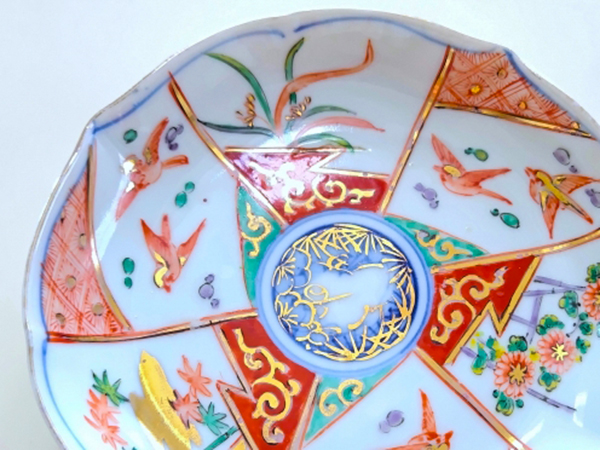
Arita ware becomes easier to appreciate when it is experienced as part of everyday meals rather than reserved only for special occasions.
Instead of assembling a matching set all at once, many people gradually combine pieces with different forms, patterns, and sizes. A plain white bowl can sit beside a sometsuke plate, while an iroe cup introduces color without overwhelming the table.
The appeal of Arita ware often lies not in formality but in flexibility. Pieces made centuries apart—or by different workshops today—can comfortably share the same table when chosen for the way they are used rather than for perfect visual uniformity.