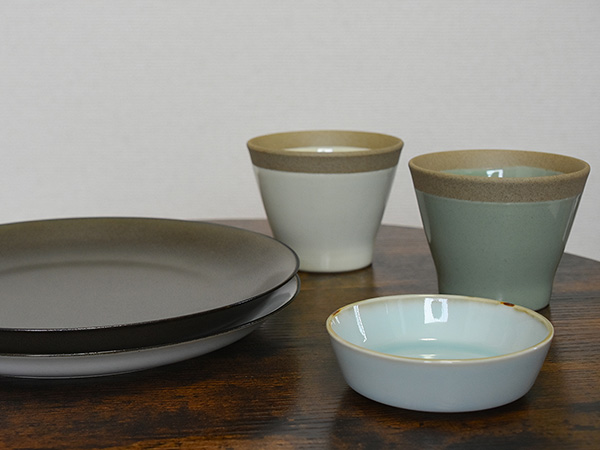
Set a washed bowl upside down on the drying rack, and its base comes into view. Look closely at the ring it rests on: a narrow strip may be bare, without the glaze that covers the surrounding surface. Before firing, the glaze was removed from this part so the bowl would not stick to the kiln shelf.
Hasami ware is the ceramic tradition associated with Hasami, a town in Nagasaki Prefecture on Japan’s southwestern island of Kyushu. Today, production centers on porcelain tableware: bowls, plates, cups, and other pieces for daily use. The main raw material is Amakusa pottery stone, which is crushed and processed into a clay body before being shaped and fired.
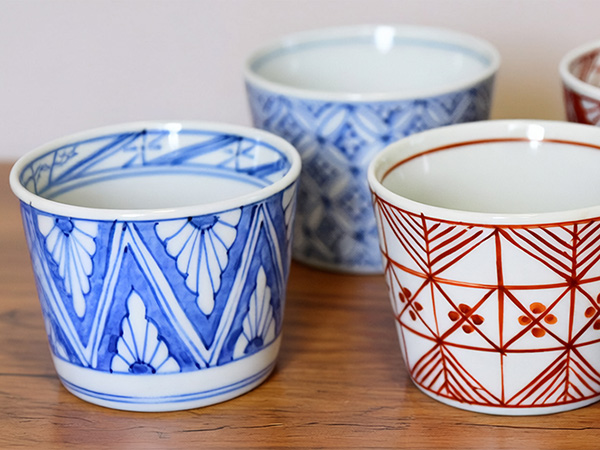
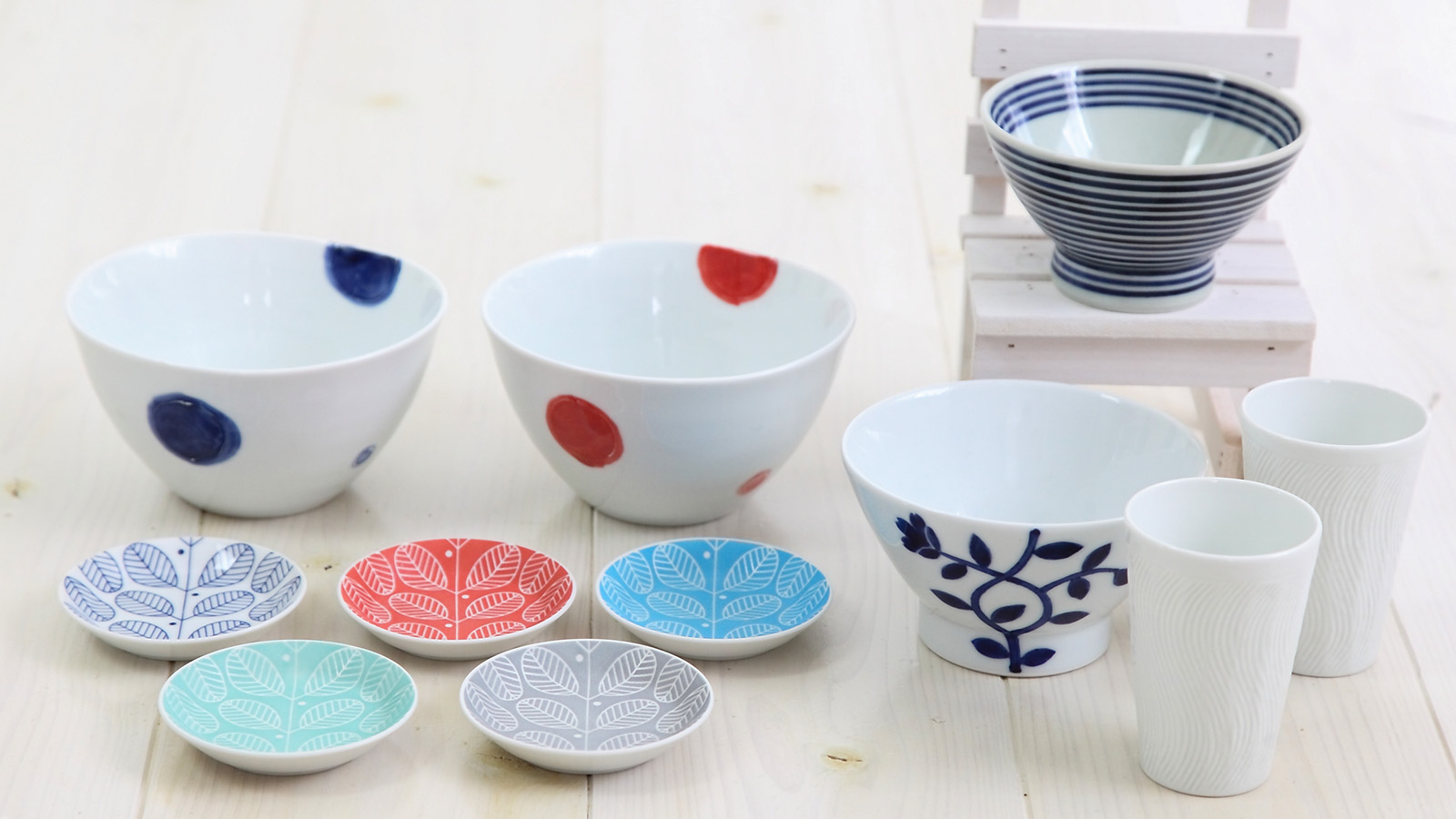
White porcelain with blue decoration is one recognizable expression of Hasami ware, but contemporary production includes many colors, shapes, and finishes. Another defining feature is the division of work among specialists in mold making, forming, decoration, firing, and distribution.
Nearby Arita, across the prefectural border in Saga, is a separate porcelain-producing area. Both developed within Hizen, the historical region covering present-day Saga and Nagasaki, and share a background in materials and techniques.
From pottery to porcelain
Ceramic production in Hasami is thought to have begun in the late 16th or early 17th century. The earliest kilns made pottery; by the 1610s or 1620s, porcelain was being produced as well.
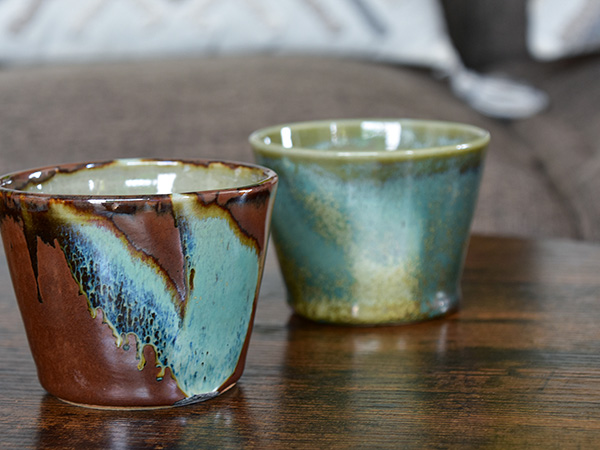
From the 1630s, pottery stone discovered at Mitsunomata, within the town, supported an expansion in porcelain production. Makers produced substantial quantities of celadon, with its blue-green glaze. Some pieces were intended for wealthy buyers in Japan, so Hasami’s early history was not confined to inexpensive everyday tableware.
In the mid-17th century, civil unrest in China disrupted Chinese ceramic exports. Overseas markets increasingly sought Japanese ceramics in their place. Hasami added kilns to produce large quantities for export, mainly to Southeast Asia.
Turning to everyday tableware
When Chinese porcelain exports resumed in the late 17th century, Hasami shifted its emphasis toward everyday tableware for the domestic market. From the 18th century, large kilns enabled production on a scale that brought porcelain into more households.
Among the pieces associated with this period are kurawanka bowls. Vendors used them when selling food and sake to passengers on boats along the Yodo River, and their sales calls gave the bowls their familiar name. Hasami became a major producer of these inexpensive everyday bowls.
From the late Edo period into the early 20th century, the town also produced bottles known as konpura bottles, used to ship soy sauce and sake overseas. Alongside vessels for serving food, makers supplied containers for transporting it.
Changing methods, continuing production
In the late 19th century, support from the local domain—the regional government of the time—ended. Makers continued production by adopting new decorating and forming techniques. In the 1920s, plaster molds, slip casting, and machine-driven forming methods helped establish a larger-scale production system.
After World War II, demand for everyday tableware grew. Kiln fuels eventually changed from heavy oil to gas, and in 1978, Japan’s national government designated Hasami ware a traditional craft.
Today, long-running designs remain in production alongside new approaches to materials and form. Hasami’s history has involved repeated adjustments to what people use and how they use it. Those changes have helped shape the tableware made there today.
Specialists working toward one finished piece
Hasami ware’s production system connects several kinds of expertise. Mold makers establish the shape; specialists form the clay bodies; kilns handle decoration and firing; trading companies distribute the finished pieces. The arrangement varies between businesses, but collaboration is central to the region’s production.
How the pattern is applied
Sometsuke, blue underglaze decoration, is one of Hasami ware’s representative techniques. A cobalt-based pigment called gosu is applied before glazing and firing, leaving the pattern beneath the glaze.
Decoration may be painted by hand or applied through printing and other methods. Some hand-painted designs in Hakusan Toki’s Hirachawan collection of wide, shallow rice bowls vary in line thickness and color from piece to piece, even within the same pattern.
Looking at how a line was applied reveals a different aspect of the object from looking at the motif alone.
A porcelain piece passes through several stages as pottery stone becomes a finished vessel. In Hasami, specialist businesses may share this work, while some manufacturers carry out several stages in one factory. The following is a representative process; materials and methods vary by product.
1. Turning stone into clay
Pottery stone is crushed and processed to refine its particles and remove iron. The moisture content is then adjusted to produce material suitable for forming. Specialist clay-processing plants prepare different blends and consistencies according to the product and forming method.
2. Making molds and forming the shape
A plaster mold is made from the vessel’s design. Bowls and plates may be formed by pressing clay against a rotating mold with a shaping tool. Hollow forms can be made through slip casting, in which liquid clay is poured into a mold.
The formed pieces may then be trimmed by hand. In Hakusan Toki’s Multiblue production, makers use a kanna to refine the curves and smooth the surface before firing.
3. Drying and bisque firing
The clay bodies must dry evenly. If different parts lose moisture and shrink at different rates, warping or cracks can develop. Thicker pieces require particular attention because the surface and interior may dry unevenly.
Once dry, the pieces receive a first firing, known as bisque firing, at around 900°C (about 1,650°F). This strengthens them for handling during decoration and glazing. The firing conditions also affect how readily the surface takes pigments and glaze.
4. Decorating and glazing
Pieces with underglaze decoration are painted or printed on the bisque-fired surface. Glaze is then applied; during firing, it melts to form a glassy layer. In typical porcelain production, glaze is removed from the underside of the foot ring—the raised base on which a bowl or plate rests. This prevents the molten glaze from attaching the piece to the kiln shelf.
5. High firing and cooling
The pieces are fired at around 1,300°C (about 2,370°F), hardening the body and melting the glaze. This stage establishes the finished shape, surface, and strength. Conditions and firing times vary with the material, product, and kiln. The kiln is allowed to cool gradually before the pieces are removed. Sudden cooling can cause defects in the finished ware.
6. Finishing and inspection
Pieces with overglaze decoration receive their decoration on top of the fired glaze and are fired again. This additional stage is not needed for every product.
Final finishing may include smoothing the base. Hakusan Toki’s Multiblue production, for example, includes polishing the foot ring after firing. The pieces are then inspected before shipment.
Hasami ware varies in material, form, finish, and decoration. The examples below focus on representative surface treatments and decorative techniques.
White Porcelain
White porcelain emphasizes the white body of the vessel, often beneath a transparent glaze. It should not be confused with unglazed porcelain.
Sometsuke
Blue decoration applied beneath the glaze, using a cobalt-based pigment. The decoration is applied before glazing and the main firing. It may be painted by hand or applied through printing methods.
Overglaze Decoration
Decoration applied over the glaze after the main firing, followed by another firing to fix it to the surface. The decoration sits above the glaze, unlike sometsuke. Gold and silver decorations are among the examples.
The amount of coffee you usually pour, the dishes you cook, and the space in your cupboard offer practical starting points for choosing tableware. Looking at a vessel’s handle, depth, or dimensions helps connect its design with a place in your day.