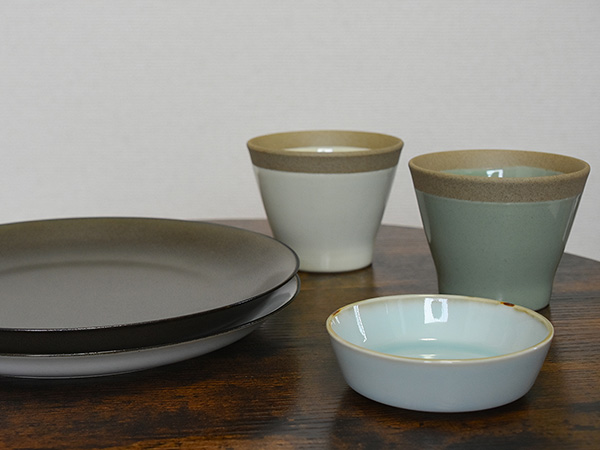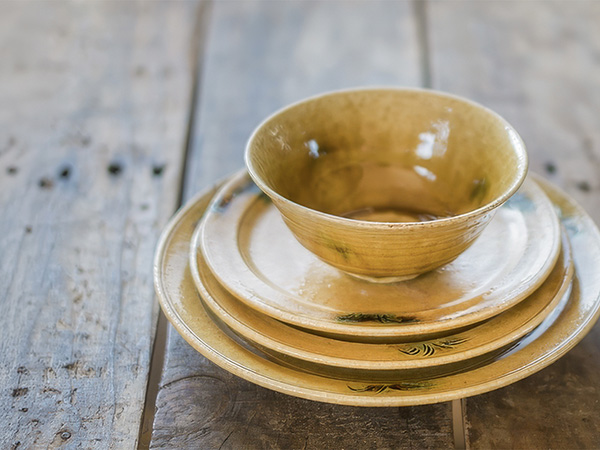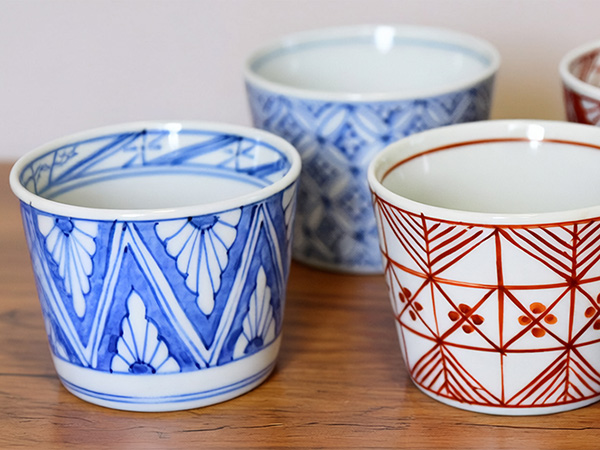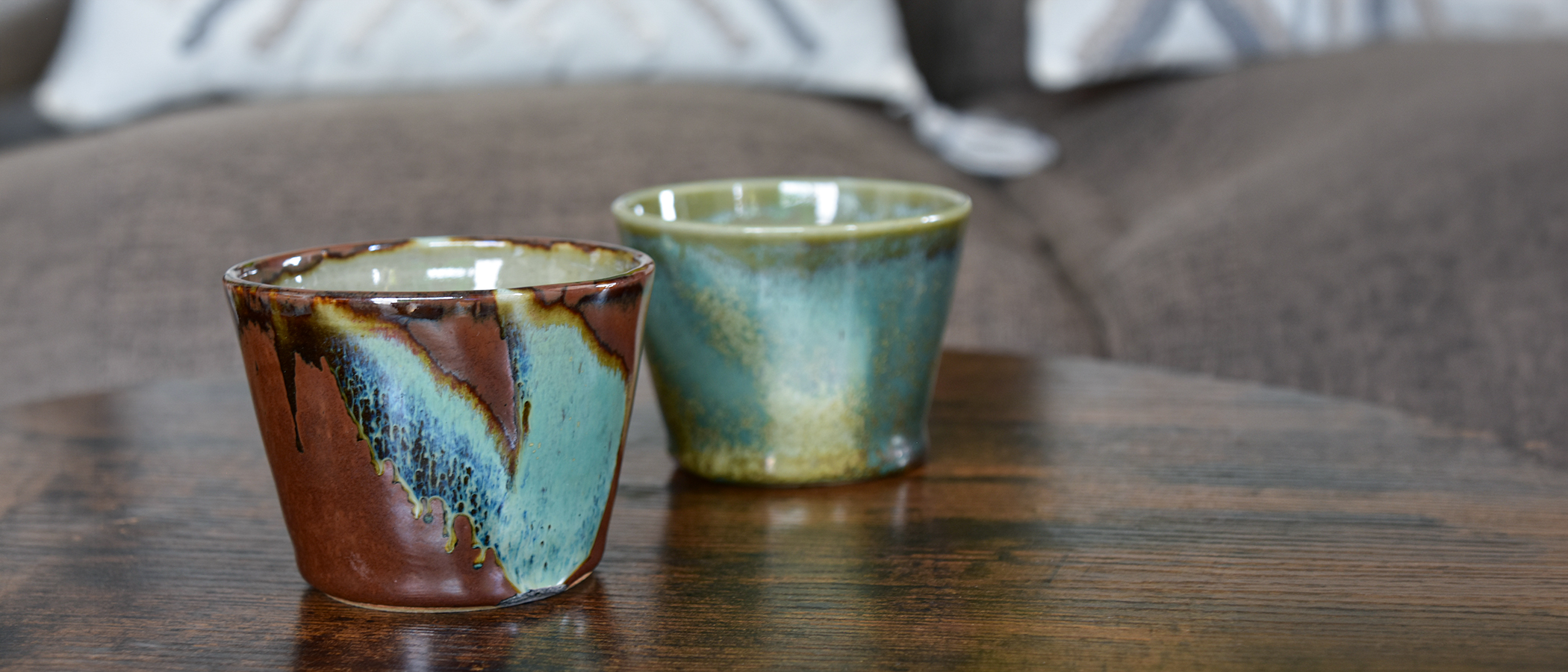
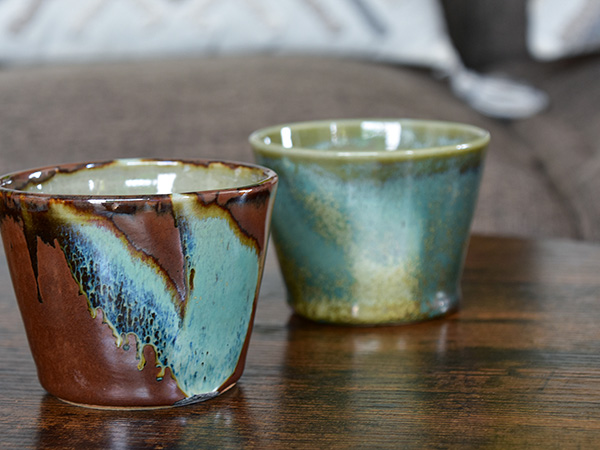
In the morning, you pour coffee into a mug and enjoy it in the morning sun. The clay beneath the glaze, the surface of the vessel, and its weight in the hand are all part of the experience.
Mashiko ware is pottery made in and around the town of Mashiko in Tochigi Prefecture, with the production area also extending into parts of Moka, Motegi, and Ichikai. The name does not describe a single visual style. Rather, it refers to pottery made within this regional tradition.
Since the first kiln in Mashiko was established, the production area developed around practical objects for daily life, including tableware and household vessels. Today, workshops continuing established techniques exist alongside makers exploring different forms and approaches, giving Mashiko ware a range of expressions rather than one fixed look.
Mashiko ware is made primarily from clay sourced from Shinpukuji area and Kitagoya area. Kibushi clay may also be blended in to improve workability. The preparation and combination of these local clays form part of the making tradition behind Mashiko ware.
Mashiko ware is officially designated under Japan's national Traditional Craft system. The designation recognizes a defined group of traditional glazes, including kaki (persimmon), black, nuka-jiro (rice-husk-ash white), nuka-seiji (rice-husk-ash celadon), nami-jiro (plain white), ame (amber), and hai (ash). Together with differences in clay, form, and firing, these glazes contribute to the varied surfaces seen across Mashiko pieces today.
Mashiko ware began around 1852 or 1853. Sources differ on the exact year.
Its beginnings are generally associated with Keizaburo Otsuka, a potter who had learned pottery-making in the nearby Kasama area before establishing a kiln in Mashiko. This connection is important because Mashiko and Kasama share a historical technical lineage, even though the two production areas later developed different identities.
From the beginning, Mashiko developed pottery for everyday use. During the late nineteenth and early twentieth centuries, kilns produced large quantities of practical household wares such as water jars, mixing bowls, storage vessels, and tableware.
A major shift came in the 1920s.
The potter Shoji Hamada moved to Mashiko in 1924. Around the same period, Soetsu Yanagi, Hamada, Kanjiro Kawai, and others developed what became known as the Mingei, or Japanese folk craft, movement, which drew attention to the aesthetic value of useful craft objects made for ordinary life.
Mashiko ware had already existed for about 70 years by then, so Mingei did not create the tradition. Instead, the movement changed the way Mashiko pottery was understood and brought wider attention to objects that had previously been made primarily as practical household goods.
Hamada became one of the most influential figures associated with Mashiko. His work also had an international dimension: before settling there, he had worked with British potter Bernard Leach and helped establish the Leach Pottery in St Ives, England, in 1920. Hamada was designated a Living National Treasure in 1955, a Japanese recognition given to individuals who preserve important traditional craft or performing arts skills.
Mashiko's development, however, was never the story of one potter alone. After World War II, everyday tableware production continued while individual studio potters increasingly developed distinct approaches of their own. The presence of potters such as Tatsuzo Shimaoka and Akio Kamoda further broadened the range of work associated with the region.
That diversity remains visible today. Mashiko still produces practical tableware, but the production area also includes individual studio ceramics, contemporary forms, and work that moves well beyond the familiar image of heavy, rustic folk pottery.
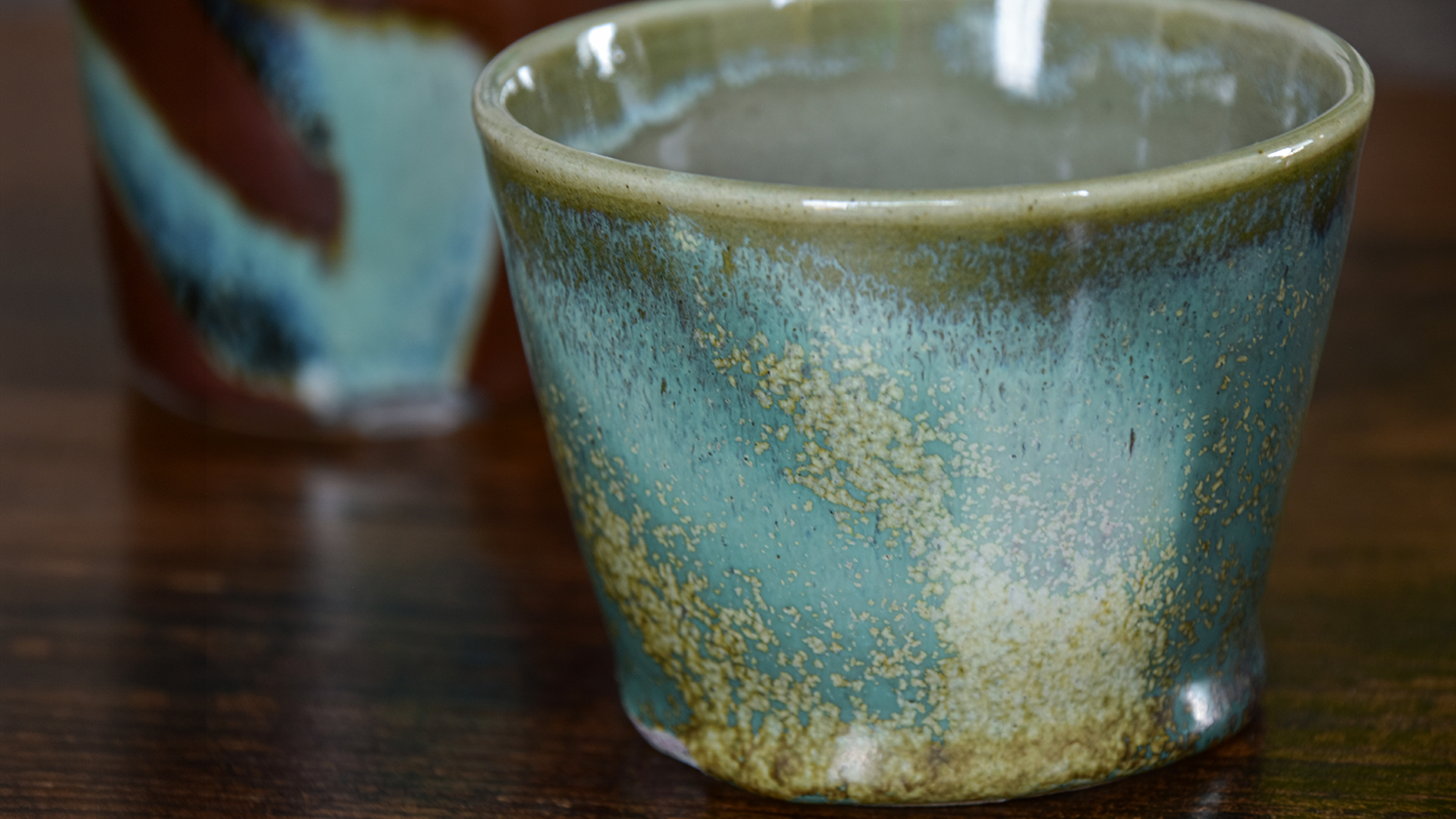
One of the clearest ways to understand Mashiko ware is through its clay and glazes.
The local clays traditionally used in the region, which contain a relatively high proportion of silica and have low plasticity. On their own, they are not especially easy to shape. Potters commonly blend in a specific clay to improve workability.
This material character is sometimes linked to the substantial forms historically associated with Mashiko pottery. Thick-walled pieces have certainly been common, particularly among everyday wares, but thickness should be understood as a tendency rather than a defining rule. Historical examples include thinner forms, and contemporary makers produce pieces with widely varying weight and profile.
Glaze is equally important to the visual character of Mashiko ware.
The official Traditional Craft designation recognizes seven traditional glazes: kaki (persimmon), black, nuka-jiro (rice-husk-ash white), nuka-seiji (rice-husk-ash celadon), nami-jiro (plain white), ame (amber), and hai (ash).
Decoration adds another layer of variation. Traditional techniques include brushed slip decoration, carving, slip-trailing, combed or incised surfaces, and other methods that alter the surface before or alongside glazing.
These materials and techniques help explain why Mashiko ware resists a single visual definition. One piece may be thick and dark-glazed; another may be lighter, thinner, or more brightly colored. Some are shaped by long-established workshop methods, while others reflect the individual approach of a contemporary potter.
The result is a regional pottery tradition whose identity lies less in one recognizable look than in the continuing relationship between clay, glaze, practical use, and the decisions of individual makers.
Mashiko pottery is made through a sequence of stages that transform locally sourced clay into finished tableware. Methods vary by workshop, maker, and type of piece, but several steps are common across traditional production.
1. Preparing the Clay
Mashiko pottery traditionally uses clay from areas such as Shinpukuji and Kitagoya.
Because these local clays have relatively low plasticity, they are often blended with Kibushi clay to make them easier to shape. The clay is refined, mixed, and kneaded to create a more even body and remove trapped air before forming.
2. Shaping
The prepared clay is formed according to the intended object.
Potters may use a wheel, molds, hand-forming techniques, or other methods depending on the shape and scale of production. A mug made individually on a wheel and a plate produced with a mold can both belong to the Mashiko tradition.
3. Drying and Biscuit Firing
Once formed, the piece is dried gradually. Drying too quickly can cause cracking or distortion, so timing depends partly on weather, humidity, and the size of the object. After drying, the ware is biscuit-fired at a lower temperature, strengthening the clay body before glazing.
4. Applying Glaze and Decoration
Glaze has a major influence on the finished appearance of Mashiko ware.
Traditional methods include dipping, pouring, brushing, and slip-trailing. The amount of glaze, the clay beneath it, and the way the two materials interact during firing all affect the final surface. Mashiko’s officially recognized traditional glazes.
5. Final Firing
The glazed pieces are fired at high temperature. This stage is irreversible, and small differences in kiln atmosphere, glaze thickness, temperature, and placement can change the finished color and surface. Black glaze, for example, may appear matte and textured under some firing conditions or smoother and more reflective under others.
After the kiln cools, the pieces are inspected and finished before use.
Mashiko ware does not have one single classification system. Pieces may be distinguished by glaze, decorative technique, form, intended use, or the individual approach of the maker.
Three traditional glazes provide a useful introduction to the range.
Kaki
Kaki glaze is an iron-based glaze made using iron-rich stone from the Mashiko area. The color can vary with the clay, glaze application, and firing, but reddish-brown tones are characteristic. Kaki glaze is one of the glazes recognized under Mashiko ware’s Traditional Craft designation.
Black
Its appearance changes with firing conditions. An oxidizing firing may produce a more matte, textured surface, while reducing conditions can produce a smoother, glossier black.
Nuka-Jiro
Rice-husk-ash white glaze uses ash from rice hulls as part of the glaze material. It produces a white to milky-white surface and can create a strong visual contrast against a darker clay body.
Mashiko ware developed around useful household pottery, and that everyday function remains one of the clearest ways to understand it.