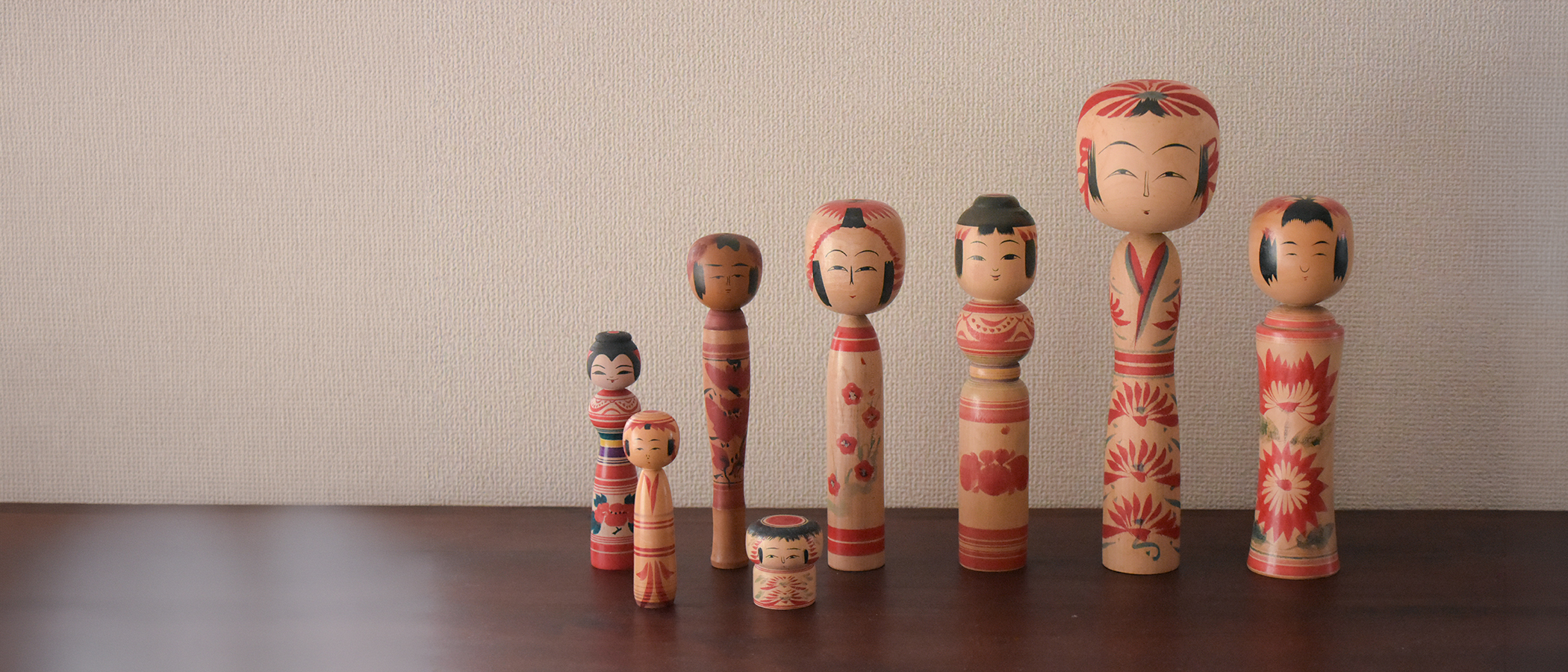
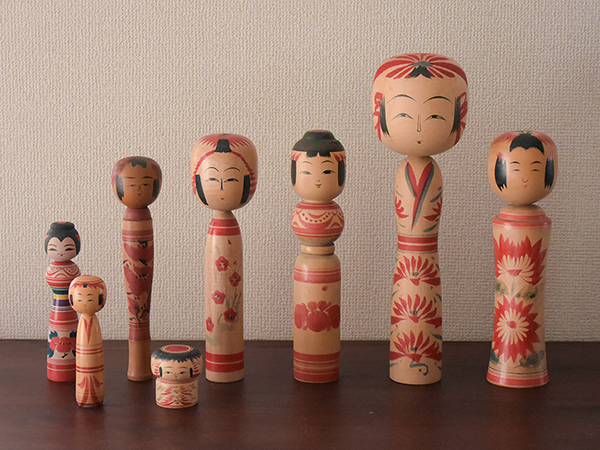
One has a large head and a body that narrows halfway down. Another has hair ornaments painted in lines that radiate from the top of its head. Kokeshi dolls share a recognizable head-and-body form, yet set two side by side and the differences are immediate. Their outlines and painted patterns reflect both regional traditions and each maker’s individual expression.
A kokeshi doll is a Japanese wooden doll with a shaped body and painted features and patterns. Its making is closely tied to the lathe, a tool that rotates the wood while a cutting tool shapes it. Traditional kokeshi have a form centered on the head and body, though these are not always made as separate parts.
The first distinction to understand is between traditional and creative kokeshi. Traditional kokeshi follow forms, patterns, and techniques handed down within a region, a family, or from master to apprentice. Creative kokeshi are designed by individual artists according to their own ideas.
Traditional kokeshi developed through the woodturning trades and hot-spring towns of Tohoku, the northeastern region of Honshu, Japan’s main island. They are made in six prefectures: Miyagi, Yamagata, Fukushima, Akita, Aomori, and Iwate.
The wood varies by region, maker, and piece. Miyagi traditional kokeshi use woods including mizuki and maple varieties called itaya-kaede and urihada-kaede in Japanese. Historically associated with children’s toys and hot-spring souvenirs, kokeshi are now also collected and displayed.
Traditional kokeshi are closely associated with kijishi, woodturners who used a lathe to make round wooden bowls and trays. Their skills are thought to have been applied to small wooden dolls, which spread through Tohoku’s hot-spring towns as children’s toys and souvenirs.
Their origins are generally placed in the later part of the Edo period (1603–1868). As forms, patterns, and techniques passed between family members and from masters to apprentices, different areas developed recognizable characteristics. These regional styles remain a useful way to understand the differences between kokeshi from one place and another. Dolls once made for children also became objects that adults admired and collected.
In 1981, Miyagi traditional kokeshi received national designation as a traditional craft. This designation applies specifically to traditional kokeshi from Miyagi, rather than to all kokeshi dolls.
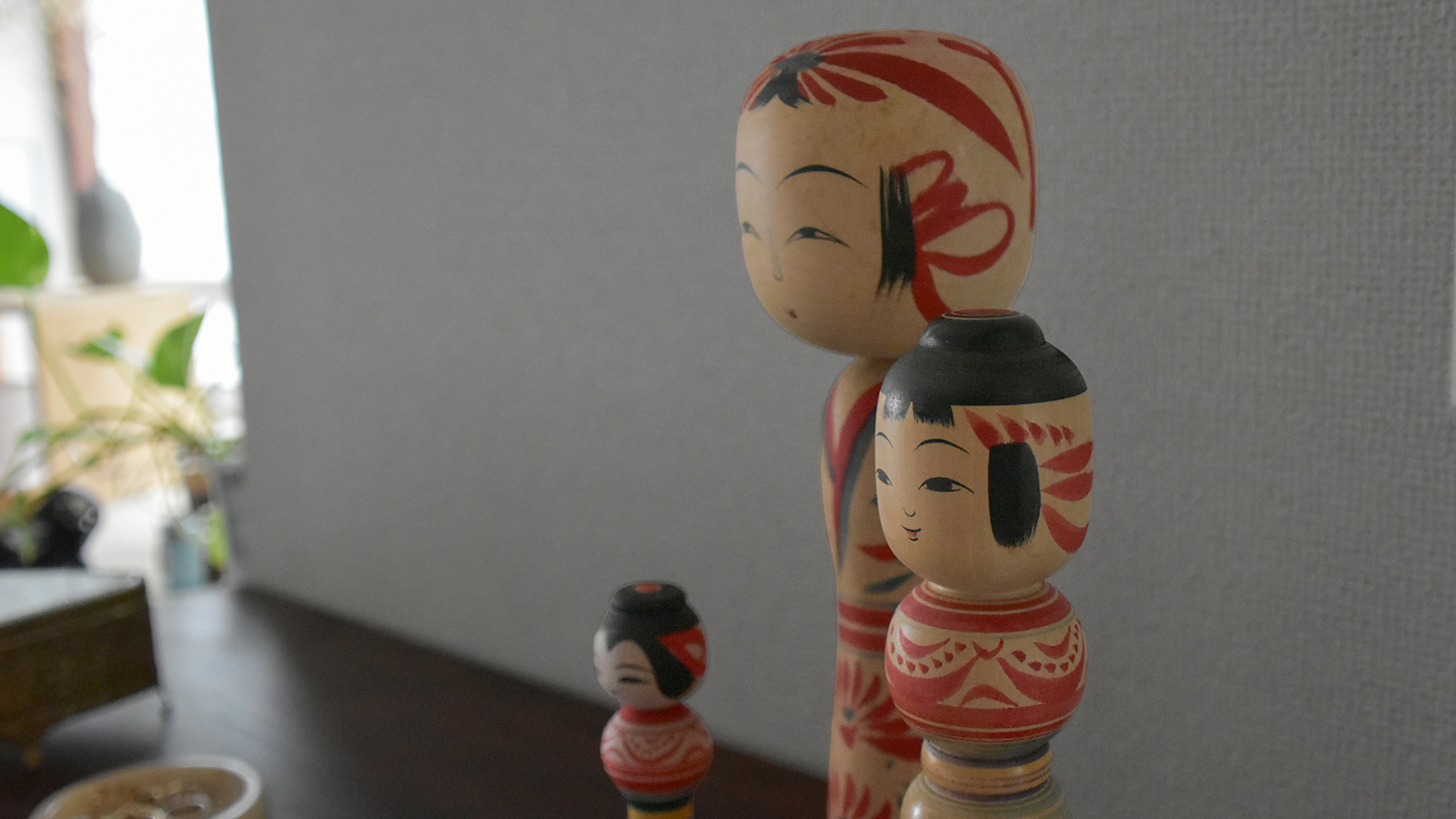
Look beyond the face to a doll’s outline, painted lines, and surface. Even within the same regional style, these details reveal differences between makers and individual pieces.
Outline
Start with proportions: the size of the head relative to the body, and where the body narrows or widens. Seen from the front and then from the side, dolls with the same basic head-and-body form can have very different outlines. In traditional kokeshi, these proportions often reflect regional characteristics.
Painted Lines and Patterns
The brushwork on the face, hair, and body gives each doll its expression and decorative character. Notice how the lines are placed and how the brushstrokes vary. Beyond floral motifs such as chrysanthemums, the painted hairstyles and markings on the top of the head offer further details to compare.
Lathe-Painted Lines
Many kokeshi have bands of color encircling the head or body. These are painted by holding a brush against the wood while it rotates on the lathe. The rounded form and the painted bands both result from this rotation, leaving traces of the same working motion in the doll’s shape and decoration.
Methods and the order of steps vary by region, workshop, and piece. These stages give a general picture of the work involved.
1. Drying the Wood
The wood is dried before shaping begins. Drying times vary: one account of production in Naruko describes six months to a year of natural drying, while kokechi, a workshop making creative kokeshi, describes a year and a half to two years.
2. Cutting and Rough Turning
The wood is cut to size and roughly shaped on the lathe. As it rotates, the maker cuts away material to form the outlines of the head and body.
3. Finish Turning and Polishing
The maker refines the outline and smooths the surface. An artisan checks curves and thickness by touch and by eye while turning. This work establishes details visible in the finished doll, such as the roundness of the head and the narrowing of the body.
4. Joining the Head and Body
When the head and body are made separately, they are fitted together. In Naruko kokeshi, the maker uses the lathe’s rotation and the resulting friction to fit the head into the body. This joint allows the head to make a sound when turned. Other Miyagi styles use different fitting methods. Not every kokeshi is made with a separate head and body.
5. Painting the Face and Patterns
The face, hair, and body patterns are painted onto the wood. Encircling lines are made with a brush while the wood rotates, while the face and floral motifs require their own brushwork. Both the turned form and the painted features contribute to a doll’s expression.
6. Finishing
The maker applies the final finish, which may include wax polishing or a surface coating. Wax polishing forms part of the technical standards for Miyagi traditional kokeshi, but finishes vary between workshops and pieces. The maker’s guidance is also the best reference for caring for the finished doll.
Traditional kokeshi are often grouped into twelve regional styles, distinguished by inherited forms, patterns, and techniques. These examples offer a starting point for noticing their differences.
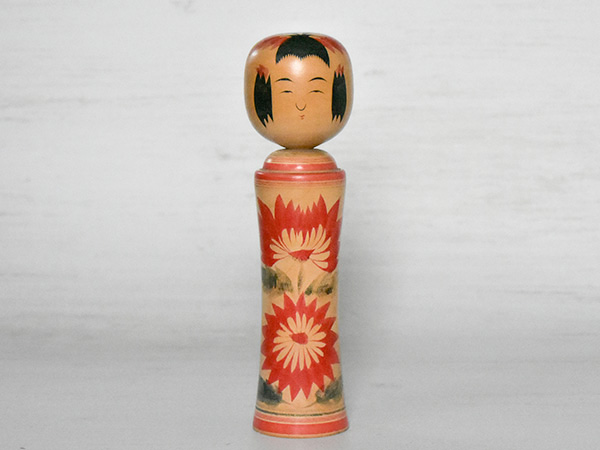
Naruko Style
A style associated with the hot-spring town of Naruko, Miyagi Prefecture.
A large head, a body that narrows halfway down, and chrysanthemum patterns. The fitted head is also known for making a sound when turned.
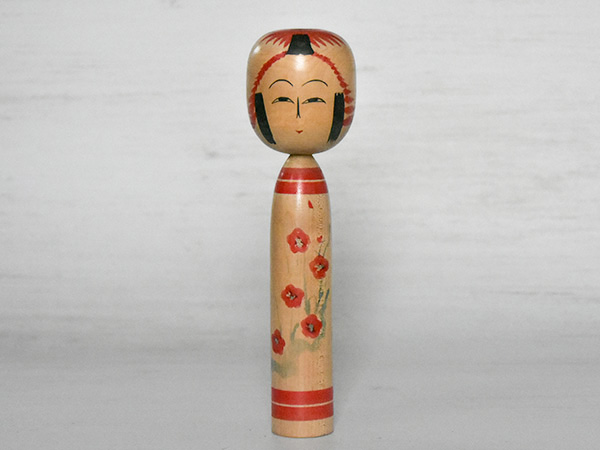
Togatta Style
A style associated with the hot-spring town of Togatta, Miyagi Prefecture.
A relatively large head, often with painted hair ornaments radiating outward. Chrysanthemums and other motifs appear on the body, with variations in hairstyle and brushwork.
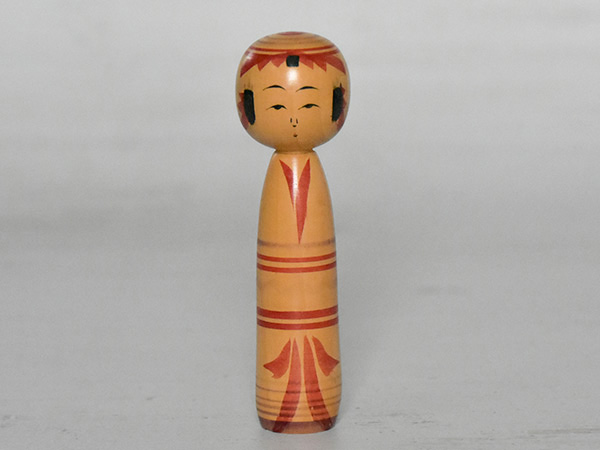
Yajiro Style
A style from the Yajiro area of Shiroishi, Miyagi Prefecture.
Lathe-painted lines on the top of the head, together with the body’s bands and color combinations, offer clues to the style. Shapes and colors vary between pieces.
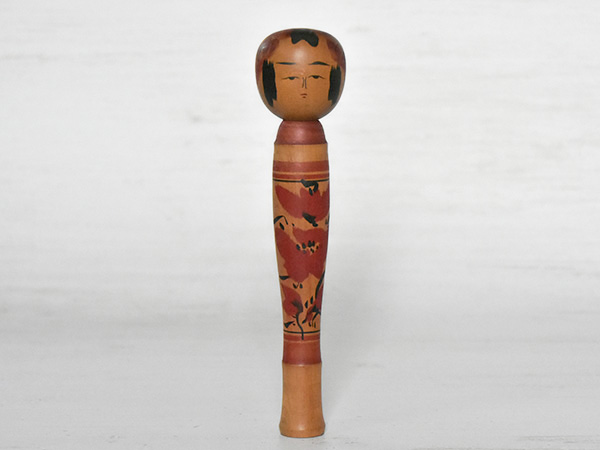
Sakunami Style
A style associated with the hot-spring town of Sakunami, Miyagi Prefecture.
A slender body, sometimes widening toward the base. The painted decoration often includes kani-giku, a chrysanthemum motif whose shape resembles a crab.
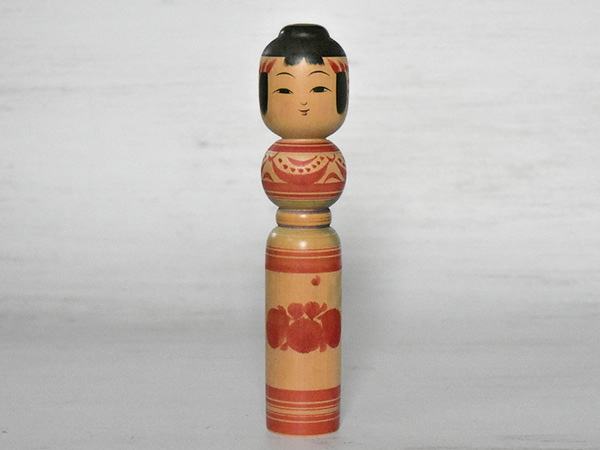
Tsugaru Style
A style from the Tsugaru area of Aomori Prefecture.
Examples have bobbed hairstyles and bodies that narrow before widening toward the base. Painted motifs include peonies and Daruma dolls—rounded Japanese dolls traditionally used as good-luck charms. With a comparatively short history, shapes and decoration vary widely.
Spend time looking at a kokeshi’s expression, outline, and patterns, and the differences between individual dolls become easier to see. Those details can also become what you grow fond of in each one.