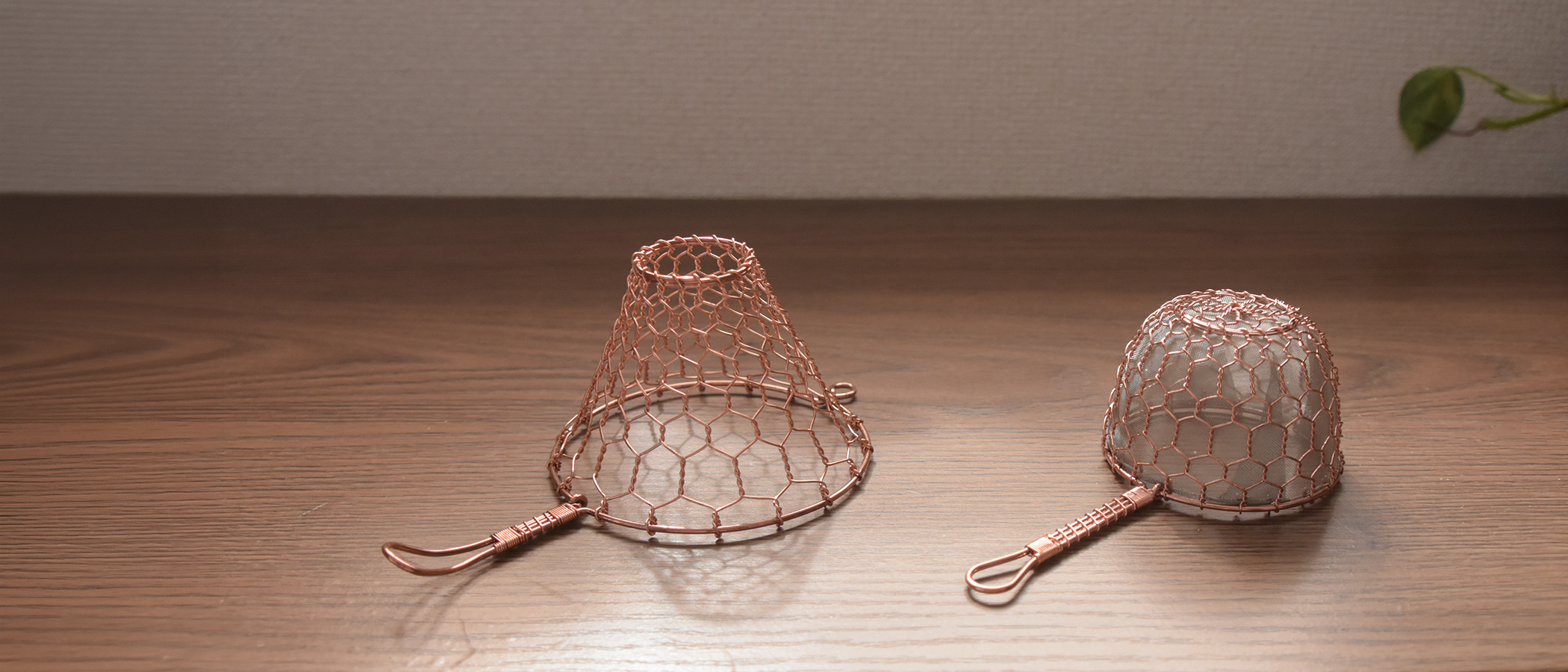
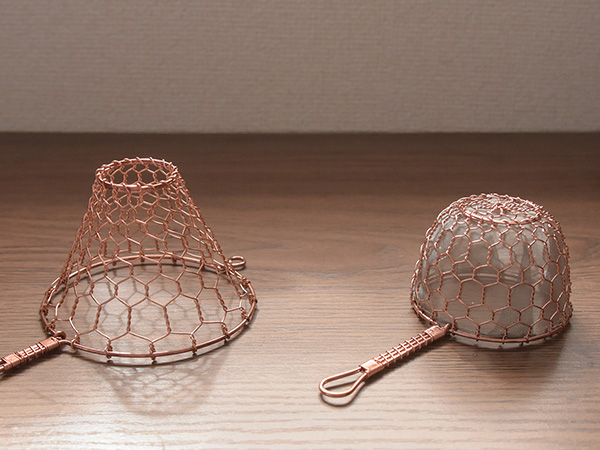
Pick up a handwoven tea strainer and look closely at the mesh. Small hexagons repeat across its surface, their sides formed by lengths of wire twisted together by hand. Look inside some strainers and another layer comes into view: a much finer mesh fitted within the outer weave.
Kyo-kanaami is a Kyoto wire craft in which metal wire is woven by hand into tools for the kitchen and table. Copper and stainless steel are among the materials used to make tea strainers, tofu servers, grilling nets, and other utensils. The City of Kyoto recognizes Kyo-kanaami among its traditional industries.
The wire thickness, mesh size, and finished shape can be adapted to a tool’s purpose. Makers have supplied restaurants, confectioners, and home kitchens with utensils designed for different tasks.
Kyo-kanaami’s origins are traditionally traced to Japan’s Heian period (794-1185). It is said that metal wire was once a precious material, and wirework was used for costly objects such as temple and shrine fittings and covers for incense burners.
As machine production made wire available in larger quantities from the Meiji era (beginning in 1868) onward, wire utensils such as drainers and tea strainers became more widely available for household use.
Demand also helped sustain the craft. Demand from Kyoto’s restaurants and confectioners contributed to the development of the local wirework industry.
After World War II, demand declined as inexpensive alternatives, including plastic products, became widespread. Makers nevertheless continued producing handwoven tools for particular uses.
Today, tea strainers, tofu servers, and grilling nets remain part of their ranges, alongside coffee drippers and wire utensils for serving food. Some makers also accept repair inquiries and custom orders, keeping existing tools in use while making others to meet specific needs.
Wire and Mesh Shaped Around a Task
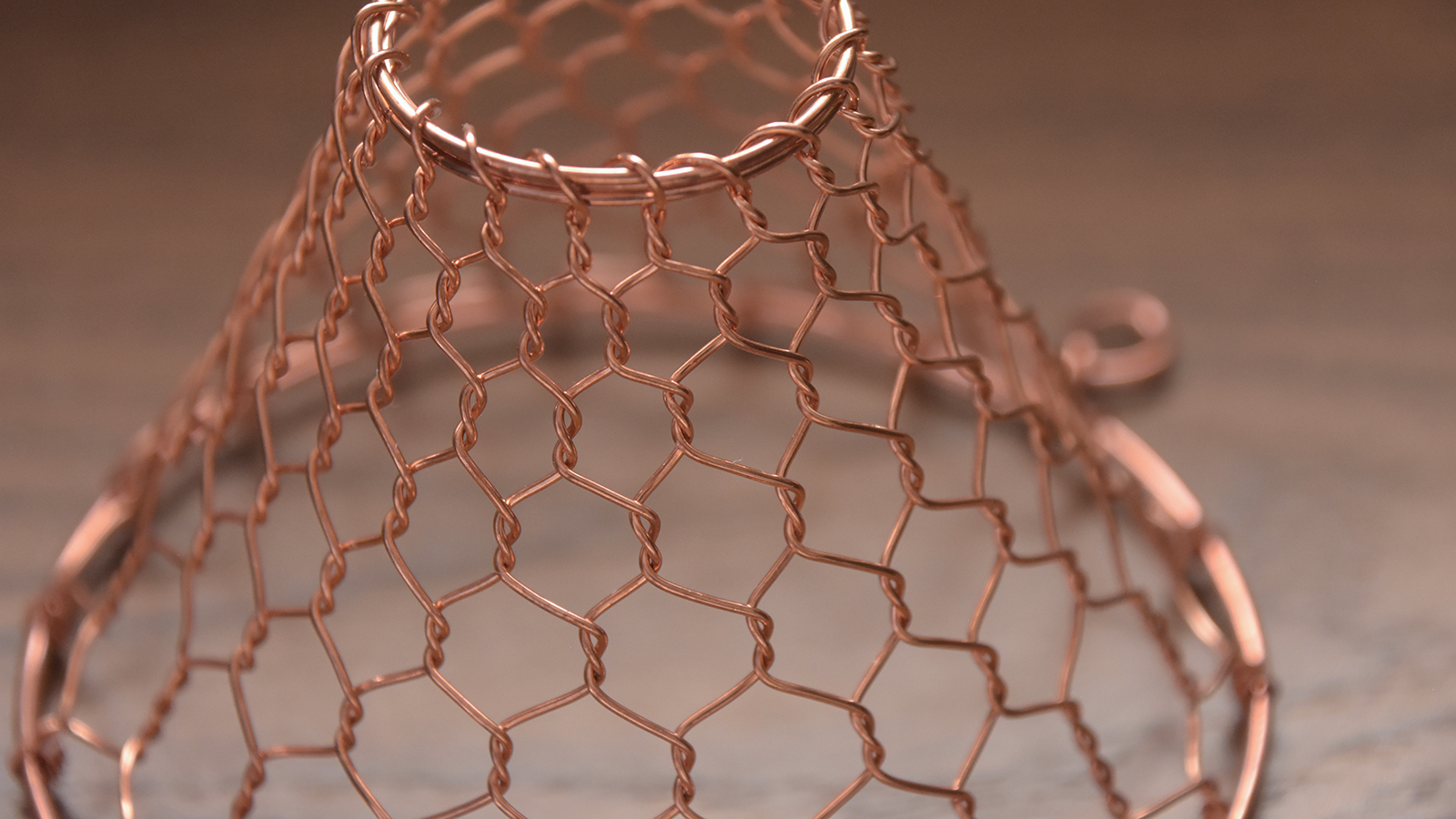
The pattern is only one part of a wire tool’s construction. The thickness of the wire, the size of the openings, and the overall shape also vary.
A tea strainer, a tofu server, and a grilling net perform different jobs. Tsujiwa Kanaami, a Kyo-kanaami maker, explains that hand-weaving allows wire thickness and mesh size to be adjusted to suit the intended use. The mesh itself is part of the tool’s design.
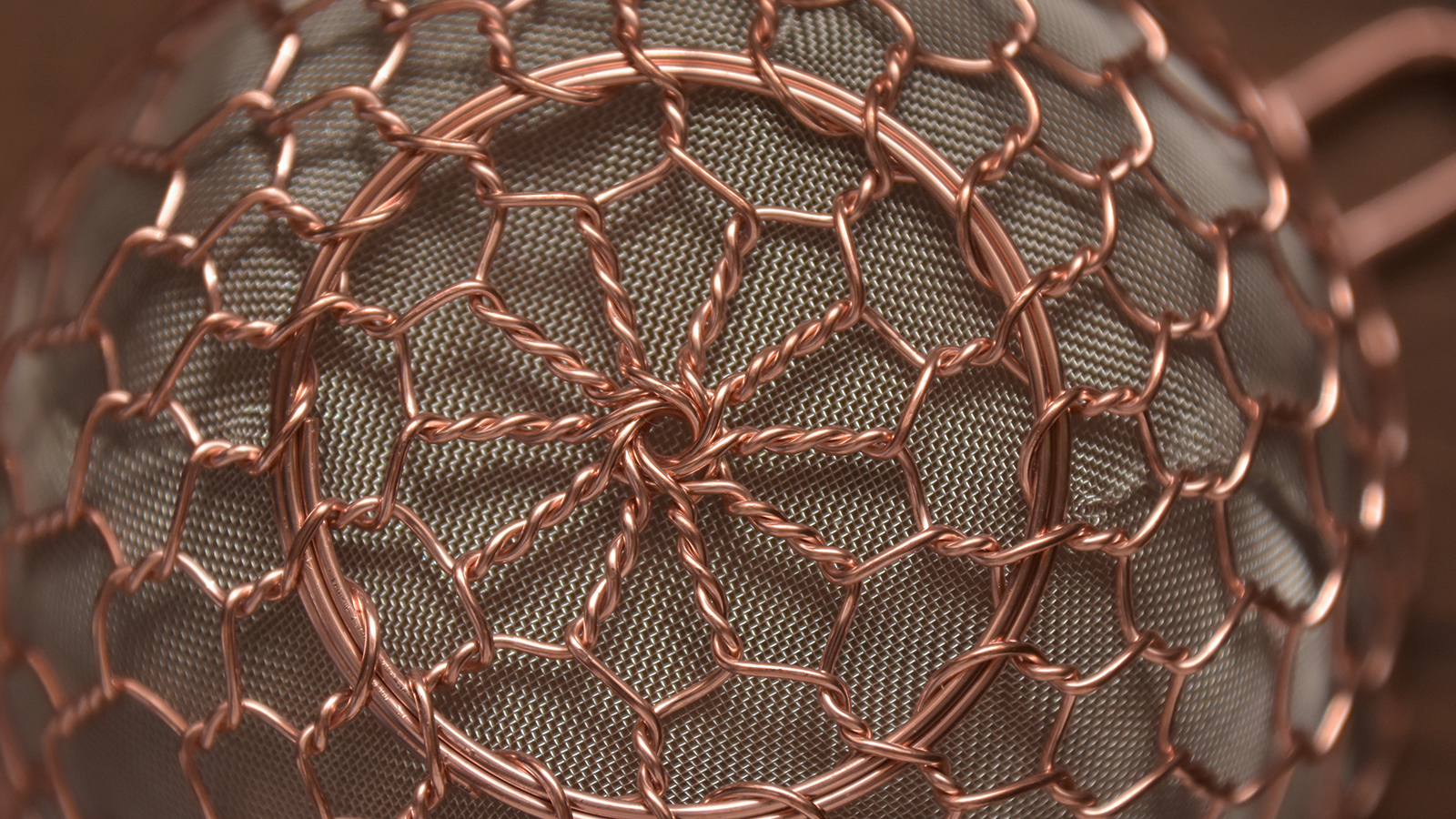
Some copper tea strainers use kikudashi, a weaving technique that creates a radiating, chrysanthemum-like pattern, together with kikko-ami, which forms hexagonal openings.
Color That Changes With Use
Copper and brass tools can change color over time. Bright copper may have a pinkish-gold sheen, deepening with use to amber or dark brown. Brass can shift from a bright gold to a softer, duller gold.
The color and pace of change vary with conditions, including exposure to air, oils from handling, and how the tool is used. These shifts are part of the changing appearance of a piece over time.
Weaving techniques and combinations of parts vary by product. The following explains the main elements of making Kyo-kanaami tools.
1. Choosing Wire and Mesh for the Task
The maker considers what the tool needs to do: strain tea leaves, lift tofu, or support food while it cooks. Wire thickness and the size of the openings can be chosen to suit that purpose. These decisions shape the tool’s construction before the finished pattern comes into view.
2. Weaving on a Board Studded With Nails
A board studded with nails provides guides for the weave. The maker twists lengths of metal wire together, forming openings such as the hexagons of kikko-ami. Kikudashi creates a different structure, with wires arranged in a radiating, flower-like pattern. Some products combine both techniques.
3. Shaping the Tool and Combining Parts
The shape of the utensil also serves its purpose. Tsujiwa Kanaami’s copper tofu servers, for example, have a slight curve intended to make scooping easier. Depending on the product, components with different roles are combined. A tea strainer may have a fine inner mesh, while a grilling net may incorporate a separate ceramic component.
Straining tea, serving something alongside it, or toasting bread on the stove: Kyo-kanaami tools have different roles across the kitchen and table. Their uses offer a way to notice how wire, openings, and shape work together.